


In the scorching Libyan desert, a pivotal battle raged on, sealing the fate of the Allied forces and forever etching the name Tobruk in the annals of World War II history. On a fateful day in 1942, a staggering 33,000 Allied troops laid down their arms in surrender, marking a crushing defeat and a significant turning point in the war.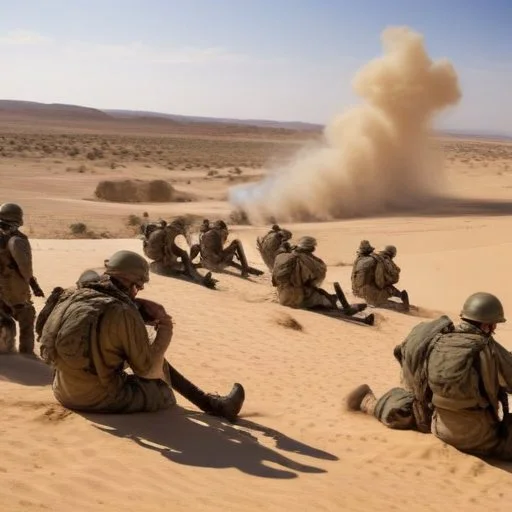
Tobruk, a small coastal town in Libya, had been a thorn in the side of the Axis powers since April 1941, when Australian and British forces captured it from the Italians. Perched on the Mediterranean coast, Tobruk was a strategic stronghold, playing a crucial role in the Allied supply chain and dominating the North African coast. The unlikely capture of Tobruk by the Axis forces was a result of a series of events that would alter the course of the war.
Under the command of Erwin Rommel, the legendary German general, the Deutsches Afrika Korps (DAK) had been steadily advancing across North Africa, pushing the Allies back. The Italian forces, though initially defeated by the Allies, had regrouped and joined forces with the Germans, making it a formidable opponent. The Allies, on the other hand, were led by Lieutenant General Claude Auchinleck, who had taken over the Eighth Army in November 1941.
The siege of Tobruk began on April 11, 1941, when the Axis forces encircled the town, cutting off the Allied supply lines. The Australian and British forces, led by General Leslie Morshead, put up a valiant resistance, but the relentless shelling, bombing, and siege began to take its toll. As the months dragged on, the defenses began to weaken, and the morale of the troops began to sag.
In June 1942, Rommel launched a final, decisive assault on Tobruk, deploying his most powerful forces to breach the defenses. The Allies, exhausted and demoralized, were unable to withstand the onslaught. On June 21, 1942, the unthinkable happened – Tobruk fell to the Axis forces, and 33,000 Allied troops surrendered, marking one of the largest prisoner-of-war captures in history.
The fall of Tobruk had far-reaching consequences, both strategically and psychologically. The Allies suffered a crushing blow to their morale, and the loss of Tobruk opened the door to further Axis advances in North Africa. The Axis powers, emboldened by their victory, continued their push towards Egypt and the Suez Canal, threatening to disrupt the Allied supply chain.
The fall of Tobruk marked a significant turning point in World War II. It highlighted the vulnerability of the Allied forces in North Africa and led to a re-evaluation of their strategy. Winston Churchill, the British Prime Minister, famously remarked, "I must warn you, the news is very bad... Tobruk has fallen." The defeat at Tobruk would become a rallying cry for the Allies, galvanizing their efforts to regroup and ultimately defeat the Axis powers.
In the end, the fall of Tobruk was a harsh reminder of the brutal realities of war, where even the seemingly invincible can fall. Yet, it also marked a crucial juncture in the war, where the Allies would regroup, reassess, and ultimately emerge victorious.
The fall of Tobruk was a pivotal moment in the North African Campaign, which was a crucial theater of operations in World War II. The region's strategic importance lay in its proximity to the Suez Canal, a vital waterway that linked the Mediterranean to the Red Sea. The Axis powers, led by Germany and Italy, sought to capture the canal to disrupt Allied supply lines and gain a significant advantage in the war. The Allies, on the other hand, were determined to protect the canal and maintain their grip on the region.
The North African Campaign was also a complex geopolitical landscape, with various factions vying for power and influence. The region was home to several nationalist movements, and the Axis powers sought to exploit these divisions to their advantage. The Allies, meanwhile, had to navigate these complex relationships while also fighting a brutal war against the Axis.
Erwin Rommel: The Desert Fox
Erwin Rommel was a legendary German Field Marshal who earned the respect of his enemies and the admiration of his peers. Nicknamed the "Desert Fox" for his cunning and bravery, Rommel was a master tactician who played a crucial role in the North African Campaign. Despite his later disillusionment with the Nazi regime, Rommel remained loyal to Germany and fought valiantly until his untimely death in 1944.
The siege of Tobruk was a testament to the importance of technology in modern warfare. The Axis powers' ability to deploy advanced artillery and airpower ultimately proved decisive in the battle. The Allies, meanwhile, were hamstrung by their limited air support and inadequate equipment. The fall of Tobruk highlighted the need for the Allies to invest in modernizing their military technology, a lesson that would be learned in the subsequent battles of El Alamein and Stalingrad.
The fall of Tobruk has been the subject of much historiographical debate, with many historians questioning the wisdom of the Allied strategy in North Africa. Some have argued that the Allies were overly focused on the Mediterranean theater, neglecting the more critical battles in Europe. Others have suggested that the fall of Tobruk was a necessary evil, forcing the Allies to regroup and reassess their strategy.
Regardless of interpretation, the fall of Tobruk remains a pivotal moment in the history of World War II, a stark reminder of the brutal realities of war and the importance of adapting to changing circumstances.
The fall of Tobruk had a profound impact on popular culture, resonating far beyond the battlefields of North Africa. The siege and subsequent fall of the city captured the imagination of the public, inspiring numerous books, films, and documentaries. The story of Tobruk has become an enduring symbol of courage and sacrifice, a testament to the bravery of the soldiers who fought and died in the desert.