


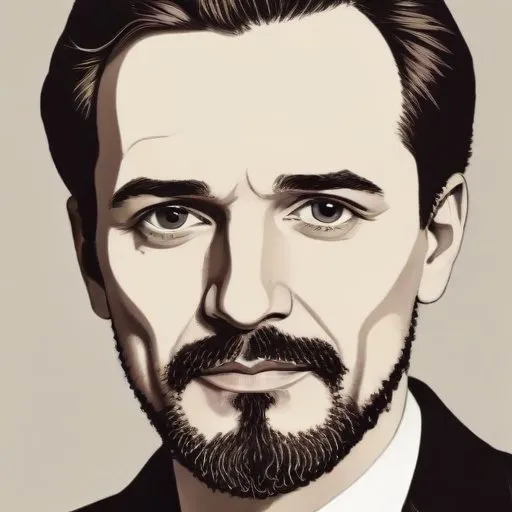
A celebrated poet and essayist, known for exploring the human condition, morality, and the search for meaning in a post-war world. His lyrical and introspective style has captivated readers globally.
Adam Zagajewski, one of Poland's most celebrated poets, novelists, and essayists, was a master of weavings words into powerful protests against the communist regime, and later, into beautiful tapestries of humanity. He is best known for his contributions to the Generation of '68, a literary movement also known as the Polish New Wave, which stood against the falsifications of reality and the appropriation of language by communist ideology and propaganda.
Zagajewski was born on June 18, 1945, in Lviv, Ukraine, then part of Poland. His family was expelled to central Poland that same year as part of Soviet post-World War II policy. They settled in Gliwice, where he graduated from Andrzej Strug V High School. Zagajewski went on to study psychology and philosophy at the Jagiellonian University in Krakow, and later taught philosophy at the AGH University of Science and Technology.
Zagajewski's poetic debut came in 1967 with the publication of "Music" in the literary magazine Zycie Literackie. He went on to publish his works and reviews in prominent magazines such as Odra and Twórczo. His involvement in the Generation of '68 led to his works being banned by communist authorities in Poland after he signed the "Letter of 59".
Undeterred, Zagajewski continued to write, and in 1978, he co-founded the Scientific Training Association. His literary works have received international recognition, earning him numerous awards and accolades, including the Neustadt International Prize for Literature, the Griffin Poetry Prize Lifetime Recognition Award, and the Princess of Asturias Award for Literature.
In 1982, Zagajewski emigrated to Paris, where he lived in exile for nearly two decades. During this time, he continued to write and publish his works, which were often critical of the communist regime. In 2002, he returned to Poland with his wife, Maja Wodecka, and settled in Krakow.
Adam Zagajewski's literary works have had a profound impact on Polish literature and beyond. His poetry and essays have been translated into numerous languages, making him a beacon of hope and rebellion against oppressive regimes. His legacy continues to inspire writers and readers alike, reminding us of the power of words to challenge and transform.
Zagajewski's words have been etched in the minds of many. One of his most memorable quotes is: "The world is a mysterious, inscrutable thing, and love is the only way to confront it."
In memory of his contributions to literature, we remember Adam Zagajewski as a poet of rebirth, a writer of beauty, and a beacon of hope in the face of adversity.
Born in 1911
A Polish writer and intellectual who explored the human condition, morality, and politics through his novels, essays, and poetry, earning him the Nobel Prize in Literature.
Born in 1921
A Polish poet and playwright who explored the human condition, morality, and the absurdity of life through his avant-garde works, often blending poetry and drama.
79 Years Old
A Polish-American poet, critic, and scholar who translated and introduced Eastern European poetry to the West, and wrote extensively on literary theory and culture.
Born in 1894
A renowned Polish literary figure, celebrated for his innovative and humorous poetry, plays, and theatrical direction, which continue to inspire and entertain audiences.
Born in 1878
A Ukrainian-Polish poet and academic who made significant contributions to 20th-century Polish literature, exploring themes of existentialism and modernity. Their work is characterized by its lyricism and philosophical depth.
