


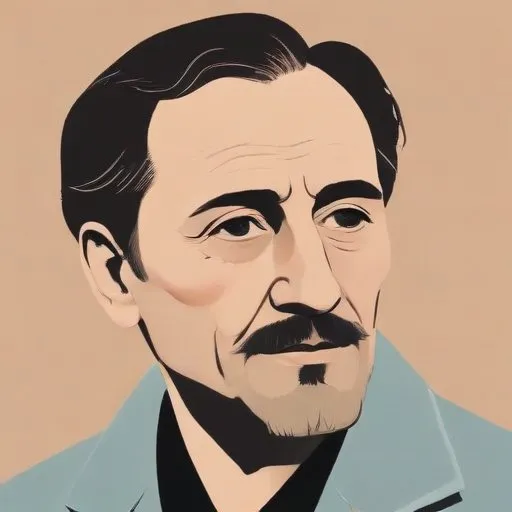
A Polish-American poet, critic, and scholar who translated and introduced Eastern European poetry to the West, and wrote extensively on literary theory and culture.
Stanisław Barańczak, a renowned Polish poet, literary critic, and translator, is best known for his extraordinary English-to-Polish translations of the dramas of William Shakespeare and the poetry of iconic literary figures like E.E. Cummings, Elizabeth Bishop, and Emily Dickinson.
Born on November 13, 1946, in Poznań, Poland, Barańczak was raised in a family of doctors and went on to study philology at Adam Mickiewicz University, where he earned his M.A. and Ph.D. His academic pursuits laid the foundation for his future endeavors as a poet, critic, and translator.
Barańczak's literary career began in 1965, and he quickly made a name for himself as a poet and critic. In 1967, he joined the staff of the Poznań magazine Nurt, where he contributed until 1971. His involvement in the Polish literary circle led him to become a cofounder of the Workers' Defence Committee (KOR) and the clandestine quarterly Zapis in 1976.
In 1981, following Poland's declaration of martial law, Barańczak left his homeland to take up a three-year contract as a lecturer at Harvard University. He remained at Harvard for almost two decades, until 1999, when complications from Parkinson's disease forced him to leave. During his time abroad, he cofounded the Paris-based Zeszyty Literackie (Literary Textbooks) in 1983 and regularly contributed to the periodical Teksty Drugie.
As a prominent representative of the Polish New Wave, Barańczak is widely regarded as one of the greatest translators of English poetry into Polish and Polish poetry into English. His translations have introduced Polish readers to the works of esteemed authors, enriching the country's literary landscape.
Barańczak's contributions to literature have been recognized with numerous awards and honors, including the prestigious PEN Translation Prize.
Through his work, Barańczak demonstrated a deep commitment to promoting cross-cultural understanding and literary exchange. His translations not only bridged the gap between languages but also facilitated a deeper appreciation for the diversity of human experience.
Stanisław Barańczak's remarkable life and legacy serve as a testament to the transformative power of literature, inspiring future generations of poets, translators, and scholars to continue his work of building bridges between cultures and languages.
Born in 1911
A Polish writer and intellectual who explored the human condition, morality, and politics through his novels, essays, and poetry, earning him the Nobel Prize in Literature.
Born in 1923
A Polish poet and translator who captured the human experience through subtle, introspective verse, earning her the Nobel Prize in Literature. Her poetry explores the complexities of life, love, and mortality.
81 Years Old
A celebrated poet and essayist, known for exploring the human condition, morality, and the search for meaning in a post-war world. His lyrical and introspective style has captivated readers globally.
Born in 1921
A Polish poet and playwright who explored the human condition, morality, and the absurdity of life through his avant-garde works, often blending poetry and drama.
Born in 1926
A renowned filmmaker behind iconic Polish New Wave cinema, known for powerful, poignant, and visually stunning works that often explored Poland's complex history and identity.
