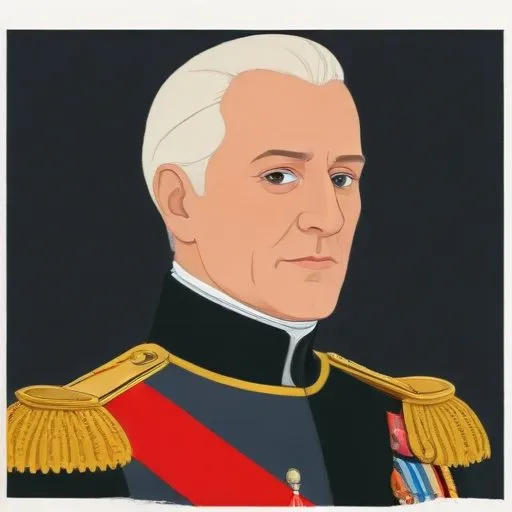
Adolphus Frederick II, Duke of Mecklenburg-Strelitz

Adolphus Frederick II, Duke of Mecklenburg-Strelitz

Adolphus Frederick II, Duke of Mecklenburg-Strelitz was born on October 19th, 1658

Full Name: Adolphus Frederick II, Duke of Mecklenburg-Strelitz
Nationality: German
Profession: Duke of Mecklenburg-Strelitz
Born In: Strelitz
Birth Year: 1658
Death Year: 1708
Duke of Mecklenburg-Strelitz: 1701
Predecessor: Adolphus Frederick I

Duke of Mecklenburg-Strelitz was a German nobleman who ruled his duchy from 1701 to 1708 and was a skilled military leader. He's most known for his involvement in the Great Northern War.

Written by: Penelope Wildwood Penelope Wildwood

Adolphus Frederick II, Duke of Mecklenburg-Strelitz: A Life of Royalty and Military Prowess

Adolphus Frederick II, Duke of Mecklenburg-Strelitz, is remembered as a prominent figure in 18th-century European royalty, distinguished for his military prowess and his role as a ruler of the Duchy of Mecklenburg-Strelitz.

A Military Career

Adolphus Frederick II was born on October 19, 1658, in Grabow, Mecklenburg-Strelitz, to Duke Adolphus Frederick I and Duchess Maria Katharina of Brunswick-Dannenberg. From a young age, he was groomed for a life of military service, and he went on to become one of the most esteemed commanders of his time. His military career spanned over two decades, during which he fought in several notable battles, including the Scanian War and the Great Northern War.

Rise to Power

In 1701, Adolphus Frederick II succeeded his father as the Duke of Mecklenburg-Strelitz, a position he held until his death in 1704. During his reign, he focused on strengthening the economy and military of his duchy, as well as forging alliances with neighboring states.

Personal Life and Legacy

Adolphus Frederick II married Landgravine Marie of Hesse-Kassel in 1684, with whom he had six children. He is often remembered as a devoted husband and father, as well as a wise and just ruler. Upon his death on December 12, 1704, he was succeeded by his son, Adolphus Frederick III.

Philosophical Contributions and Beliefs

Although Adolphus Frederick II's primary focus was on military matters, he was also known for his interest in philosophy and the arts. He was a patron of the arts, and his court attracted many notable scholars and artists of the time.

Influence on Modern Society

Adolphus Frederick II's legacy extends beyond his military achievements and his role as a ruler. He played a significant role in shaping the course of European history, particularly in the context of the Great Northern War. His diplomatic efforts helped to establish Mecklenburg-Strelitz as a major player in regional politics.

Career Highlights and Major Works

Trivia and Fun Facts

Historical Context and Legacy

Adolphus Frederick II lived during a time of great upheaval in Europe, marked by numerous conflicts and power struggles. Despite the challenges he faced, he managed to establish himself as a respected leader and military commander. His legacy continues to be felt in Mecklenburg-Strelitz, where he is still remembered as a hero and a visionary leader.

Timeline
1658
Born in Grabow
Adolphus was born in Grabow, Germany, to a noble family. He would go on to become the Duke of Mecklenburg-Strelitz.
1701
Became Duke
Adolphus succeeded his brother as the Duke of Mecklenburg-Strelitz, solidifying his position as a prominent figure in German politics.
1708
Signed the Treaty of Copenhagen
Adolphus signed the Treaty of Copenhagen, which established an alliance between Mecklenburg-Strelitz and Denmark.
1729
Died in Mirow
Adolphus died in Mirow, leaving behind a legacy as a skilled politician and diplomat who strengthened Mecklenburg-Strelitzs position in Europe.
1716
Founded the University of Rostock
Adolphus founded the University of Rostock, which became a center of learning in Germany.
Adolphus Frederick II, Duke of Mecklenburg-Strelitz

Adolphus Frederick II, Duke of Mecklenburg-Strelitz Quiz

What was Adolphus Frederick II, Duke of Mecklenburg-Strelitz primarily known for?

Score: 0/5
FAQ
What was Adolphus Frederick IIs role in the Duchy of Mecklenburg-Strelitz?
Adolphus Frederick II, as the Duke of Mecklenburg-Strelitz, played a key role in governing the duchy, implementing reforms and promoting economic development.
How did Adolphus Frederick II influence the development of Mecklenburg-Strelitz?
Adolphus Frederick IIs reforms, particularly in the areas of education and agriculture, helped shape the development of Mecklenburg-Strelitz, improving the lives of its citizens.
What was Adolphus Frederick IIs relationship with the Holy Roman Empire?
Adolphus Frederick II, as a member of the House of Mecklenburg, maintained close ties with the Holy Roman Empire, participating in imperial politics and diplomacy.
What legacy did Adolphus Frederick II leave in the history of Mecklenburg-Strelitz?
Adolphus Frederick IIs legacy in Mecklenburg-Strelitz is marked by his commitment to reform and modernization, as well as his efforts to promote the duchys economic and cultural development.
How did Adolphus Frederick II balance his duties as a duke and a statesman?
Adolphus Frederick II effectively balanced his roles as a duke and a statesman, using his diplomatic skills to navigate the complexities of imperial politics and his administrative talents to govern the duchy effectively.

Related People:

Frederick the Great

Born in 1712

Prussian king who ruled with Enlightenment values, promoting arts, education, and religious tolerance, while also being a skilled military strategist and expanding his kingdom through wars.

Catherine the Great

Born in 1729

Empress of Russia from 1762 to 1796, she transformed her country into a major European power, modernizing its culture, politics, and economy through numerous reforms and conquests.

Peter III of Russia

Born in 1728

A short-lived Russian monarch who attempted to modernize and westernize the country, but was overthrown and assassinated after only six months in power.

Frederick William III of Prussia

Born in 1770

King of Prussia from 1797 to 1840, he ruled during the Napoleonic Wars and reformed the Prussian army, leading to its rise as a major European power. He's also known for his romantic poetry and music compositions.