


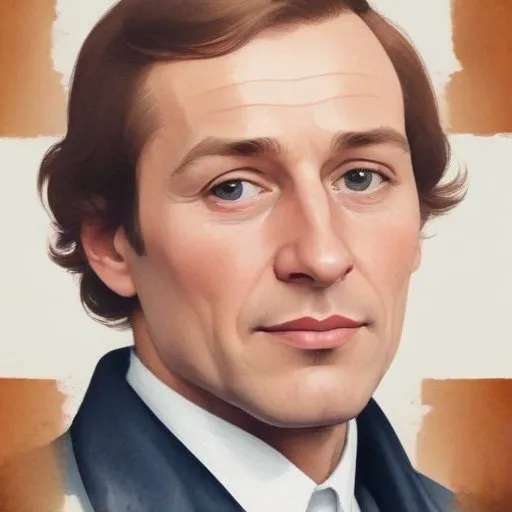
A 17th-century Dutch painter renowned for his exquisite and highly detailed portraits, landscapes, and still-life works, characterized by their soft, golden light and serene atmosphere.
Adriaen van der Werff was a Dutch painter of unparalleled skill, renowned for his captivating portraits and exquisite devotional, mythological, and erotic scenes. His works, characterized by intricate details and a deep understanding of human emotion, continue to fascinate art enthusiasts to this day.
Born on January 21, 1659, in Rotterdam, Netherlands, Van der Werff's artistic journey began at the tender age of ten, when he started taking lessons from local artist Eglon van der Neer. Two years later, he moved in with Van der Neer, specializing in clothes and draperie. This early training laid the foundation for his future success.
In 1696, Van der Werff's talent caught the attention of Johann Wilhelm, Elector Palatine, and his wife, Anna Maria Luisa de Medici. The royal couple commissioned two paintings, which were sent to Cosimo III de Medici, Grand Duke of Tuscany, in Florence. This pivotal moment marked the beginning of Van der Werff's illustrious career.
In 1703, he became the official court painter and a knight, following in the footsteps of his former teacher, Van der Neer. His new role brought with it a significant increase in wealth and fame, as he was highly compensated by the Elector for his biblical and classical erotic paintings.
Van der Werff's artistic style was characterized by his use of rich colors, delicate brushstrokes, and an unwavering attention to detail. His ability to capture the subtleties of human emotion, particularly in his portraits, earned him widespread acclaim.
Some of Van der Werff's most notable works include his portraits of Prince John Churchill, 1st Duke of Marlborough (1704), and Gian Gastone de Medici, Grand Duke of Tuscany (1705). These masterpieces demonstrate his exceptional skill in capturing the essence of his subjects.
Van der Werff's contributions to the art world were immense. He was hailed as one of the greatest Dutch painters of his day, earning a European reputation and amassing a considerable fortune. Arnold Houbraken, a prominent art historian, considered him the greatest of the Dutch painters, a sentiment that endured throughout the 18th century.
Johann Wilhelm, Elector Palatine, was so enamored with Van der Werff's work that he refused to sell any of the 34 paintings he owned, instead showcasing them in a specially designated room alongside Rembrandt's works.
Adriaen van der Werff's artistic legacy continues to inspire and influence artists to this day. His exquisite paintings, which seamlessly blend beauty and emotion, remain a testament to his boundless talent and dedication to his craft.
Through his work, Van der Werff has left an indelible mark on the world of art, ensuring his place as one of the most celebrated Dutch painters in history.
Born in 1606
A master of light and shadow, this 17th-century artist is renowned for his emotionally charged and deeply human portraits, landscapes, and biblical scenes that continue to captivate art lovers worldwide.
Born in 1632
A master of capturing intimate, serene domestic scenes, particularly of women, in exquisite detail and soft, luminous light. His works evoke a sense of quiet contemplation and everyday beauty.
Born in 1622
A Dutch master of light and shadow, known for his innovative use of chiaroscuro and his captivating, intimate portraits.
Born in 1629
A Dutch master of domestic scenes, capturing intimate moments of everyday life in 17th-century Holland with remarkable light and atmosphere. His works offer a glimpse into the lives of ordinary people during the Dutch Golden Age.
Born in 1638
A 17th-century master of Dutch Golden Age landscape painting, capturing serene and intimate scenes of woods, rivers, and villages. His works evoke a sense of tranquility and connection to nature.
