


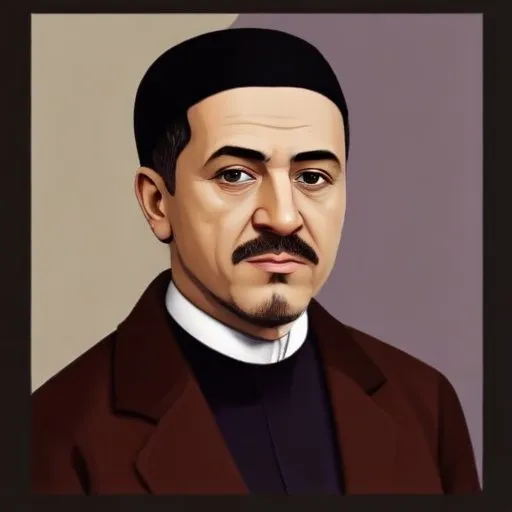
A Turkish composer and musicologist who blended traditional folk music with Western classical styles, creating a unique sound that helped shape Turkey's cultural identity.
Ahmed Adnan Saygun was a renowned Turkish composer, musicologist, and writer, widely regarded as the father of Turkish music. Born on May 7, 1907, in Izmir, Turkey, Saygun dedicated his life to promoting and preserving Turkish music, leaving an indelible mark on the country's cultural landscape.
Saygun's early life was steeped in music. His mother, a skilled pianist, introduced him to the world of music at a tender age. He began his formal music education in Izmir, later moving to Istanbul to study at the Istanbul Conservatory. In 1928, Saygun traveled to Paris, where he honed his skills at the Paris Conservatory, studying under some of the most prominent musicians of the time, including Vincent d'Indy and Eugene Borrel.
Saygun's compositional career spanned over five decades, during which he created a vast array of works, including symphonies, operas, chamber music, and choral pieces. Some of his most notable works include:
Saygun's music is characterized by its unique blend of Turkish folk melodies and Western classical music elements. His works often explored themes related to Turkish history, literature, and culture.
Ahmed Adnan Saygun's contribution to Turkish music is immeasurable. He played a pivotal role in developing a distinctly Turkish style of music, which earned him the title "Father of Turkish Music." His compositions inspired a generation of Turkish musicians, and his legacy continues to shape the country's music scene.
Saygun received numerous awards and honors for his contributions to Turkish music, including:
Ahmed Adnan Saygun passed away on January 6, 1991, leaving behind a rich cultural heritage. He was a true pioneer, who dedicated his life to promoting Turkish music and preserving the country's cultural identity. His legacy continues to inspire generations of musicians, composers, and music enthusiasts.
Saygun's personal milestones are a testament to his tireless efforts to promote Turkish music. He founded the Ankara State Conservatory in 1936, which became a hub for music education in Turkey. He also established the Turkish Music Association, which aimed to preserve and promote Turkish music.
Ahmed Adnan Saygun believed that music was an integral part of a nation's cultural heritage. He advocated for the preservation and promotion of Turkish folk music, which he saw as a vital component of the country's cultural identity. His music and writings reflect his deep love for Turkish culture and his commitment to promoting it.
Did you know that Ahmed Adnan Saygun was a prolific writer, publishing numerous books on music, literature, and culture? He was also an accomplished linguist, fluent in several languages, including French, German, and English.
In conclusion, Ahmed Adnan Saygun's remarkable life and work have left an indelible mark on Turkish music and culture. His compositions, writings, and advocacy have inspired generations, cementing his place as one of the most important figures in Turkish cultural history.
Born in 1881
A Hungarian musical genius who merged folk melodies with modernist techniques, creating a unique sound that transformed classical music.
Born in 1882
A Hungarian composer, conductor, and musicologist who developed a unique style blending folk and classical music, and is renowned for his contributions to music education and ethnomusicology.
Born in 1882
A Russian master of music, renowned for revolutionizing classical music with bold, avant-garde compositions that blended traditional and modern elements. His iconic works, such as "The Rite of Spring," continue to inspire and influence artists across genres.
Born in 1892
A French composer and educator who blended jazz and classical music to create a unique sound, and is best known for his ballet scores and chamber music compositions.
Born in 1895
A renowned composer, violist, and conductor who blended traditional and modern styles, creating complex yet accessible music that resonated with audiences. His works spanned from operas to chamber music.
Born in 1890
A renowned opera and symphony conductor, known for his precise and expressive interpretations of classical music, particularly his work with the Berlin State Opera.
Born in 1886
A renowned German conductor and composer, he was a dominant figure in the Berlin Philharmonic, known for his intense and expressive performances of Beethoven, Brahms, and Bruckner. He was also a composer of symphonies and other works.
Born in 1895
A renowned composer and educator, he's famous for his iconic cantata "Carmina Burana", which has become a cultural phenomenon, and his innovative approach to music education.
