


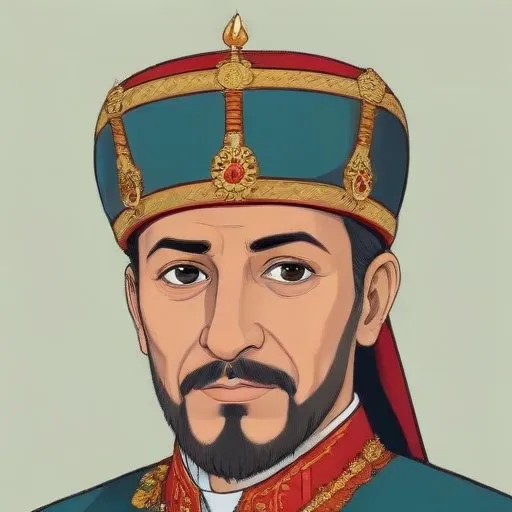
The 18th-century ruler of the Ottoman Empire, known for his cultural and artistic achievements, particularly in architecture and literature. He oversaw the construction of many iconic buildings and promoted arts and education.
Ahmed III, the 23rd Sultan of the Ottoman Empire, is renowned for his significant contributions to the empire's cultural, artistic, and architectural development during the Tulip Era (1718-1730), a period of unprecedented growth and modernization.
Born on December 30, 1673, in Hacoglu Pazarck, Dobruja, Ahmed III was the son of Sultan Mehmed IV and Glnu Sultan, an ethnic Greek. His early life was marked by significant events, including his circumcision ceremony in 1675, where he was joined by his brother, Prince Mustafa (future Mustafa II).
Ahmed III ascended to the throne in 1703, following the abdication of his brother, Mustafa II. During the initial days of his reign, he focused on appeasing the janissaries, a powerful military corps. Grand Vizier Nvehirli Damat Ibrahim Pasha played a crucial role in stabilizing the government and implementing reforms.
The Tulip Era, marked by the influence of Nvehirli Damat Ibrahim Pasha and the Sultan's daughter, Fatma Sultan, was a time of remarkable cultural and artistic achievements. Ahmed III's love for literature, calligraphy, and history made him a patron of the arts, encouraging the development of architecture, literature, and poetry.
Ahmed III's reign was marked by a strong emphasis on education, literature, and the arts, reflecting his belief in the importance of cultural development and intellectual pursuits.
Ahmed III's reign is often regarded as the Ottoman Empire's golden age, with significant contributions to architecture, literature, and the arts. His legacy continues to influence Turkish culture and society to this day.
Despite his many achievements, Ahmed III's reign was not without controversy. His struggles to appease the janissaries and maintain stability in the empire often led to tensions and conflicts.
"Knowledge is the light of the mind, and the key to the treasury of happiness."
Ahmed III's legacy has been recognized through various awards and honors, including the establishment of the Ahmed III Fountain in Istanbul, a testament to his enduring impact on Turkish culture.
Ahmed III's emphasis on education, literature, and the arts has had a lasting impact on Turkish society, shaping the country's cultural and intellectual identity.
Ahmed III's relationships with his family members, particularly his daughter, Fatma Sultan, played a significant role in shaping his reign and legacy.
Ahmed III's passion for learning, literature, and the arts serves as an inspiration to individuals seeking to make a lasting impact on their communities.
Ahmed III's remarkable legacy continues to captivate historians, scholars, and enthusiasts alike, offering a glimpse into the Ottoman Empire's rich cultural heritage during its golden age.
Born in 1494
Ruling the Ottoman Empire at its peak, he expanded its borders, conquered Belgrade, and laid siege to Vienna, earning a reputation as a brilliant military strategist and statesman. He also codified laws and reformed the empire's administration.
Born in 1604
The 17th-century ruler who sparked a rebellion by attempting to reform the Janissary corps, leading to his eventual deposition and murder. He's infamous for his short, tumultuous reign.
Born in 1642
The Ottoman sultan who ruled from 1648 to 1687, known for his military campaigns that expanded the empire's borders, including the conquest of Crete and parts of Poland. He was also known for his cultural and architectural achievements, including the construction of several mosques and palaces.
Born in 1761
Reformed the Ottoman Empire's military and administration, introducing Western-style reforms to modernize the state. Known for his efforts to centralize power and reduce corruption.
Born in 1717
The Ottoman Empire's 18th-century ruler, known for his military campaigns and attempts to modernize the empire, particularly in the fields of education and administration. He also fought against the Russian Empire and lost significant territory.
Born in 1725
Reigned from 1774 to 1789, this Ottoman sultan implemented reforms, strengthened the military, and fought wars with Russia and Austria, leaving a lasting impact on the empire's politics and economy.
Born in 1326
The founder of the Ottoman Empire's expansionist era, known for conquering much of the Balkans and establishing the Ottoman state as a dominant power in the region.
Born in 1447
The Ottoman Empire's eighth ruler, known for his military campaigns, administrative reforms, and cultural patronage, which led to a golden age of Ottoman architecture and art. He also oversaw the expulsion of Jews from Spain, offering them refuge in the Ottoman Empire.
