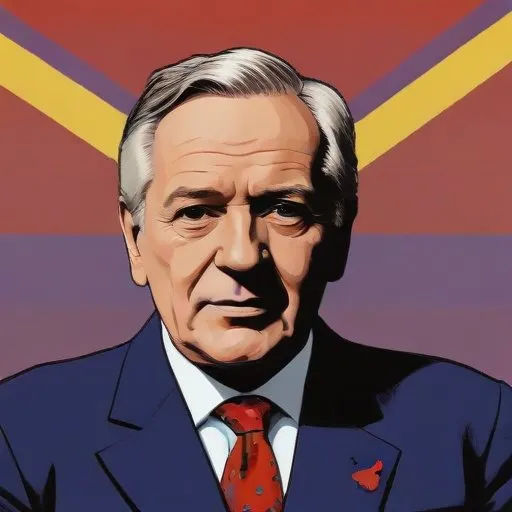
Sir Albert Arthur Dunstan: The Pioneering Politician of Victoria
A Legacy of Leadership and Service
Sir Albert Arthur Dunstan, a name synonymous with dedication, perseverance, and visionary leadership, is remembered as one of the most influential politicians in Victoria's history. As the 33rd Premier of Victoria, serving from 1935 to 1945, Dunstan left an indelible mark on the state's politics, economy, and social fabric.
Early Life and Humble Beginnings
Born on July 26, 1882, in Donald East, Victoria, Dunstan was the tenth son and thirteenth child of Sarah and Thomas Dunstan, immigrants from England. Growing up on the family's selection at Cope Cope, he was educated at the local state school before venturing out to work on the land. In 1907, he moved to Queensland, where he took up a pioneer block at Jondaryan, living in a tent. He later returned to Victoria, farming at Goschen and Kaneira, before establishing a sheep property at Kamarooka in 1918.
A Rise to Prominence in Politics
Dunstan's foray into politics began in 1916, when he joined the Kaneira branch of the Victorian Farmers Union (VFU). After moving to Bendigo, he joined the local branch and was endorsed as the union's candidate for the seat of Eaglehawk at the 1920 state election. Defeating incumbent Australian Labor Party MP Tom Tunnecliffe, Dunstan subsequently joined the VFU's parliamentary party, which later evolved into the Country Party.
A Radical Leader and Premier
As a leader of the Country Party's radical wing, Dunstan emerged as a force to be reckoned with in Victorian politics. In 1921, he voted in favor of a no-confidence motion against
Harry Lawson's Nationalist government, despite being part of the governing coalition. This bold move showcased his commitment to the principles of his party and his willingness to challenge the status quo.
Philosophical Contributions and Beliefs
Dunstan's political philosophy was shaped by his rural upbringing and his commitment to the welfare of farmers and rural communities. He believed in the importance of decentralization, advocating for greater autonomy and decision-making power for regional areas. His leadership was marked by a strong sense of social justice, as he worked to improve the lives of ordinary Victorians.
Career Highlights and Major Works
- Longest-serving Premier of Victoria from a non-Labor party
- Implemented significant reforms in agriculture, education, and health
- Advocated for decentralization and regional development
- Strengthened the Country Party, paving the way for future leaders
Influence on Modern Society
Dunstan's legacy extends far beyond his time in office. His commitment to rural communities and his vision for a more equitable society continue to inspire generations of Victorians. His leadership during World War II, when he played a crucial role in coordinating the war effort and mobilizing resources, remains a testament to his statesmanship.
Personal Milestones and Key Life Events
- Knighted in 1944 for his services to politics and the war effort
- Served as President of the Victorian Farmers Union (1933-1935)
- Married twice, first to Mabel McLachlan (1909) and then to Ethel May Johnston (1935)
Historical Context and Legacy
Sir Albert Dunstan's remarkable career serves as a beacon of hope and inspiration for those seeking to make a positive impact in the world. His dedication to public service, his commitment to social justice, and his visionary leadership continue to shape the course of Victoria's history.
FAQ
What were Albert Dunstans achievements as Premier of Victoria?
Albert Dunstan was the 33rd Premier of Victoria, serving from 1935 to 1945, and achieving significant reforms in areas such as education, healthcare, and infrastructure development.
What was Albert Dunstans role in Australian politics?
Albert Dunstan played a key role in Australian politics, serving as a member of the Australian Labor Party and contributing to the development of social and economic policies during the mid-20th century.
How did Albert Dunstans political career begin?
Albert Dunstans political career began in the 1920s, as he was elected to the Victorian Legislative Assembly and rose through the ranks, becoming Premier of Victoria in 1935.
What were Albert Dunstans views on economic development?
Albert Dunstans views on economic development emphasized the importance of state-led infrastructure development, public investment, and social welfare programs to promote economic growth and stability.
What is Albert Dunstans legacy in Australian history?
Albert Dunstans legacy in Australian history is one of significant achievement and reform, shaping the development of Victoria and contributing to the growth of the Australian Labor Party.