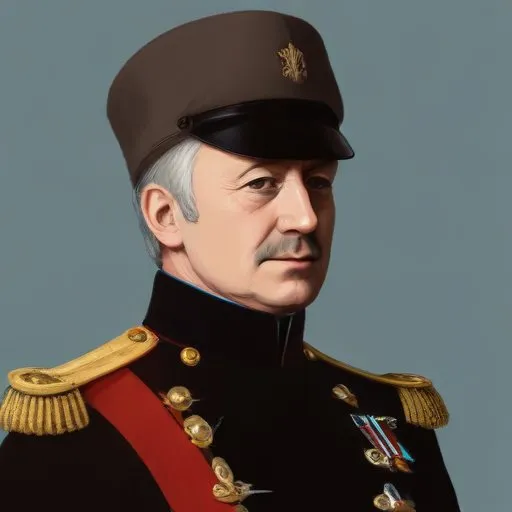
Albert Frederick, Duke of Prussia: A Leader of Distinction
A Legacy of Power and Influence
Albert Frederick, Duke of Prussia, was a prominent figure in 16th-century European politics, renowned for his role as the second and last Prussian duke of the Ansbach branch of the Hohenzollern family. From 1568 until his death in 1618, he wielded significant power and influence, shaping the course of Prussian and Polish history.
Early Life and Ascension
Born on May 7, 1553, Albert Frederick was the son of Albert of Prussia and Anna Marie of Brunswick-Lüneburg. His ancestry was steeped in nobility, with his great-grandfather being the Polish king
Casimir IV Jagiellon. This illustrious heritage would ultimately contribute to his consideration as a candidate for the Polish throne.
Rise to Power and Feudal Homage
After paying feudal homage to his cousin, King Sigismund Augustus of Poland, on July 19, 1569, in Lublin, Albert Frederick became the Duke of Prussia. This significant event was chronicled by the Polish chronicler Jan Kochanowski in his work,
Proporzec Standard.
Political Ambitions and Controversies
During the 1573 Polish election, Albert Frederick attempted to gain acceptance to the Polish senate but was opposed by the powerful
Jan Zamoyski, later Grand Hetman of the Crown of the Kingdom of Poland. This resistance was largely due to Zamoyski's fear of Protestant influence in the Polish legislative body. Albert Frederick initially refused to recognize the election of Stefan Bathory and supported the candidacy of Maximilian of Habsburg. However, at the Toruń sejm of October 1576, he eventually gave his support to the new monarch.
Personal Milestones and Key Life Events
- In 1572, Albert Frederick began to exhibit signs of mental disorder, which would affect his decision-making abilities in the years to come.
- In 1573, he married Marie Eleonore of Cleves, a daughter of Wilhelm, Duke of Jülich-Cleves-Berg and Archduchess Maria of Austria.
- In 1578, his cousin, George Frederick of Brandenburg-Kulmbach, took over the regency due to Albert Frederick's declining mental health.
- After George Frederick's death in 1603, the Polish king Sigismund III Vasa appointed Joachim Frederick as regent in 1605, and permitted his son, John Sigismund, to succeed him in 1611.
Legacy and Historical Context
Albert Frederick's reign was marked by significant events that shaped the course of Prussian and Polish history. His fluency in Polish and his ancestry made him a strong candidate for the Polish throne, earning him the support of Polish Lutherans. Although he never achieved his goal of becoming the King of Poland, his legacy as a Duke of Prussia remains significant.
Quotes and Memorable Sayings
Although there are no direct quotes attributed to Albert Frederick, his actions and decisions speak to his philosophy of power, influence, and loyalty.
Impact on Modern Society
Albert Frederick's contributions to the development of Prussia and Poland continue to influence modern society. His legacy serves as a reminder of the intricate web of politics, power, and nobility that shaped European history.
Comparative Analysis with Contemporaries
In comparison to his contemporaries, Albert Frederick's unique blend of nobility, ancestry, and political acumen set him apart as a leader of distinction. His experiences and decisions provide valuable insights into the complexities of 16th-century European politics.
Personal Relationships and Anecdotes
Although limited information is available about Albert Frederick's personal relationships, his marriage to Marie Eleonore of Cleves and his cousinship with George Frederick of Brandenburg-Kulmbach demonstrate the complex web of alliances and relationships that defined his life.
Trivia and Fun Facts
- Albert Frederick was the second and last Prussian duke of the Ansbach branch of the Hohenzollern family.
- He was fluent in Polish, a rare skill among nobility at the time.
- His ancestral connections to the Polish royal family made him a strong candidate for the Polish throne.
By exploring the life and reign of Albert Frederick, Duke of Prussia, we gain a deeper understanding of the intricate dynamics of 16th-century European politics and the legacy of a leader who continues to inspire and fascinate historians and scholars today.
FAQ
What was Albert Frederick, Duke of Prussias role in the Treaty of Wehlau?
Albert Frederick, Duke of Prussia played a significant role in the Treaty of Wehlau, signed in 1657, which marked the beginning of Brandenburg-Prussias rise to prominence. He acted as a mediator between Poland and Sweden, leading to a peace treaty that benefited his duchy.
How did Albert Frederick, Duke of Prussia contribute to the development of Ducal Prussia?
Albert Frederick, Duke of Prussia made significant contributions to the development of Ducal Prussia by promoting trade, commerce, and education. He encouraged the establishment of schools, colleges, and universities, which helped to foster a culture of learning and innovation.
What were Albert Frederick, Duke of Prussias military achievements?
Albert Frederick, Duke of Prussia had several notable military achievements, including his role in the Second Northern War and the Scanian War. He successfully defended his duchy against Swedish invasions and expanded his territories through strategic alliances and battles.
What was Albert Frederick, Duke of Prussias relationship with the Polish-Lithuanian Commonwealth?
Albert Frederick, Duke of Prussia had a complex relationship with the Polish-Lithuanian Commonwealth. He formed alliances with Poland to counter the Swedish threat, but also engaged in border disputes and territorial conflicts with the Commonwealth.
How did Albert Frederick, Duke of Prussias successor shape the future of Prussia?
Albert Frederick, Duke of Prussias successor, Frederick III, continued his predecessors legacy by transforming the Duchy of Prussia into the Kingdom of Prussia in 1701. This marked a significant turning point in Prussian history, establishing the kingdom as a major European power.