


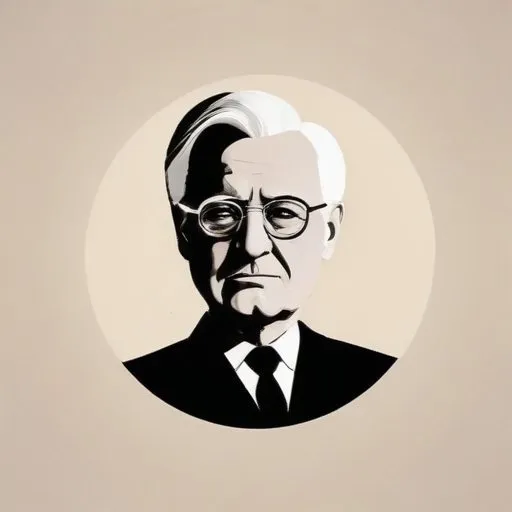
A German journalist and politician who served as a member of the East German parliament and was a prominent figure in the country's socialist movement, known for his advocacy of democratic socialism.
Albert Norden was a prominent German communist politician and journalist, best known for his role as the editor of the weekly news magazine, Deutschlands Stimme (Voice of Germany), and his contributions to the infamous Braunbuch über Reichstagsbrand und Hitlerterror (Brown Book on Reichstag Fire and Hitler Terror).
Albert Norden was born on December 4, 1904, in Myslowitz, Silesia, to a liberal rabbi, Joseph Norden, and his wife, Emilie Meseritz-Norden. He was one of five recorded children. At the tender age of 15, Norden joined the Young Communist League of Germany, and the following year, he became a member of the Communist Party of Germany.
From 1923 onwards, Norden held editorial positions in various communist publications, honing his skills as a journalist and politician. In 1931, he became the editor of Rote Fahne (Red Flag), a prominent communist newspaper.
In 1933, Norden emigrated to France, where he continued to work as a journalist and politician. He later spent time in exile in Denmark and Czechoslovakia before returning to France in 1938. During this period, he was detained in France from 1939 to 1940.
In 1941, Norden emigrated to the United States, where he continued to work with various popular front publications. During his time in exile, he wrote chapters for the widely read Braunbuch über Reichstagsbrand und Hitlerterror, which dealt with the international linkages of the German NSDAP.
In 1940, Norden married Herta Fischer, and their son, Johnny, was born in October 1942. Tragically, Norden's father died in the Theresienstadt concentration camp during World War II.
In 1946, Norden returned to Berlin, where he became the editor of Deutschlands Stimme (Voice of Germany). In 1949, he was assigned as the head of the Press Section of the Information Department of the Ministerial Council of the German Democratic Republic, working under Gerhart Eisler.
In 1952, Norden was purged from his position in the Press Department, but he obtained a professorship at Humboldt University. He later became the director of the National Council of the National Front for a Democratic Germany and the Committee for German Unity.
Albert Norden's contributions to German politics and journalism are undeniable. Through his work as a journalist and politician, he played a significant role in shaping the country's post-war landscape. His legacy continues to inspire generations of politicians, journalists, and scholars.
Albert Norden's life and career serve as a testament to his unwavering commitment to his principles and his country. His contributions to German politics and journalism continue to inspire and educate to this day.
Born in 1893
Led the German Democratic Republic (East Germany) from 1950 to 1971, implementing socialist policies and building the Berlin Wall. He's known for his strict communist rule and dividing a nation.
Born in 1912
The last communist leader of East Germany, known for his rigid adherence to Soviet ideology and his role in constructing the Berlin Wall.
Born in 1876
The first President of the German Democratic Republic, a key figure in East Germany's post-war government, known for his role in shaping the country's socialist policies. He played a crucial part in the country's early years, helping to establish its government and economy.
89 Years Old
Last communist leader of East Germany, known for his brief rule and attempted reforms before the Berlin Wall fell.
97 Years Old
A journalist and politician who accidentally sparked the fall of the Berlin Wall by prematurely announcing new travel regulations, leading to a wave of protests and eventual reunification.
