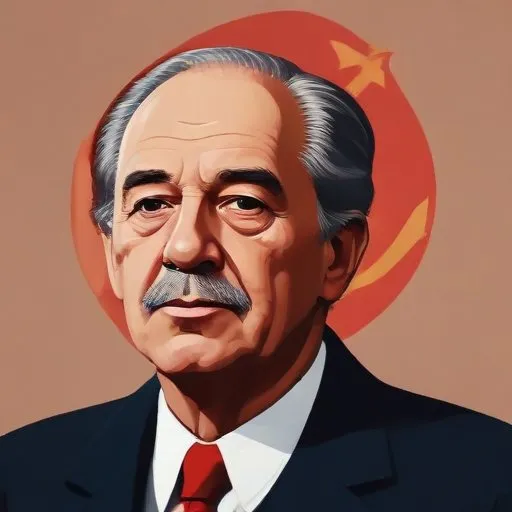
Albert Weisbord: The Tireless Champion of Labor Rights
A Legacy of Union Organization and Trotskyist Activism
Albert Weisbord, an American political activist and union organizer, left an indelible mark on the labor movement of the 20th century. He is best remembered, alongside his wife Vera Buch, as one of the primary union organizers of the seminal 1926 Passaic Textile Strike and as the founder of the Communist League of Struggle, a small but influential Trotskyist political organization of the 1930s.
Early Years and Education
Born on December 9, 1900, to a Russian-Jewish family in New York City, Weisbord's early life was shaped by his exposure to the harsh realities of working-class life. His father, a manufacturer, instilled in him a strong sense of social justice, which would later inform his political activism. Weisbord attended primary, grammar, and high school in Brooklyn, New York, and worked various jobs to support his family, including as a newsboy, clerk, and factory worker.
Weisbord's academic pursuits were marked by excellence, as he entered the City College of New York in 1917 and joined the Brooklyn Branch of the Socialist Party of America. He began teaching English to immigrants at the Rand School of Social Science, an adult educational offshoot of the Socialist Party, while still attending school. Weisbord graduated with a bachelor's degree from City College, Phi Beta Kappa, in 1921, and went on to graduate with honors from Harvard Law School in 1924.
A Career of Labor Activism
Weisbord's political career was marked by his involvement with various organizations, including the Industrial Workers of the World (IWW) and the Socialist Party of America (SPA). He was a vocal advocate for labor rights and played a crucial role in organizing the Passaic Textile Strike of 1926, which brought attention to the deplorable working conditions faced by textile workers.
In the 1930s, Weisbord founded the Communist League of Struggle, a Trotskyist organization that sought to promote revolutionary socialism. Throughout his life, Weisbord remained committed to the principles of social justice and workers' rights, earning him a reputation as a tireless champion of labor activism.
Personal Milestones and Key Life Events
- Weisbord's marriage to Vera Buch, a fellow activist, was a partnership that lasted a lifetime and fostered a deep commitment to social justice.
- In 1921, he embarked on a speaking tour to reorganize the Young People's Socialist League, which had splintered from the Socialist Party.
- Weisbord's involvement in the Passaic Textile Strike of 1926 brought him national attention and solidified his reputation as a labor leader.
Philosophical Contributions and Beliefs
Weisbord's political philosophy was shaped by his commitment to socialism and his critique of capitalism. He believed in the power of collective action and the importance of worker self-organization. Through his work with the Communist League of Struggle, Weisbord promoted a vision of revolutionary socialism that aimed to empower workers and challenge the dominant capitalist order.
Influence on Modern Society
Weisbord's legacy extends beyond the labor movement, influencing modern social and political thought. His commitment to social justice and workers' rights has inspired generations of activists, from the Civil Rights Movement to contemporary labor organizers. His work serves as a testament to the power of collective action and the importance of challenging unjust systems.
Legacy and Historical Context
Albert Weisbord's life and work offer a unique window into the tumultuous landscape of early 20th-century American politics. His commitment to socialism and labor activism reflects the broader currents of social change that shaped the era. As a champion of workers' rights and a vocal critic of capitalism, Weisbord's legacy continues to inspire and inform contemporary social and political movements.
FAQ
What was Albert Weisbords role in the Communist League of Struggle?
Albert Weisbord was a founding member and leader of the Communist League of Struggle, a Marxist-Leninist organization in the United States. He played a key role in shaping the groups ideology and strategy during the 1920s and 1930s.
How did Albert Weisbords views on communism evolve over time?
Albert Weisbords views on communism underwent significant changes over time, reflecting his experiences with the Communist Party USA and his later involvement with the Trotskyist movement. He became increasingly critical of Stalinism and advocated for a more democratic, participatory approach to socialism.
What was Albert Weisbords relationship like with other American communists?
Albert Weisbord was part of a network of American communists, including figures like James Cannon and Max Shachtman. His relationships with these individuals were often complex and fraught, reflecting the factional struggles and ideological debates within the American left during this period.
How did Albert Weisbord contribute to the development of American Trotskyism?
Albert Weisbord was an important figure in the development of American Trotskyism, helping to popularize Leon Trotskys ideas and critiques of Stalinism. His writings and activism helped to shape the trajectory of the Trotskyist movement in the United States.
What is Albert Weisbords legacy in the history of American radicalism?
Albert Weisbords legacy in the history of American radicalism is that of a committed activist and thinker who challenged the dominant ideologies of his time. His contributions to the development of American Trotskyism and his critiques of Stalinism remain important parts of the American lefts intellectual and political heritage.