


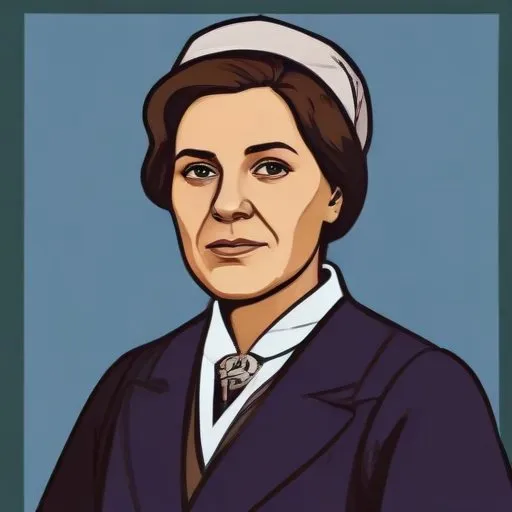
Pioneering female physician and women's rights advocate who fought for women's suffrage and access to education and birth control, paving the way for future generations of women.
Aletta Jacobs, a trailblazing Dutch physician and women's suffrage activist, made history as the first woman to officially attend a Dutch university and later, one of the first female physicians in the Netherlands. She founded the world's first birth control clinic in 1882, solidifying her position as a leader in both the Dutch and international women's movements.
Born on February 9, 1854, in Sappemeer, Netherlands, Aletta Jacobs was inspired by her father, a doctor, and yearned to follow in his footsteps. Despite the existing barriers, she fought to gain entry to higher education and graduated in 1879 with the first doctorate in medicine earned by a woman in the Netherlands.
As a physician, Jacobs provided medical services to women and children, growing concerned over the health of working women. She recognized that laws did not provide adequate protection for their health, compromising their economic stability. In response, she opened a free clinic to educate poor women about hygiene and child care.
In 1882, she expanded her services to include distribution of contraception information and devices, establishing the world's first birth control clinic. This groundbreaking initiative aimed to empower women to take control of their reproductive health and well-being.
From 1883, Jacobs strove to change laws that limited women's access to equality. She challenged the authorities on women's right to vote, advocating for mandatory break laws in retail workers' employment. Her tireless efforts culminated in the attainment of the vote for Dutch women in 1919.
Jacobs was instrumental in the establishment of the Women's International League for Peace and Freedom, an organization dedicated to promoting peace and challenging patriarchal structures. She traveled extensively, documenting the socioeconomic and political status of women worldwide and speaking out about women's issues.
Aletta Jacobs' remarkable life and work have left an indelible mark on modern society. Her pioneering spirit, medical expertise, and unwavering commitment to women's rights have inspired generations of women. Her legacy continues to shape the world, advocating for reproductive rights, equal pay, and social justice.
"The most important thing in life is to stop saying 'I wish' and start saying 'I will.'" - Aletta Jacobs
| 1854 | Born in Sappemeer, Netherlands |
| 1879 | Graduated with first doctorate in medicine earned by a woman in the Netherlands |
| 1882 | Founded the world's first birth control clinic |
| 1883 | Challenged authorities on women's right to vote |
| 1919 | Dutch women gained the right to vote |
| 1929 | Passed away on August 10th |
Aletta Jacobs' courageous spirit, unwavering dedication, and groundbreaking achievements have cemented her place in history as a champion of women's rights and reproductive justice.
Born in 1857
A pioneering Marxist theorist and women's rights activist who played a key role in shaping socialist and feminist movements in early 20th-century Europe.
Born in 1871
A pioneering Marxist theorist and activist who advocated for workers' rights and criticized capitalism, known for her radical ideas on revolution and democracy.
Born in 1858
A leading figure in the British suffragette movement, fighting for women's right to vote through militant tactics and public demonstrations. Her activism led to significant social and political change.
Born in 1880
Co-founder of the Women's Social and Political Union, a leading figure in the UK suffragette movement, fighting for women's right to vote. She played a crucial role in organizing protests, demonstrations, and hunger strikes to achieve this goal.
Born in 1882
A pioneering figure in the fight for women's right to vote, leading protests, hunger strikes, and advocating for workers' rights and socialism. Her artwork also helped raise awareness for the suffrage movement.
Born in 1860
Pioneering feminist writer and social reformer who penned the iconic short story "The Yellow Wallpaper," a powerful critique of patriarchal society and the oppression of women.
Born in 1815
Pioneering women's rights activist who led the women's suffrage movement, fighting for women's right to vote and own property.
Born in 1820
Pioneering figure in the women's suffrage movement, fighting for women's right to vote and own property. Her tireless efforts led to significant advancements in women's rights.
