


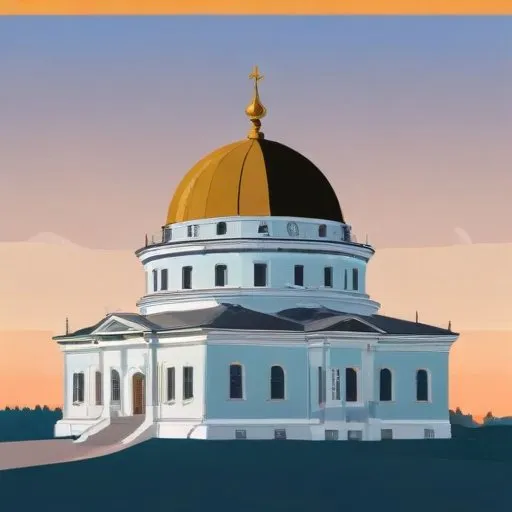
A Russian painter and architect who designed the Pulkovo Observatory, a prominent astronomical research institution in Russia. He's most known for his stunning watercolor landscapes and architectural designs.
Alexander Pavlovich Brullov was a renowned Russian artist and architect, celebrated for his exceptional contributions to Russian Neoclassicism. He is best known for designing some of Russia's most iconic landmarks, including the Mikhailovsky Theatre, Lutheran Church of Saint Peter and Saint Paul, and the Pulkovo Observatory.
Born on November 29, 1798, in Saint Petersburg, Alexander Brullov came from a family of French artists. His great-grandfather, grandfather, father, and brothers were all artists, and his first teacher was his father, Paul. He attended the Imperial Academy of Arts, where he studied architecture and graduated with honors in 1820.
With a stipend from the Society for the Promotion of Artists, Brullov embarked on an eight-year sojourn to Europe, visiting Italy, Germany, and France from 1822 to 1830. During this period, he refined his skills in architecture and art, producing numerous watercolor portraits, including those of prominent figures like Yekaterina Pavlovna Bakunina, John Capodistria, and Natalya Goncharova Pushkina, wife of the Russian poet Alexander Pushkin.
Upon his return to Russia, Brullov was appointed professor at the Imperial Academy of Arts, marking the beginning of his most productive period. He designed and supervised the construction of several iconic buildings in Saint Petersburg, including:
In addition to these projects, Brullov played a significant role in the reconstruction of the Winter Palace after the fire of 1837, designing striking interiors like the Pompei Hall, the Malachite Room, and the White Hall. He also built the Orenburg Caravanserai in Orenburg in 1844.
Alexander Brullov's contributions to Russian architecture and art have left an indelible mark on the country's cultural heritage. His designs continue to inspire generations of architects and artists, and his iconic landmarks remain popular tourist attractions. Brullov's legacy is a testament to his vision, creativity, and dedication to his craft.
Brullov's son, Pavel, followed in his footsteps, becoming a painter of some note. The Brullov family's artistic traditions continued through generations, solidifying their position as one of the most influential artistic families in Russian history.
Alexander Brullov passed away on January 9, 1877, leaving behind a rich cultural legacy that continues to inspire and enrich the lives of people around the world.
Born in 1799
A Russian Romantic painter who created vibrant, emotive works that captured the essence of everyday life and mythology, earning him the title "the founder of the Romantic movement in Russia".
28 Years Old
Russian tennis player who won Olympic gold and holds multiple ATP titles, known for his powerful serve and dominant playing style.
Born in 1757
A prominent Ukrainian-Russian painter of the late 18th and early 19th centuries, known for his elegant and intimate portraits of Russian aristocracy. His works are celebrated for their subtlety and emotional depth.
Born in 1737
A Russian painter and academic who created influential works of art that blended traditional Russian styles with Western European techniques, and taught at the Imperial Academy of Arts.
Born in 1782
A Russian-Italian painter celebrated for his emotive and psychologically complex portraits that captured the essence of his subjects, often blending realism with romanticism.
