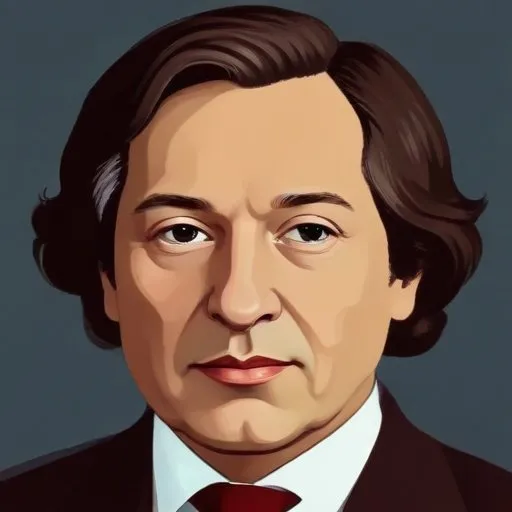
Alexander Gelfond: The Mathematical Genius Behind the Gelfond-Schneider Theorem
A Legacy in Number Theory
Alexander Gelfond, a renowned Soviet mathematician, is best known for his groundbreaking theorem that resolved the 7th Hilbert problem, a challenge that had puzzled mathematicians for decades. Gelfond's work on transcendental numbers, which culminated in the Gelfond-Schneider theorem, has had a profound impact on number theory, cementing his place among the greatest mathematicians of the 20th century.
Early Life and Education
Born on October 24, 1906, in Saint Petersburg, Russian Empire, Gelfond was the son of a professional physician and amateur philosopher, Osip Gelfond. This eclectic upbringing instilled in him a passion for mathematics and philosophy, which would later influence his work. Gelfond's academic journey began at Moscow State University, where he earned his Ph.D. in 1930 under the guidance of
Aleksandr Khinchin and Vyacheslav Stepanov.
The Gelfond-Schneider Theorem
Gelfond's most significant contribution to mathematics is his eponymous theorem, which states that if a and b are algebraic numbers with a ≠ 0 and a ≠ 1, and if a is not a real rational number, then any value of ab is a transcendental number. This theorem, independently proved by Theodor Schneider, has far-reaching implications for number theory and has been instrumental in solving various mathematical problems.
Academic Career and Honors
Gelfond's academic career was marked by numerous achievements and honors. He became a Professor at Moscow State University in 1931 and worked at the Steklov Institute of Mathematics from 1933. In 1939, he was elected a Corresponding member of the Academy of Sciences of the Soviet Union for his contributions to cryptography. Throughout his career, Gelfond worked alongside prominent mathematicians, including Edmund Landau,
Carl Ludwig Siegel, and David Hilbert.
Personal Life and Legacy
Gelfond's personal life remains somewhat of an enigma, but his professional legacy is undeniable. According to
Vladimir Arnold, Gelfond served as the Chief Cryptographer of the Soviet Navy during World War II. Despite his significant contributions, Gelfond remained humble and devoted to his work. He continued to teach and research at Moscow State University until his passing on November 7, 1968.
Impact on Modern Mathematics
Gelfond's work has had a profound impact on modern mathematics, influencing fields such as number theory, algebraic geometry, and cryptography. His theorem has been used to solve various mathematical problems, and its applications continue to grow. The Gelfond-Schneider theorem remains a cornerstone of number theory, and its significance is a testament to Gelfond's genius and dedication to his craft.
Quotes and Memorabilia
"I do not know what I seem to the world; as for myself, I seem to be only a boy playing on the seashore, diverting myself now and then finding a smoother pebble or a prettier shell than ordinary, while the great ocean of truth lies undiscovered before me." - Gelfond, reflecting on his own humility and the vastness of mathematical knowledge.
In conclusion, Alexander Gelfond's legacy is a testament to the power of human ingenuity and dedication. His work continues to inspire mathematicians and scientists, and his theorem remains a beacon of innovation in the world of number theory.
Timeline of Key Events
- 1906: Alexander Gelfond born on October 24 in Saint Petersburg, Russian Empire.
- 1924: Gelfond enters Moscow State University.
- 1927: Begins postgraduate studies under Aleksandr Khinchin and Vyacheslav Stepanov.
- 1929: Proposes the Gelfond conjecture and proves a special case of the theorem.
- 1930: Earns Ph.D. and begins working with Edmund Landau, Carl Ludwig Siegel, and David Hilbert in Germany.
- 1931: Becomes a Professor at Moscow State University.
- 1933: Begins working at the Steklov Institute of Mathematics.
- 1934: Fully proves the Gelfond-Schneider theorem.
- 1939: Elected a Corresponding member of the Academy of Sciences of the Soviet Union for contributions to cryptography.
- 1966: Alan Baker proves the Gelfond conjecture.
- 1968: Gelfond passes away on November 7.
FAQ
What are Alexander Gelfonds contributions to cryptography?
Alexander Gelfond made significant contributions to cryptography, including the development of the Gelfond-Leontiev symmetric cipher, which was used in the Soviet Union. He also worked on cryptographic systems and algorithms, and his work remains influential in the field of cryptography.
What is Alexander Gelfonds most notable work in mathematics?
Alexander Gelfonds most notable work in mathematics is the proof of the transcendence of 2^√2, which is a fundamental result in number theory. This work earned him the Stalin Prize in 1946.
How did Alexander Gelfonds work impact the Soviet cryptosystem?
Alexander Gelfonds work on cryptography had a significant impact on the Soviet cryptosystem. His developments in symmetric ciphers and cryptographic algorithms improved the security of Soviet communication systems, which were critical during World War II and the Cold War.
What was Alexander Gelfonds role in the Soviet Academy of Sciences?
Alexander Gelfond was a member of the Soviet Academy of Sciences and played a key role in the development of cryptography and coding theory in the Soviet Union. He was also a professor at Moscow State University and supervised many students who went on to become prominent cryptographers.
What awards did Alexander Gelfond receive for his contributions to mathematics and cryptography?
Alexander Gelfond received several awards for his contributions to mathematics and cryptography, including the Stalin Prize, the Lenin Prize, and the USSR State Prize. He was also awarded the title of Hero of Socialist Labor in 1975.