


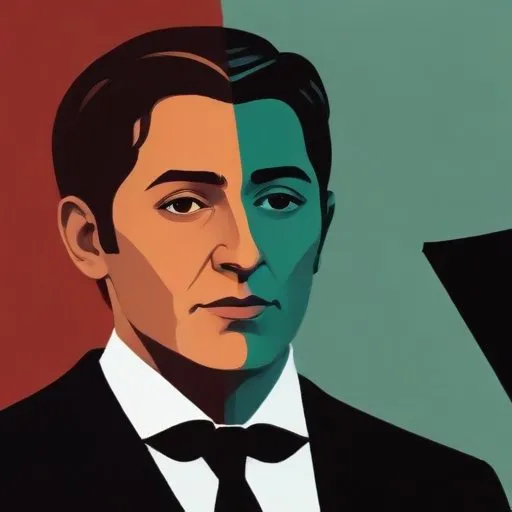
A Russian pianist and composer who wrote operas, symphonies, and chamber music, particularly famous for his Piano Concerto in B-flat major, Op. 18.
Alexander Fyodorovich Goedicke was a renowned Russian and Soviet composer and pianist, celebrated for his remarkable contributions to the world of music, despite lacking formal training in composition. His talent and dedication earned him the prestigious Anton Rubinstein Prize for Composition at the tender age of 23, setting the tone for a lifetime of creative excellence.
Born on March 4, 1877, in Moscow, Russia, Goedicke was blessed with a musical upbringing. His father, Fyodor Goedicke, was a minor composer and pianist, who happened to be the uncle and first teacher of the famous Nikolai Medtner. Alexander's father played a significant role in nurturing his son's musical talents from an early age. Goedicke studied piano at the Moscow Conservatory under the guidance of notable instructors such as Galli, Pavel Pabst, and Vasily Safonov.
Goedicke's compositional prowess was evident in his early works, which earned him recognition and accolades. In 1900, he won the Anton Rubinstein Competition, establishing himself as a force to be reckoned with in the musical world. Throughout his career, he composed a diverse range of works, including operas, symphonies, concertos, and chamber music. His opera, Virineya, written between 1913 and 1915, is considered one of his most notable works.
Goedicke's passion for music extended beyond composition to teaching. He served as a professor at the Moscow Conservatory, where he instilled his knowledge and expertise in future generations of musicians. His legacy is a testament to his dedication to the world of music, leaving behind a rich body of work that continues to inspire and influence musicians today.
Alexander Goedicke lived a fulfilling life, devoted to his craft and family. He passed away on July 9, 1957, at the age of 80, leaving behind a treasure trove of musical masterpieces that continue to captivate audiences worldwide.
Through his remarkable journey, Goedicke proved that with determination and passion, one can overcome even the most daunting challenges, earning him a revered place in the annals of Russian and Soviet musical history.
Born in 1840
A renowned Russian composer and educator, he is best known for his iconic and beloved ballets, such as Swan Lake and The Nutcracker, which continue to enchant audiences worldwide.
Born in 1839
A Russian master of evocative and dramatic music, famous for his vivid orchestral works, including the iconic "Night on Bald Mountain" and "Pictures at an Exhibition".
Born in 1844
A Russian master of orchestration, known for his vibrant and exotic compositions, such as "Scheherazade" and "Flight of the Bumblebee", that evoke fantastical worlds and mythical creatures.
Born in 1804
A Russian composer who is often considered the father of Russian classical music, known for his operas and orchestral works that blended Russian folk melodies with Western classical music traditions.
Born in 1873
A renowned Russian musician who composed iconic symphonies and piano concertos, and was also a skilled pianist and conductor, leaving a lasting legacy in classical music.
Born in 1882
A Russian master of music, renowned for revolutionizing classical music with bold, avant-garde compositions that blended traditional and modern elements. His iconic works, such as "The Rite of Spring," continue to inspire and influence artists across genres.
Born in 1906
A renowned Russian pianist and composer, known for blending classical music with dark humor and satire, creating iconic symphonies and film scores that still resonate today.
Born in 1891
A Russian musical genius who composed iconic works like "Peter and the Wolf" and "Romeo and Juliet," blending classical and modern styles.
