


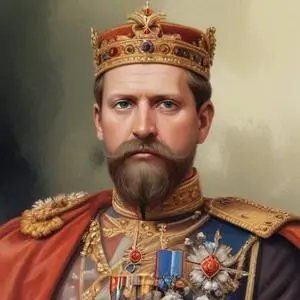
Liberalizing reforms and abolishing serfdom in Russia, earning the nickname "Liberator."
Known as Alexander the Liberator, Alexander II of Russia is celebrated for his groundbreaking reforms, particularly the emancipation of Russia's serfs in 1861, which freed millions of peasants from bondage. This monumental achievement shaped the course of Russian history, earning him a revered place in the annals of time.
Born on April 29, 1818, Alexander II was the eldest son of Nicholas I and Alexandra Feodorovna. He received a comprehensive education, with a strong emphasis on literature, philosophy, and languages. Upon his father's death in 1855, Alexander II ascended to the throne, inheriting a nation on the brink of crisis.
Alexander II's reign was marked by a series of progressive reforms, including:
These reforms transformed Russia, fostering a more equitable society and paving the way for future modernization.
Alexander II's foreign policy was characterized by a commitment to peace and diplomacy. He:
Despite his pacifist stance, Alexander II engaged in a brief war with the Ottoman Empire in 1877-1878, securing the independence of Bulgaria, Montenegro, Romania, and Serbia.
Alexander II's personal life was marked by tragedy, including the death of his eldest son, Nicholas, in 1865, and an assassination attempt in 1866. His later years were marred by a more conservative approach, but his legacy as a champion of reform and liberation remains unwavering.
Alexander II's assassination on March 13, 1881, was a devastating blow to Russia, but his reforms and policies continue to inspire generations. As a champion of freedom, equality, and progress, Alexander II's impact on Russian history is immeasurable.
Alexander II's remarkable life and reign continue to captivate historians and enthusiasts alike, serving as a testament to the power of visionary leadership and unwavering commitment to progress.
Born in 1729
Empress of Russia from 1762 to 1796, she transformed her country into a major European power, modernizing its culture, politics, and economy through numerous reforms and conquests.
Born in 1672
Reformed Russia's government, military, and culture, transforming it into a major European power. Known for modernizing and westernizing the country through numerous reforms and founding St. Petersburg.
Born in 1868
The last emperor of Russia, ruling from 1894 to 1917, known for his poor leadership and decisions that led to the downfall of the Romanov dynasty and the rise of communism.
Born in 1818
Liberalizing reforms and abolishing serfdom in Russia, earning the nickname "Liberator."
Born in 1828
A Russian literary giant who penned sweeping novels like "War and Peace" and "Anna Karenina", exploring the human condition with profound insight and masterful storytelling.
Born in 1821
A Russian literary mastermind who penned psychologically complex novels that probed the human condition, exploring themes of morality, philosophy, and the darker aspects of human nature.
Born in 1870
Founder of the world's first socialist state, leading the Bolshevik Revolution and establishing the Soviet Union, known for his radical Marxist ideology and authoritarian rule.
Born in 1878
The Soviet Union's ruthless leader who ruled with an iron fist, implementing policies that led to widespread famine and purges, while also playing a crucial role in defeating Nazi Germany in World War II.
