


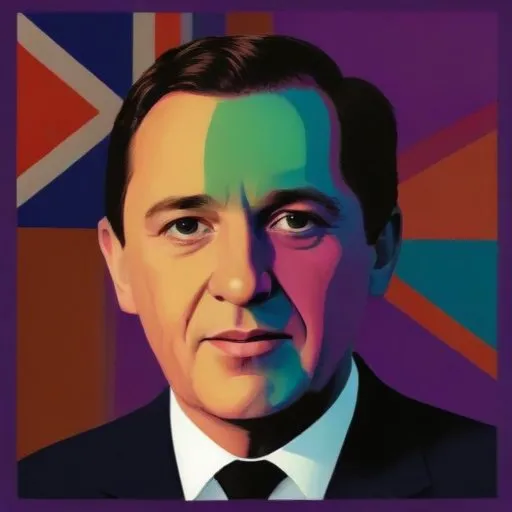
The 26th Premier of New South Wales, serving from 1916 to 1920, known for his role in shaping the state's economy and infrastructure during World War I. He implemented various reforms, including the introduction of compulsory military training.
Alexander Mair, the 29th Premier of New South Wales, is remembered for his remarkable leadership during the tumultuous period of World War II, and his tireless efforts to unify the fractured United Australia Party government. From August 1939 to May 1941, Mair's premiership was marked by his steely determination to stabilize the state's finances, implement crucial labour reforms, and mobilize the war effort.
Born on August 25, 1889, in Melbourne, Victoria, Mair's early life was shaped by his entrepreneurial spirit. He worked in various businesses before moving to Albury, New South Wales, where he would eventually make a name for himself in politics.
In 1932, Mair entered the New South Wales Legislative Assembly, representing the seat of Albury, and was re-elected a further four times. His swift rise through the cabinet of Bertram Stevens' United Australia Party government began in April 1938, when he became Assistant Minister. He soon assumed the roles of Minister for Labour and Industry in June, and Colonial Treasurer in October.
Following Stevens' defeat in a no-confidence motion, Mair succeeded him as Premier in August 1939. This marked a new chapter in the state's history, as Mair set out to address the government's precarious financial situation, inherited from his predecessor.
Through a combination of fiscal discipline, increased taxes, and innovative labour laws, Mair successfully reduced unemployment and brought stability to the state's finances. His leadership was instrumental in uniting the fractured United Australia Party, which was critical to navigating the challenges of wartime governance.
In September 1939, World War II broke out, and Mair mobilized the state towards the war effort. Despite his best efforts, he struggled to communicate his vision to the voters, which ultimately contributed to his defeat in the May 1941 election. The Labor Party, led by William McKell, won 20 seats, marking the end of Mair's premiership.
Remaining as Opposition Leader, Mair played a pivotal role in the formation of the Democratic Party and later, the Liberal Party, in 1945. Following the death of Reginald Weaver, Mair became the leader of the Liberal Party in New South Wales, a position he held until March 1946, when he resigned to contest the Australian Senate.
Although unsuccessful in his bid for the Senate, Mair's legacy as a unifying force in New South Wales politics remains unparalleled. He passed away on August 3, 1969, at the age of 79, leaving behind a testament to his unwavering dedication to public service.
Alexander Mair's remarkable political career serves as a testament to his vision, resilience, and commitment to the people of New South Wales. His leadership during one of the most turbulent periods in Australian history continues to inspire and influence generations of politicians and public servants.
Born in 1815
A pioneering figure in Australian politics, instrumental in shaping the country's federation and unity, known for his tireless advocacy for a unified Australia.
62 Years Old
American basketball player who won an Olympic gold medal in 1988 and played professionally in the NBA and overseas. Known for his dominant college career at Memphis State University.
62 Years Old
South Korean-American football player who played as a midfielder for the South Korea national team and various clubs, including the LA Galaxy. He's known for his speed and agility on the field.
Born in 1845
The 4th Prime Minister of Australia, a Scottish-Australian lawyer and politician who served from 1904 to 1905, known for his role in shaping the country's early years and contributing to its growth.
Born in 1844
The 13th Premier of New South Wales, a prominent figure in Australian politics, served from 1899 to 1901 and implemented significant reforms in education and labor laws. He's remembered for his progressive policies and commitment to social justice.
Born in 1855
The 18th Premier of New South Wales, a pioneering Australian politician who played a crucial role in shaping the country's early 20th-century politics and infrastructure development. He's most known for his progressive reforms and nation-building initiatives.
Born in 1871
The 19th Premier of New South Wales, a key figure in Australian politics, known for his contributions to the country's development during the late 19th century. He played a significant role in shaping the state's infrastructure and economy.
Born in 1869
The 20th Premier of New South Wales, serving from 1920 to 1921, known for his brief but significant tenure during a time of post-war reconstruction and industrial unrest.
