


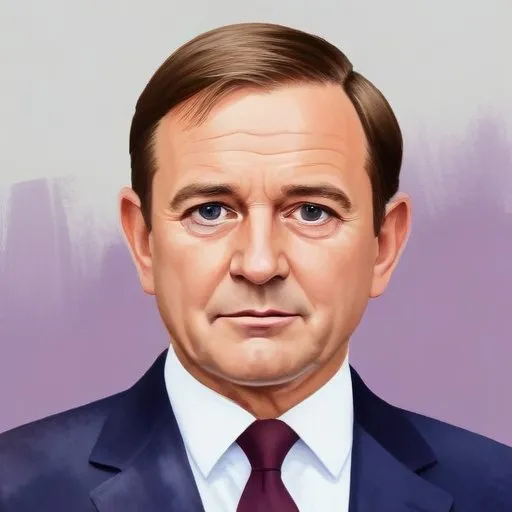
The 18th Premier of New South Wales, a pioneering Australian politician who played a crucial role in shaping the country's early 20th-century politics and infrastructure development. He's most known for his progressive reforms and nation-building initiatives.
James McGowen is remembered as a pioneering figure in Australian politics, earning the distinction of being the first Labor Party member to serve as Premier of New South Wales from 1910 to 1913. During his tenure, he implemented a range of progressive reforms that left a lasting impact on the state.
McGowen was born on August 16, 1855, to English immigrants James McGowen and Eliza Ditchfield while they were en route to Melbourne. His father, a boilermaker, later settled in New South Wales, where McGowen would grow up and begin his own career as a boilermaker.
McGowen's early life was marked by limited schooling, but he went on to become an apprentice boilermaker in 1870. He quickly rose through the ranks, becoming secretary of the United Society of Boilermakers and Iron Shipbuilders of New South Wales in 1874. In 1888, he took on the role of president of the Sydney Trades Hall committee, where he worked tirelessly to raise funds for the construction of the Trades Hall in Sydney.
McGowen's involvement in the labor movement led him to be elected as a member of the New South Wales Legislative Assembly in 1891, representing the Labor Electoral League. He quickly established himself as a leader, becoming party leader in 1894 and retaining the position following Australia's federation in 1901.
In 1904, McGowen became leader of the opposition, and it was during this period that he laid the groundwork for the Labor Party's future electoral successes. In 1910, he led the party to a majority government, becoming the first Labor Premier of New South Wales.
During his premiership, McGowen oversaw a range of significant reforms, including the establishment of the New South Wales Arbitration Court, the introduction of workers' compensation, and the creation of the Rural Bank of New South Wales.
McGowen's leadership and commitment to the labor movement earned him a revered place in Australian political history. Despite being expelled from the Labor Party in 1916 due to disagreements over conscription, he continued to serve in politics, eventually becoming a Nationalist appointee to the New South Wales Legislative Council.
In 1878, McGowen married Emily Towner, with whom he had a long and happy marriage. Throughout his life, McGowen remained committed to his family and the labor movement, leaving behind a legacy that continues to inspire generations of Australian politicians and activists.
Today, McGowen is remembered as a pioneering figure in Australian politics, a leader who fought tirelessly for the rights of workers and the principles of social justice. His contributions to the development of New South Wales and the broader Australian labor movement remain an integral part of the country's history and identity.
Born in 1860
The 6th Prime Minister of Australia, a key figure in the country's early 20th-century politics, known for his role in shaping Australia's economy and foreign policy. He played a crucial part in Australia's transition from a British colony to an independent nation.
Born in 1871
The 19th Premier of New South Wales, a key figure in Australian politics, known for his contributions to the country's development during the late 19th century. He played a significant role in shaping the state's infrastructure and economy.
Born in 1869
The 20th Premier of New South Wales, serving from 1920 to 1921, known for his brief but significant tenure during a time of post-war reconstruction and industrial unrest.
62 Years Old
South Korean-American football player who played as a midfielder for the South Korea national team and various clubs, including the LA Galaxy. He's known for his speed and agility on the field.
Born in 1854
This Irish-Australian politician served as the 15th Premier of New South Wales, playing a significant role in shaping the state's development and governance. He's most known for his contributions to education and infrastructure reforms.
Born in 1877
The 21st Premier of New South Wales, a pioneering figure in Australian politics, who played a crucial role in shaping the country's early development and infrastructure. He's most known for his progressive reforms and nation-building initiatives.
Born in 1845
The 4th Prime Minister of Australia, a Scottish-Australian lawyer and politician who served from 1904 to 1905, known for his role in shaping the country's early years and contributing to its growth.
