


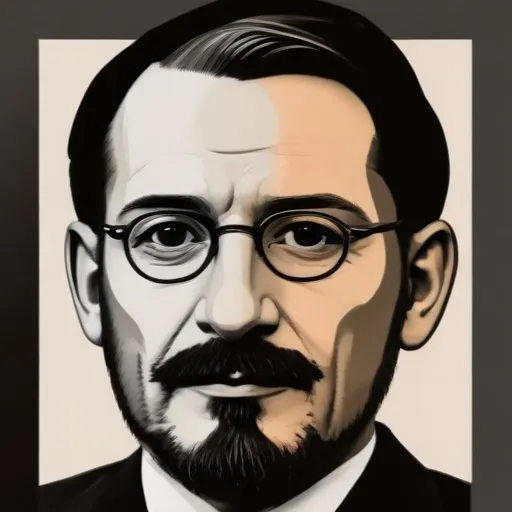
A German chemist who discovered the concept of isomerism, which revolutionized organic chemistry, and was a pioneer in the field of agricultural chemistry.
Alexander Mitscherlich was a renowned German chemist who made significant contributions to the fields of cellulose and agronomy. He is best known for patenting an early version of the sulfite process in 1882, which revolutionized the processing of wood to create cellulose.
Mitscherlich was born on May 28, 1836, in Berlin, Germany, to Eilhard Mitscherlich, a notable chemist in his own right. He pursued his higher education at the University of Göttingen, where he became a member of the Burschenschaft Hannovera fraternity.
Mitscherlich's most notable work was in the field of wood processing, where he developed an early version of the sulfite process. This groundbreaking innovation allowed for the efficient production of cellulose, a critical component in various industries, including paper, textiles, and construction.
In addition to his work on cellulose, Mitscherlich made significant contributions to the field of agronomy. In 1909, he published a seminal work on crop yields, which introduced the concept of the "Law of Physiological Relations." This idea posits that crop yields are determined by the minimum amount of plant nutrients available, a concept that would later become known as the "Law of the Minimum."
Mitscherlich's work was deeply rooted in his understanding of the natural world and the interconnectedness of living systems. He believed that a deep appreciation for the intricate relationships between organisms and their environments was essential for developing sustainable and efficient agricultural practices.
Mitscherlich's pioneering work in cellulose and agronomy has had a lasting impact on various industries and aspects of modern society. His innovations in wood processing have enabled the mass production of paper, textiles, and construction materials, while his contributions to agronomy have informed sustainable agricultural practices and crop management strategies.
While Mitscherlich's quotes are not well-documented, his work speaks to his passion for understanding the natural world and his commitment to developing sustainable solutions for the benefit of humanity.
Mitscherlich's work took place during a time of rapid industrialization and growth, and his innovations played a significant role in shaping the development of various industries. His legacy continues to inspire new generations of scientists and researchers, who are working to address the complex environmental and sustainability challenges of the 21st century.
Mitscherlich's work can be compared to that of other prominent scientists of his time, such as Justus von Liebig, who is credited with developing the "Law of the Minimum." Mitscherlich's contributions built upon Liebig's work, expanding our understanding of the intricate relationships between soil, plants, and nutrients.
While little is known about Mitscherlich's personal relationships, his work and legacy have been celebrated by scholars and researchers across the globe. His pioneering spirit and commitment to advancing our understanding of the natural world continue to inspire new generations of scientists and thinkers.
Mitscherlich's work has had a profound impact on the fields of cellulose, agronomy, and environmental science. His innovations have enabled the development of sustainable agricultural practices, efficient wood processing, and innovative materials production.
Alexander Mitscherlich's remarkable contributions to science and society continue to inspire and influence new generations of thinkers and innovators. His legacy serves as a testament to the power of human ingenuity and the importance of interdisciplinary approaches to addressing complex environmental challenges.
Alexander Mitscherlich's remarkable story serves as a testament to the power of human ingenuity and the importance of interdisciplinary approaches to addressing complex environmental challenges. His legacy continues to inspire new generations of thinkers and innovators, and his work remains a cornerstone of sustainable development and environmental stewardship.
Born in 1803
Developed groundbreaking theories on organic chemistry and agriculture, revolutionizing farming practices and earning the title "Father of Fertilizers".
Born in 1800
German chemist and academic who synthesized urea, debunking the theory of vitalism, and made significant contributions to organic chemistry. He is considered one of the founders of modern organic chemistry.
Born in 1818
Developed the theory of chemical structure and introduced the concept of synthetic chemistry, revolutionizing the field of organic chemistry.
Born in 1835
German chemist and Nobel laureate who synthesized barbituric acid and developed the theory of organic dyes, revolutionizing the textile industry. His work laid the foundation for modern dye chemistry.
Born in 1847
A German chemist and academic who pioneered the field of alicyclic compounds and was awarded the Nobel Prize in Chemistry in 1910 for his work on alkaloids. He discovered and characterized many new compounds, significantly advancing the field of organic chemistry.
Born in 1872
A German-Swiss chemist and academic who discovered the structure of chlorophyll, the green pigment in plants, and was awarded the Nobel Prize in Chemistry in 1915. His work laid the foundation for modern plant biochemistry.
Born in 1881
Organic chemist and Nobel laureate who synthesized hemin and chlorophyll, leading to a deeper understanding of biological pigments. His work has far-reaching implications for fields like medicine and agriculture.
Born in 1898
Developed groundbreaking catalysts that revolutionized the production of plastics and led to the creation of new materials, earning a Nobel Prize in Chemistry.
