


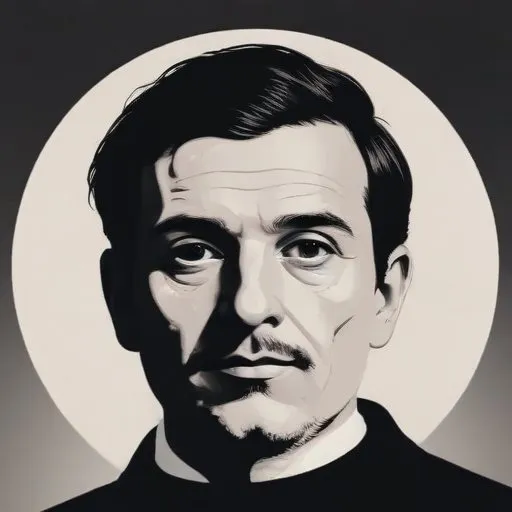
French astronomer and academic who calculated the orbit of Uranus and discovered the existence of Neptune, making significant contributions to celestial mechanics.
Alexis Bouvard, a French astronomer, is renowned for his meticulous observations of the irregularities in Uranus' motion and his audacious hypothesis of an eighth planet in the Solar System. His groundbreaking work laid the foundation for the subsequent discovery of Neptune, cementing his status as a trailblazer in the field of astronomy.
Born on June 27, 1767, in Contamines, Duchy of Savoy, Bouvard's fascination with the celestial realm led him to pursue a career in astronomy. He joined the Paris Observatory as a student astronomer in 1793, where he worked under the tutelage of the illustrious Pierre-Simon Laplace.
Bouvard's illustrious career was marked by the discovery of eight comets and the compilation of astronomical tables for Jupiter, Saturn, and Uranus. Although his tables for Jupiter and Saturn were highly accurate, those for Uranus revealed substantial discrepancies with subsequent observations. These inconsistencies led Bouvard to hypothesize the existence of an eighth planet, which he believed was responsible for the irregularities in Uranus' orbit.
Bouvard's contributions to astronomy earned him numerous honors, including membership in the Académie des sciences (1803), fellowship in the Royal Society (1826), and honorary fellowship in the Royal Society of Edinburgh (1828). His legacy extends beyond the scientific community, with a cape in Western Australia, Cape Bouvard, named in his honor. The suburb of Bouvard and the residential development of Port Bouvard, both located in Mandurah, Western Australia, also bear his name.
Throughout his life, Bouvard demonstrated unwavering dedication to his craft, driven by an insatiable curiosity and a passion for discovery. His work, although sometimes marked by controversy and skepticism, paved the way for future astronomers to build upon. Bouvard's remarkable journey serves as a testament to the power of human ingenuity and the boundless wonders of the universe.
Although Bouvard's quotes are scarce, his work speaks volumes about his dedication to the pursuit of celestial knowledge. His legacy continues to inspire generations of astronomers, and his name remains etched in the annals of astronomical history.
Alexis Bouvard's remarkable journey serves as a beacon, illuminating the vast expanse of the universe and inspiring future generations to explore the unknown.
Born in 1811
Predicted the existence and location of Neptune, a previously unknown planet, through mathematical calculations, revolutionizing astronomy.
Born in 1777
A pioneer in mathematics and physics, he made major contributions to number theory, algebra, and electromagnetism, shaping our understanding of the natural world.
Born in 1854
A pioneer in mathematics and physics, he laid the foundations for modern chaos theory, topology, and relativity, making groundbreaking contributions to our understanding of space and time.
Born in 1749
Developed nebular hypothesis of the origin of the solar system and formulated Laplace's equation, a fundamental concept in mathematics and physics. He's considered the founder of celestial mechanics.
Born in 1796
A pioneer in statistics and social physics, he applied mathematical models to understand social phenomena, paving the way for modern sociology and data analysis.
Born in 1784
Developed the Bessel functions, a set of mathematical equations crucial for astronomy, navigation, and engineering, and made the first accurate measurement of a star's distance from Earth.
