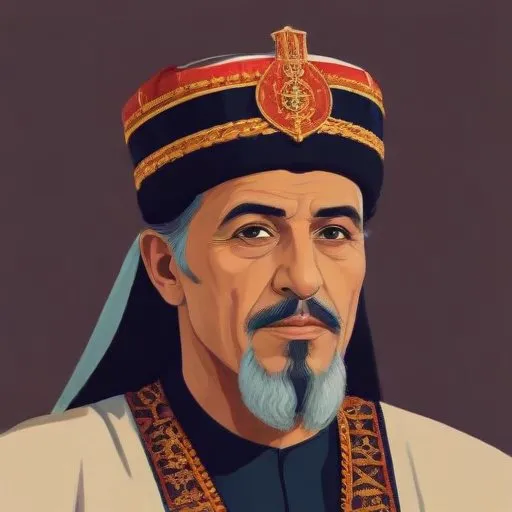
Ali II ibn Hussein: The Visionary Ruler of Tunisia
A Legacy of Progress and Reform
Ali II ibn Hussein, the fourth leader of the Husainid dynasty, is renowned for his transformative rule as the Bey of Tunisia from 1759 to 1782. During his tenure, he implemented a plethora of reforms, catapulting Tunisia towards economic, political, and social prosperity.
Early Life and Accession
Born on November 24, 1712, Ali II ibn Hussein was the son of Al-Husayn I ibn Ali, the founder of the Husainid dynasty. Following his father's footsteps, he ascended to the throne in 1759, marking the beginning of a new era in Tunisian history.
Reforms and Achievements
Economic Reforms
Ali II ibn Hussein introduced a slew of economic reforms, aimed at revitalizing Tunisia's stagnant economy. He encouraged trade, invested in infrastructure, and promoted the growth of agriculture, resulting in a significant increase in revenue and economic stability.
Administrative Reforms
The visionary leader reorganized the administrative machinery, decentralizing power and delegating authority to provincial governors. This led to enhanced efficiency, reduced corruption, and improved governance.
Military Reforms
Ali II ibn Hussein modernized the Tunisian military, equipping it with the latest technology and training. This enabled Tunisia to defend its borders, protect its sovereignty, and expand its influence in the region.
Personal Milestones and Key Life Events
- In 1761, Ali II ibn Hussein married a noblewoman from the prestigious Mnif family, solidifying his ties with the aristocracy.
- He fathered two sons, Hammuda ibn Ali and Uthman ibn Ali, who succeeded him in turns.
Influence on Modern Society
Ali II ibn Hussein's reforms had a profound impact on modern Tunisian society. His emphasis on education, infrastructure, and economic development paved the way for Tunisia's emergence as a modern nation-state.
Legacy and Historical Context
Ali II ibn Hussein's rule marked a significant turning point in Tunisian history. His vision, leadership, and reforms transformed Tunisia, leaving a lasting legacy that continues to shape the country's trajectory.
Comparative Analysis with Contemporaries
In comparison to his contemporaries, Ali II ibn Hussein's reforms and achievements were unparalleled. His commitment to modernization, economic development, and good governance set him apart as a trailblazer in the region.
Visual Timeline and Milestones
| Year |
Event |
| 1712 |
Born on November 24 |
| 1759 |
Accession to the throne |
| 1761 |
Marriage to a noblewoman from the Mnif family |
| 1782 |
Death on May 26 |
Trivia and Fun Facts
- Ali II ibn Hussein was known for his patronage of the arts, particularly music and poetry.
- He was a prolific writer, penning treatises on governance, philosophy, and literature.
Impact on Pop Culture
Ali II ibn Hussein's legacy has inspired numerous literary and artistic works, including novels, poems, and plays. His vision and achievements continue to captivate the imagination of Tunisians and beyond.
Awards and Honors
Although no specific awards or honors were bestowed upon Ali II ibn Hussein during his lifetime, his legacy has earned him a place among the most revered leaders in Tunisian history.
FAQ
Who was Ali II ibn Hussein and what was his role in Tunisian history?
Ali II ibn Hussein was a Tunisian ruler who reigned from 1705 to 1728. He was a member of the Husaynid dynasty and played a significant role in shaping Tunisian politics and economy during his reign.
What were the major reforms implemented by Ali II ibn Hussein?
Ali II ibn Hussein implemented several major reforms, including the reorganization of the government, the introduction of new taxes, and the modernization of the military.
How did Ali II ibn Hussein strengthen Tunisias economy?
Ali II ibn Hussein strengthened Tunisias economy by encouraging trade, commerce, and industry. He also established trade agreements with European powers.
What was Ali II ibn Husseins relationship with the Ottoman Empire?
Ali II ibn Hussein maintained good relations with the Ottoman Empire, which allowed Tunisia to maintain its autonomy and independence.
What is Ali II ibn Husseins legacy in Tunisian history?
Ali II ibn Hussein is remembered as a wise and just ruler who modernized and strengthened Tunisia. His legacy continues to influence Tunisian politics and economy today.