


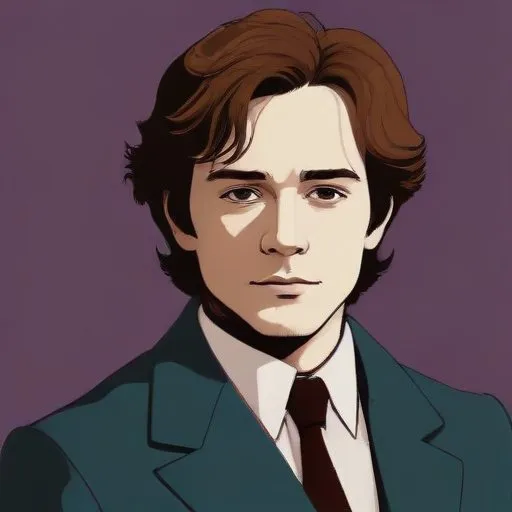
A Scottish poet and writer who explored themes of nature, folklore, and the human condition through his lyrical and accessible verse. He's most known for his Romantic-era poetry and biographies of fellow writers.
Renowned Scottish poet and author, Allan Cunningham, left an indelible mark on the literary world with his captivating imitations of old Scottish ballads and heartfelt lyrics. Born on December 7, 1784, in Keir, near Dalswinton, Dumfries and Galloway, Cunningham's literary prowess was ignited early on, with his father's neighbor being none other than the legendary poet Robert Burns.
Cunningham's early life was marked by his apprenticeship as a stonemason, but it was his leisure time that truly defined him. He devoted himself to reading and writing, crafting imitations of old Scottish ballads that would eventually earn him the admiration of Walter Scott and James Hogg. In 1809, he collected old ballads for Robert Hartley Cromek's Remains of Nithsdale and Galloway Song, inadvertently sparking a controversy that would catapult him into the literary limelight.
In 1810, Cunningham made the bold move to London, where he worked as a parliamentary reporter and journalist until 1814. It was during this period that he forged lasting relationships with prominent figures like Walter Scott and James Hogg, solidifying his position in the literary circle. His next career move would take him to the studio of sculptor Francis Chantrey, where he served as clerk of the works until Chantrey's passing in 1841.
Through his contributions to literature, Allan Cunningham left behind a rich tapestry of words, woven from the very fabric of Scotland's cultural heritage. His passion for preserving and celebrating the nation's history, folklore, and art has inspired generations of writers, poets, and artists. As we reflect on his remarkable life and works, we are reminded of the power of art to transcend time, touching hearts and minds across the ages.
Born in 1759
Celebrated for his poignant and lyrical poetry, he penned iconic works that capture the essence of Scottish culture and identity. His contributions to literature continue to inspire and delight readers worldwide.
97 Years Old
Veteran actor and director with a prolific career spanning over 60 years, known for his iconic roles in films like "Blade Runner" and "Big Trouble in Little China".
97 Years Old
Pioneering television producer and director behind iconic British shows like "Armchair Theatre" and "The Avengers", revolutionizing the small screen with innovative storytelling and style.
Born in 1750
A Scottish poet and novelist who wrote in Scots language, exploring themes of Scottish identity and culture, and is often regarded as a key figure in the Scottish Renaissance.
Born in 1595
A British composer and educator, he wrote music for films, television, and the concert hall, and taught at the Royal College of Music. He's particularly renowned for his work on the music for the British Transport Films documentaries.
Born in 1763
A Scottish-born Irish minister and theologian who played a key role in the Restoration Movement, seeking to unify Christians and restore the church to its New Testament roots. He's known for his writings on Christian unity and his efforts to move beyond denominational divisions.
