


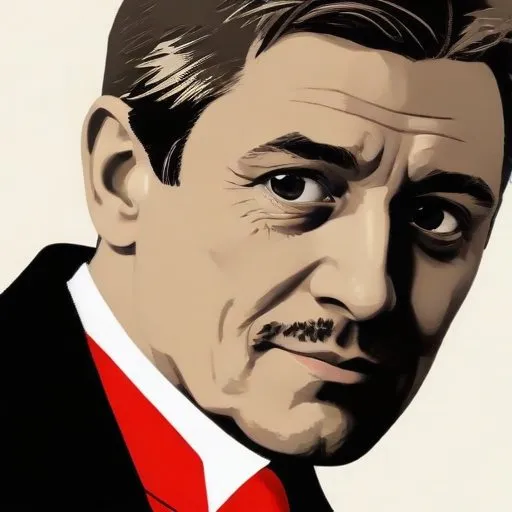
Czech composer and educator who pioneered microtonal music, experimenting with quarter tones and other unconventional scales, and founded the Prague Conservatory's quarter-tone department.
Alois Hba was a Czech composer, music theorist, and teacher who left an indelible mark on modern classical music. He is renowned for his pioneering work in microtonal music, particularly his extensive use of the quartertone scale, which revolutionized the way composers approached musical expression.
Born on June 21, 1893, in Vizovice, Moravian Wallachia, Hba was the youngest of 10 children. He demonstrated exceptional musical talent from a young age, possessing absolute pitch, which was discovered when he was just five years old. His family's love for folk songs and active participation in church singing and folk music performances instilled in him a deep appreciation for the nuances of Czech national music.
Hba's fascination with the musical aspects of the Czech language led him to explore the possibilities of microtonal music. He developed a three-quarter tone system, which he discussed in his theoretical works, and used scales in this tuning in sections of some of his compositions. His experiments with quartertones, sixthtones, fifthtones, and twelfthtones opened up new avenues for musicians and composers to explore.
Hba's prolific career was marked by an astonishing array of compositions, including three operas, 16 string quartets, numerous chamber music pieces, piano and organ works, choral pieces, and songs. He also designed special keyboard and woodwind instruments capable of playing quartertone scales, further expanding the possibilities of microtonal music.
Hba's groundbreaking work had a profound impact on modern classical music, inspiring generations of composers to experiment with microtonal music. His innovative approach to composition continues to influence contemporary music, ensuring his legacy as a visionary composer and music theorist.
Hba's music was not only a reflection of his technical expertise but also a manifestation of his philosophical beliefs. He was deeply interested in the relationship between music and language, and his work often explored the nuances of pitch, rhythm, accent, dynamics, and timbre in the Czech language.
Alois Hba's remarkable life and work serve as a testament to his innovative spirit and his enduring impact on modern classical music. His pioneering work in microtonal music continues to inspire and challenge musicians and composers today, cementing his place as one of the most important figures in 20th-century music.
Born in 1854
A Czech composer and theorist who created innovative, folk-inspired operas and orchestral works that explored the human experience, often with a focus on social justice and morality.
Born in 1899
A Czech composer who blended folk elements with modernist techniques, creating a unique sound that reflected his country's cultural heritage. His music is characterized by its lyricism, humor, and dramatic flair.
Born in 1890
A Czech-American pianist and composer who blended neoclassicism and surrealism, creating innovative works that merged classical music with jazz and avant-garde elements.
Born in 1841
A Czech composer and academic who blended folk influences with classical music, creating iconic works like the "New World Symphony".
Born in 1824
A Czech pianist and composer who is often referred to as the father of Czech national music, known for his operas and symphonic poems that evoke a strong sense of national identity.
Born in 1874
A Czech virtuoso violinist and composer, known for his romantic and expressive works, including his iconic Asrael Symphony, which showcases his mastery of orchestration and emotional depth.
