


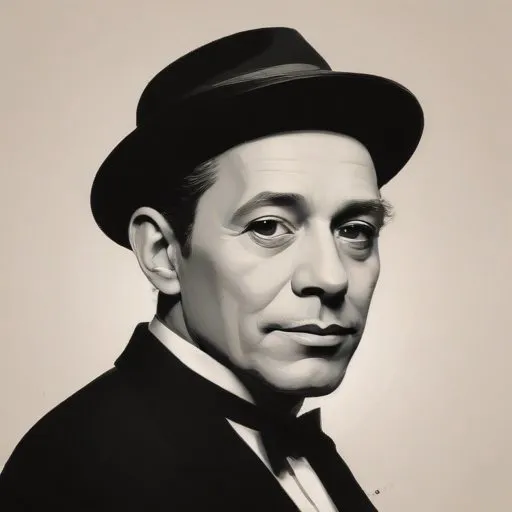
A pioneering African American composer and bandleader, known for blending jazz and classical music, and leading the US Navy's first all-black band during World War II.
Alton Augustus Adams, Sr. is remembered primarily as the first black bandmaster in the United States Navy, a distinction he held from 1917. His remarkable career was marked by numerous milestones, including the performance of his music by the bands of John Philip Sousa and Edwin Franko Goldman.
Born on November 4, 1889, in St. Thomas, Adams was the son of aspiring artisan parents. Despite the challenges he faced, Adams developed a passion for music and literature at an early age. He attended elementary school and later apprenticed to become a carpenter and then a shoemaker.
However, it was music that truly resonated with Adams. He learned to play the piccolo, an instrument he chose primarily because it was less expensive than a full-size flute, and joined the St. Thomas Municipal Band in 1906. Simultaneously, he studied music theory and composition through correspondence courses with Dr. Hugh A. Clark at the University of Pennsylvania.
In June 1910, Adams broke away from the Municipal Band to form his own ensemble, the Adams Juvenile Band. This bold move marked the beginning of a remarkable journey, as the band developed rapidly, becoming an integral part of the social fabric in the islands' capital city, Charlotte Amalie.
The Adams Juvenile Band played for a variety of social and charitable events, as well as regular concerts in the city's bandstand at Emancipation Garden, a location that remembers and celebrates Governor von Scholten's proclamation, which gave freedom to the slaves in 1848.
Adams' passion for reading and writing bore fruit as early as 1910, when he first contributed an article on the black composer Samuel Coleridge-Taylor to The Dominant. In 1915, he became the music editor for D. Hamilton Jackson's St. Croix newspaper, The Herald. A year later, he became the band columnist for Boston's Jacobs Band Monthly.
Adams' music was performed by the bands of John Philip Sousa and Edwin Franko Goldman, and his march, "The Governors Own," appears as the first selection on the bicentennial album "Pride of America," released by New World Records.
Alton Augustus Adams, Sr. left an indelible mark on American music, paving the way for future generations of musicians and composers. His remarkable career, marked by perseverance and dedication, serves as a testament to the power of music to transcend boundaries and inspire greatness.
Throughout his life, Adams was driven by a passion for music and a commitment to excellence. His remarkable achievements serve as a testament to the power of hard work and determination.
In conclusion, Alton Augustus Adams, Sr. was a true pioneer, whose remarkable career continues to inspire and influence American music to this day.
Born in 1899
A legendary jazz pianist, composer, and bandleader who revolutionized the genre with his unique style and iconic compositions, such as "Take the A Train" and "Mood Indigo".
Born in 1904
A legendary jazz pianist and bandleader who led a iconic orchestra, blending swing and blues to create a unique sound that influenced generations of musicians. Known for his distinctive "less-is-more" style and hits like "April in Paris" and "One O'Clock Jump".
Born in 1909
A virtuosic clarinetist and bandleader, known as the "King of Swing," who revolutionized jazz music with his energetic and sophisticated style, leading a racially integrated orchestra in the 1930s.
Born in 1910
A virtuosic clarinetist and innovative bandleader, he revolutionized the swing era with his unique sound and iconic hits like "Begin the Beguine" and "Stardust".
Born in 1913
A legendary jazz musician and bandleader, known for his virtuosic saxophone and clarinet playing, and leading his iconic orchestra through the swing and bebop eras.
Born in 1907
A legendary jazz musician who played saxophone and trumpet, and composed music for films and TV shows, leaving a lasting impact on the jazz genre.
Born in 1904
A pioneering jazz musician who revolutionized the saxophone's role in jazz, creating a rich, full-bodied sound that influenced generations of musicians.
Born in 1908
A jazz legend who revolutionized the vibraphone, leading his own orchestra and collaborating with icons like Benny Goodman and Charlie Christian, while also acting in films and TV shows.
