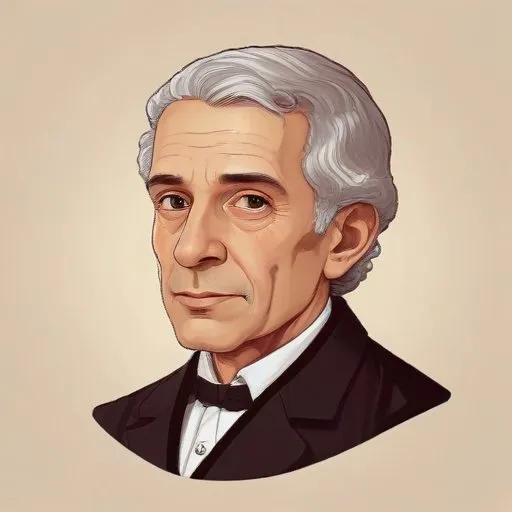
Angelo Secchi

Angelo Secchi

Angelo Secchi was born on June 29th, 1818

Full Name: Angelo Secchi
Profession: Astronomer
Nationality: Italian
Place of Birth: Reggio Emilia
Date of Birth: June 29, 1818
Occupation: Academic
Field of Work: Astronomy
Notable Work: Spectroscopy

Italian astronomer and academic who pioneered spectroscopy, discovering that stars have unique spectral signatures, and was the first to classify stars based on their spectra.

Written by: Oliver Wren Oliver Wren

The Astronomer-Priest: Angelo Secchi and the Celestial Quest

Angelo Secchi, a trailblazing Italian Catholic priest and astronomer, revolutionized the field of astronomical spectroscopy, and boldly declared the Sun to be a star. As the director of the observatory at the Pontifical Gregorian University, Secchi dedicated his life to unraveling the mysteries of the cosmos.

Early Life and Inspirations

Born on June 28, 1818, in Reggio Emilia, Italy, Secchi was drawn to science and mathematics from a young age. He entered the Jesuit Order at 16 and continued his studies at the Roman College, where he demonstrated exceptional scientific talent.

Astronomical Pursuits

Secchi's fascination with astronomy was sparked by his meeting with Alfred Weld, a Jesuit astronomer, during his time at Stonyhurst College in the United Kingdom. Upon his return to Rome, he became the head of the observatory at the Pontifical Gregorian University, where he oversaw the relocation of the observatory to a new facility on top of the Sant' Ignazio Church.

Pioneering Spectroscopy

Secchi's groundbreaking work in astronomical spectroscopy enabled him to analyze the light emitted by celestial bodies. He was one of the first scientists to apply spectroscopy to the study of the Sun, moon, and planets, and his research laid the foundation for modern astrophysics.

Influence and Legacy

Secchi's contributions to astronomy and spectroscopy earned him recognition from the American Philosophical Society, to which he was elected in 1860. His work continues to inspire astronomers and scientists today, and his legacy as a pioneer in astronomical spectroscopy remains unparalleled.

Personal Milestones and Key Life Events

Quotes and Memorable Sayings

"The study of the universe is a divine occupation, and the pursuit of knowledge is a sacred duty."

Honors and Recognition

Angelo Secchi was honored with election to the American Philosophical Society in 1860, a testament to his outstanding contributions to the field of astronomy.

Trivia and Fun Facts

Angelo Secchi's remarkable life and achievements serve as a testament to the power of curiosity and dedication. As we gaze up at the stars, we remember the pioneering spirit of this astronomer-priest, who dared to explore the unknown and expand our understanding of the universe.

Timeline
1818
Birth in Italy
Angelo Secchi was born on June 29, 1818, in Reggio Emilia, Italy. He would go on to become a renowned astronomer and academic.
1849
Became Director of the Observatory
Secchi was appointed Director of the Observatory at the Collegio Romano, a position he held until his death.
1853
Discovered the Filamentary Structure of the Sun
Secchi discovered the filamentary structure of the sun, a groundbreaking observation that contributed significantly to solar astronomy.
1864
Published Lezioni di Fisica
Secchi published his work Lezioni di Fisica, a comprehensive physics textbook that became a standard in Italian education.
1878
Died in Italy
Angelo Secchi passed away on February 26, 1878, in Rome, Italy, leaving behind a legacy as a pioneering astronomer and academic.
Angelo Secchi

Angelo Secchi Quiz

What is Angelo Secchi known for pioneering in astronomy?

Score: 0/5
FAQ
What was Angelo Secchis most significant contribution to astronomy?
Angelo Secchi was an Italian astronomer and academic who made a significant contribution to the field of astronomy through his research on stellar spectroscopy. He was one of the first scientists to study the spectra of stars, and his work helped lay the foundations for modern astrophysics.
What is Angelo Secchis most famous discovery?
Angelo Secchis most famous discovery was the observation of the spectra of stars, which he achieved using a telescope and a spectroscope. His work revealed the diversity of stellar spectra, and helped scientists understand the composition and properties of stars.
How did Angelo Secchis work influence the development of astrophysics?
Angelo Secchis work had a profound impact on the development of astrophysics, inspiring many scientists to explore the properties and behavior of stars. His research on stellar spectroscopy helped establish astrophysics as a distinct field of study, and paved the way for future breakthroughs in our understanding of the universe.
What is Angelo Secchis legacy in astronomy?
Angelo Secchis legacy in astronomy is immense. He is widely regarded as one of the pioneers of modern astrophysics, and his work continues to inspire scientists and astronomers today. His research on stellar spectroscopy remains an important area of study in astrophysics.
How did Angelo Secchis work influence future generations of astronomers?
Angelo Secchis work had a profound impact on future generations of astronomers, inspiring many to explore the properties and behavior of stars. His innovative approach to stellar spectroscopy helped pave the way for the development of modern astrophysics, and continues to influence scientists today.

Related People:

Umberto Nobile

Born in 1885

Designed and flew airships, leading the first expedition to reach the North Pole by air in 1926. He also led a tragic expedition to the Arctic in 1928 that ended in disaster.

Guglielmo Marconi

Born in 1874

Developer of the first practical wireless telegraph, pioneering radio communication and earning a Nobel Prize in Physics. Known for revolutionizing long-distance communication.

Alessandro Volta

Born in 1745

Italian physicist who invented the first electrical battery, revolutionizing the field of electricity and paving the way for countless technological advancements.

Evangelista Torricelli

Born in 1608

Developed the mercury barometer, a device that measures atmospheric pressure, and made significant contributions to the study of vacuums and fluids.

Galileo Galilei

Born in 1564

Pioneering astronomer, physicist, and mathematician who played a major role in the Scientific Revolution, making key discoveries that challenged Aristotelian views and laid the foundation for modern science.