


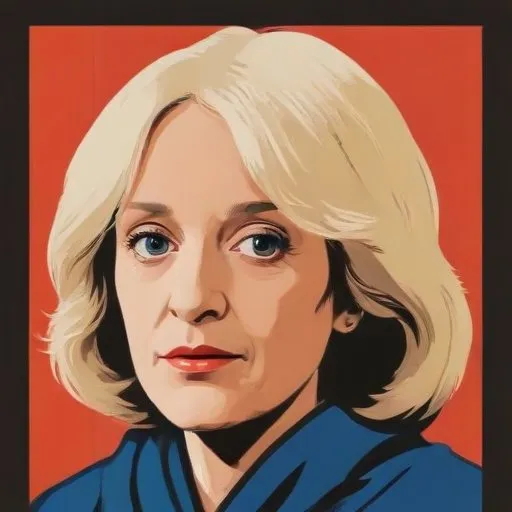
A 17th-century metaphysician who developed a unique philosophical system that combines elements of Cartesianism, Quakerism, and mysticism, and is recognized for her groundbreaking work on the nature of God, the universe, and the human soul.
As a trailblazing philosopher of the Enlightenment era, Anne Conway left an indelible mark on the intellectual landscape of 17th-century England. Her groundbreaking work, characterized by its unique blend of rationalism and gynocentric concerns, earned her recognition as one of the most original thinkers of her time.
Born on December 14, 1631, as Anne Finch, she was the youngest child of Sir Heneage Finch, a prominent Recorder of London and Speaker of the House of Commons under Charles I. Despite her father's untimely death just before her birth, Anne grew up in a nurturing environment, surrounded by the esteemed walls of Kensington Palace, which her family owned at the time.
Her early years were marked by a rigorous education, courtesy of private tutors, who instilled in her a keen sense of curiosity and a passion for learning. Anne's intellectual pursuits took her from mastering Latin to exploring the realms of Greek and Hebrew, setting the stage for her later rendezvous with philosophy.
It was her half-brother, John Finch, who introduced Anne to one of his tutors at Christ's College, Cambridge – the esteemed Platonist, Henry More. This chance encounter kindled a lifelong correspondence and close friendship between Henry and Anne, with their exchanges centered around the philosophy of René Descartes.
As their intellectual bond grew stronger, Anne evolved from More's informal pupil to his intellectual equal, engaging in stimulating debates and discussions that showcased her remarkable intellectual prowess. Henry More himself acknowledged Anne's exceptional abilities, stating that she had "scarce ever met with any Person, Man or Woman, of better Natural parts" (The Life of Henry More, 1710, p. 193).
In 1651, Anne married Edward Conway, later 1st Earl of Conway, who shared her passion for philosophy and had been tutored by Henry More himself. The couple's union not only forged a strong personal bond but also created a fertile ground for philosophical exchange, with Anne and Edward establishing their residence as a hub for intellectual discussions and debates.
Anne Conway's work, characterized by its unique blend of rationalism and gynocentric concerns, exerted a profound influence on prominent thinkers, including Gottfried Leibniz. Her philosophical contributions have been aptly recognized by historians, with Hugh Trevor-Roper hailing her as "England's greatest female philosopher."
Anne Conway's intellectual legacy continues to inspire and enlighten scholars, offering a timely reminder of the profound impact women have had on the development of philosophical thought.
Anne Conway's pioneering work has played a significant role in shaping the intellectual landscape of modern society. Her emphasis on reason, individualism, and the importance of women's voices in philosophical discourse has inspired generations of thinkers, activists, and scholars.
Today, Anne Conway's ideas continue to resonate with contemporary issues, including feminist philosophy, queer theory, and intersectionality, underscoring the enduring relevance of her philosophical contributions.
Born in 1632
A 17th-century thinker who laid the groundwork for modern democracy, arguing that governments derive their power from the people and that individuals have inherent rights to life, liberty, and property.
Born in 1646
Developed calculus independently of Isaac Newton, and made major contributions to the fields of philosophy, politics, and history.
Born in 1632
A 17th-century philosopher and scholar who developed a comprehensive philosophical system that emphasizes God, nature, and human freedom, influencing modern thought on ethics, politics, and religion.
Born in 1596
Developed influential philosophical and mathematical concepts, including the famous phrase "I think, therefore I am," and laid the foundation for modern Western philosophy.
Born in 1898
A pioneer of modern sculpture, creating abstract, biomorphic forms that evoke a sense of primal emotion, and illustrating books with whimsical, dreamlike drawings.
46 Years Old
Australian rugby league halfback who played for the St. George Dragons and represented New South Wales and Australia in the 1950s and 1960s. He was a prolific try-scorer and won three premierships with the Dragons.
Born in 1685
An Irish bishop and philosopher who argued that reality is purely spiritual and that objects only exist as perceived by the mind. He's known for his idealist philosophy and the phrase "to be is to be perceived."
