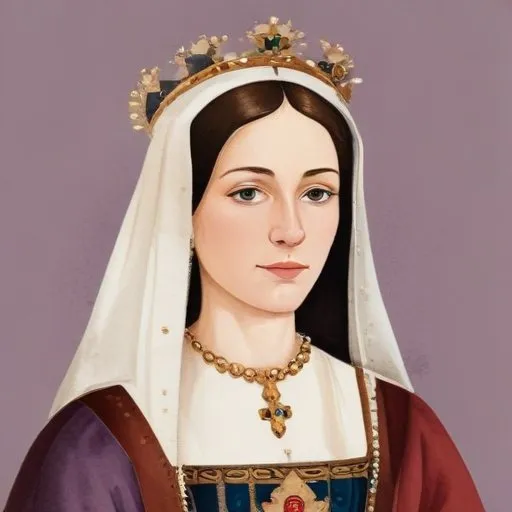
Anne of Bohemia and Hungary: The Queen Who Shaped the Fate of Empires
A Legacy of Power and Influence
Anne of Bohemia and Hungary, also known as Anna Jagellonica, was a queen who left an indelible mark on the history of Europe. As the wife of King Ferdinand I, later Holy Roman Emperor, she reigned as Queen of Germany, Bohemia, and Hungary, and Archduchess of Austria, wielding significant power and influence over the fate of empires.
Early Life and Education
Born on July 23, 1503, in Buda (now Budapest), Anne was the oldest child and only daughter of King Vladislaus II of Bohemia and Hungary and his third wife, Anne of Foix-Candale. Her paternal grandparents were King Casimir IV of Poland of the Jagiellon dynasty and
Elisabeth of Austria, one of the heiresses of the Kingdom of Bohemia, the Duchy of Luxembourg, and the Duchy of Kuyavia. This illustrious lineage prepared her for a life of royalty and leadership.
A Humanist Education
Maximilian I, the Holy Roman Emperor, took Anne and her brother, King
Louis II of Hungary and Bohemia, under his care after their father's death in 1516. In Vienna and later Innsbruck, Anne received a humanist education, emphasizing problem-solving skills, dancing, music, and physical skills, including hunting and handling weapons. This unique education prepared her for the complexities of royal life.
Marriage and Reign
On May 26, 1521, Anne married Archduke Ferdinand of Austria in Linz, Austria, in a union that would shape the course of European history. As queen, she played a crucial role in supporting her husband's governance of the Habsburg hereditary lands and later as Holy Roman Emperor. The marriage stipulation that Ferdinand would succeed Anne's brother, Louis, in case he died without legitimate male heirs, further solidified her position as a key player in the dynastical politics of the time.
Queen of Bohemia and Hungary
Anne's reign as Queen of Bohemia and Hungary marked a significant turning point in the history of these regions. She played a vital role in maintaining the balance of power between the Habsburg and Jagiellon dynasties, ensuring the stability of her kingdoms. Her diplomatic prowess and strong will helped to negotiate key alliances and secure the interests of her people.
Influence on Modern Society
Anne's legacy extends beyond her reign, influencing the course of European politics and society. Her role in shaping the Habsburg dynasty's power and her diplomatic efforts contributed to the development of modern nation-states. Her emphasis on education and problem-solving skills paved the way for future generations of female leaders and intellectuals.
Historical Context and Legacy
Anne of Bohemia and Hungary's life was shaped by the complex web of alliances and rivalries that defined the early modern period. Her reign was marked by the Protestant Reformation, the rise of the Ottoman Empire, and the struggle for power among European royal houses. Despite these challenges, she left a lasting impact on the history of Europe, cementing her place as one of the most influential queens of her time.
Trivia and Fun Facts
- Anne's marriage to Ferdinand was a strategic alliance that united the Habsburg and Jagiellon dynasties, strengthening both houses.
- She was known for her exceptional hunting skills, a testament to her unusual humanist education.
- Anne's brother, King Louis II of Hungary and Bohemia, died in 1526, making her husband, Ferdinand, the King of Hungary and Bohemia.
FAQ
What was the significance of Anne of Bohemia and Hungarys marriage to Ferdinand I of Habsburg?
The marriage of Anne of Bohemia and Hungary to Ferdinand I of Habsburg was a strategic alliance that united the powerful Habsburg and Jagiellonian dynasties.
What were Anne of Bohemia and Hungarys roles in the Habsburg court?
Anne of Bohemia and Hungary played a crucial role in the Habsburg court, serving as a mediator and advisor to her husband Ferdinand I and his brother Charles V.
What was Anne of Bohemia and Hungarys relationship with her brother-in-law Charles V?
Anne of Bohemia and Hungary had a close relationship with her brother-in-law Charles V, who relied on her for counsel and support in his many diplomatic and military endeavors.
What were Anne of Bohemia and Hungarys contributions to the Renaissance?
Anne of Bohemia and Hungary was a patron of the arts and a supporter of humanist scholars, and her court was a center of Renaissance culture and learning.
What is Anne of Bohemia and Hungarys legacy in European history?
Anne of Bohemia and Hungarys legacy in European history is that of a skilled diplomat and politician who played a crucial role in shaping the course of the Habsburg dynasty and the Renaissance.