


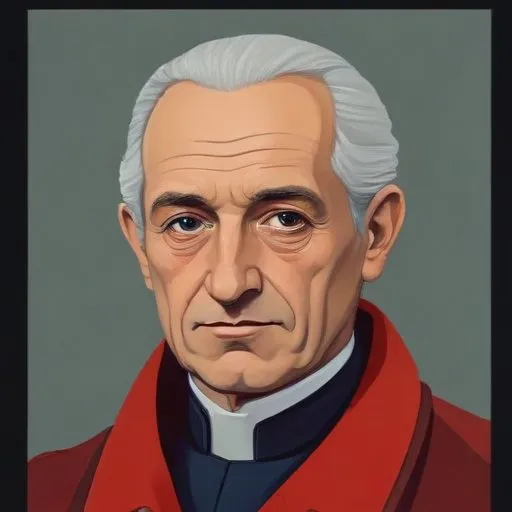
Developed innovative railway systems and locomotives, revolutionizing transportation in the 19th century.
Anselm Franz, an Austrian engineer, is renowned for developing the Jumo 004, the world's first mass-produced turbojet engine, which revolutionized the aviation industry during World War II. His groundbreaking work in turboshaft designs in the United States, as part of Operation Paperclip, has had a lasting impact on modern aeronautics.
Born on January 20, 1900, in Schladming, Austria, Franz studied mechanical engineering at the Graz University of Technology. He later earned a doctoral degree from the University of Berlin, solidifying his foundation in engineering.
Franc joined Junkers Aircraft in 1936, where he oversaw supercharger and turbocharger development. In 1939, he was handpicked to lead the development of the Jumo 004 turbojet engine, which would go on to power the German Luftwaffe's fighter jets.
As part of Operation Paperclip, Franz was recruited by the United States to work on turboshaft designs. His work led to the development of the Lycoming T53, Honeywell T55, AGT1500, and PLF1A2 engines. Notably, the PLF1A2 was the world's first high-bypass turbofan engine.
Franz's pioneering work in turbojet engines has had a profound impact on the aviation industry. His designs have enabled faster, more efficient, and more powerful aircraft, revolutionizing air travel and military capabilities.
Anselm Franz passed away on November 18, 1994, leaving behind a legacy of innovation and contributions to the field of aeronautics. His work continues to inspire engineers and aviation enthusiasts alike.
"The key to success lies in understanding the intricacies of airflow and combustion." - Anselm Franz
While Franz's life was marked by groundbreaking achievements, his humble approach to engineering and his dedication to his craft remain an inspiration to many.
Anselm Franz's remarkable career serves as a testament to the power of innovation and dedication. His legacy continues to soar, inspiring future generations of engineers and aviation enthusiasts.
Born in 1856
A pioneering engineer who harnessed the power of alternating current (AC) to transform the world's electrical systems, and is credited with developing groundbreaking technologies like radio communication and X-ray imaging.
Born in 1874
Developer of the first practical wireless telegraph, pioneering radio communication and earning a Nobel Prize in Physics. Known for revolutionizing long-distance communication.
Born in 1857
A pioneer in the field of electromagnetism, he discovered radio waves and proved James Clerk Maxwell's theories, paving the way for modern wireless communication. His experiments led to the development of radio, television, and mobile phones.
Born in 1831
Developed groundbreaking theories that unified electricity and magnetism, and predicted the existence of radio waves, revolutionizing our understanding of the physical world.
Born in 1791
Pioneering scientist who discovered electromagnetic induction, formulated the laws of electrolysis, and invented the first electrical generator, revolutionizing our understanding of electricity and its applications.
Born in 1775
A pioneer in the field of electromagnetism, he formulated fundamental laws that describe the relationship between electric currents and magnetic fields. His work laid the foundation for many modern technologies, including electric motors and generators.
Born in 1777
A pioneer in mathematics and physics, he made major contributions to number theory, algebra, and electromagnetism, shaping our understanding of the natural world.
Born in 1850
Developed groundbreaking theories in electromagnetism and telecommunication, and is credited with reformulating Maxwell's equations into their modern form. His work laid the foundation for modern electrical engineering and communication systems.
