


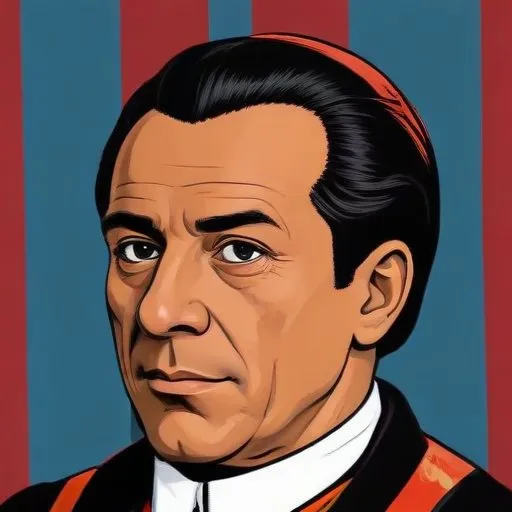
A Portuguese magistrate and politician who served as Minister of Justice and was a key figure in the country's liberal movement, known for his efforts to modernize the justice system.
Antnio Lus de Seabra, 1st Viscount of Seabra, is renowned for drafting the first Portuguese Civil Code in 1867, a monumental legislative achievement that remained in force for a century. This groundbreaking code, still referred to as the Seabra Civil Code, has left an indelible mark on Portugal's legal framework and cemented Seabra's reputation as a visionary jurist and statesman.
Seabra was born on December 2, 1798, on board the vessel Santa Cruz off the coast of Cape Verde, where his parents were traveling to Rio de Janeiro. He was baptized in Rio de Janeiro and later returned to Portugal for his preparatory studies. In 1815, he enrolled at the University of Coimbra, graduating with a law degree in 1820.
During his student years, Seabra was an ardent supporter of the Liberal Revolution of 1820 and the Constitutionalists. He expressed his enthusiasm through a sonnet, "Accordai, cidados, que a Ptria geme," which gained popularity at the time. He also founded the monthly periodical O Cidado Literato, showcasing his literary and political inclinations.
In 1821, Seabra was appointed as a juiz de fora in Alfndega da Fé, earning public praise from the Minister of Justice, Jos da Silva Carvalho, for his dedication and expertise. He went on to hold various esteemed positions, including rector of the University of Coimbra, judge in the Oporto appellate court, member of Parliament, Peer of the Realm, and judge of the Supreme Court of Justice.
The crowning achievement of Seabra's career, the Portuguese Civil Code, was enacted in 1867. This comprehensive code, the first of its kind in Portugal, introduced sweeping reforms to the country's legal system, consolidating and modernizing its laws. The code's enduring impact is a testament to Seabra's vision, expertise, and commitment to justice.
Seabra's contributions to Portuguese law and politics have been recognized through various honors and titles. He was conferred the title of 1st Viscount of Seabra, and his name is etched in the annals of Portuguese history as a pioneering figure of the Constitutional Monarchy period.
Through his remarkable life and achievements, Antnio Lus de Seabra, 1st Viscount of Seabra, has left an indelible mark on Portuguese history, cementing his place as one of the most important figures of the 19th century.
Born in 1894
A Portuguese field marshal and politician who served as the 13th President of Portugal, known for his military career and brief presidential term during a tumultuous period in Portuguese history.
Born in 1894
A 19th-century Portuguese naval officer and politician who served as the country's president from 1958 to 1974, known for his authoritarian rule and colonial policies.
Born in 1883
A Brazilian military leader who served as president from 1946 to 1951, known for his role in rebuilding the country after World War II. He implemented various reforms and modernized the country's infrastructure.
Born in 1882
A dominant leader who ruled Brazil from 1930 to 1945 and again from 1951 until his suicide in 1954, known for implementing reforms and promoting nationalism.
Born in 1918
A Brazilian lawyer and politician who served as the 24th President of Brazil, known for his left-wing policies and nationalization of industries, leading to a military coup that ousted him.
