


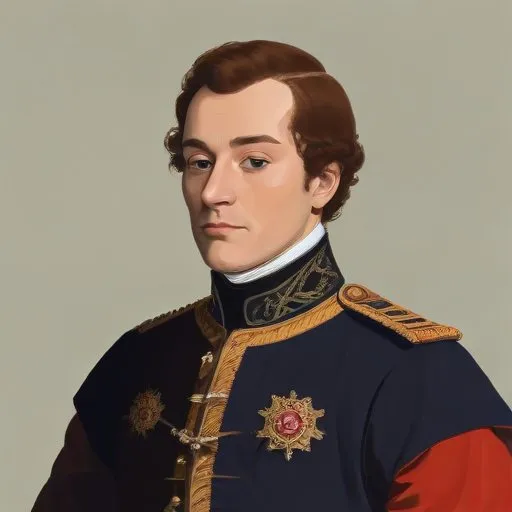
A 16th-century French nobleman who played a significant role in the French Wars of Religion, leading the Catholic League and fighting against the Huguenots. He's also known for his military campaigns and strategic alliances.
Antoine, known as "the Good," was the Duke of Lorraine from 1508 until his death in 1544. He is remembered for his bravery and strategic prowess, particularly in his campaigns in Italy and his successful efforts to free Lorraine from the Holy Roman Empire.
Born on June 4, 1489, at Bar-le-Duc, Antoine was the son of René II, Duke of Lorraine, and Philippa of Guelders. He spent seven formative years at the court of King Louis XII, where he befriended the future King Francis I and developed his military skills.
After his father's death in December 1508, Antoine succeeded him as Duke of Lorraine. In 1530, he divided the family possessions with his brother Claude, retaining the duchies of Lorraine and Bar. This decision marked the beginning of his independent rule and set the stage for his future accomplishments.
Antoine fought in two Italian campaigns, first under Louis XII and later with Francis I. He participated in the Battle of Agnadello in 1509 and the Battle of Marignano in 1515. His military prowess earned him recognition, and he was called upon to quell the German Peasants' War, defeating two armies and retaking Saverne and Slestat.
In 1542, Antoine succeeded in freeing Lorraine from the Holy Roman Empire with the Treaty of Nuremberg. This monumental achievement cemented his legacy as a champion of independence and self-determination.
During his reign, Antoine confronted the spread of Protestant Reformation in Lorraine, responding with an edict in 1523. He also faced challenges from peasant rebellions andforeign invasions, including the invasion by Emperor Charles V's army in 1544.
Antoine's personal relationships played a significant role in his life. He was close to his brother Claude, with whom he divided the family possessions. His friendship with Francis I, forged during their time at the French court, remained strong throughout his life.
In 1544, Antoine fell ill and fled to Bar-le-Duc, where he died on June 14. His legacy as a skilled military leader, shrewd politician, and champion of independence continues to inspire generations. His bravery and strategic prowess have earned him a revered place in history.
Born in 1768
The last Holy Roman Emperor, who ruled from 1792 to 1806, oversaw the dissolution of the Holy Roman Empire and was a key figure in European politics during the Napoleonic Wars.
Born in 1500
Ruling over a vast empire from 1519 to 1556, he was a powerful and influential leader who played a crucial role in shaping European politics and religion. He is most known for his efforts to unify Christian Europe and defend it against the Ottoman Empire.
Born in 1519
King of France from 1547 to 1559, known for his cultural and artistic patronage, and his role in the Italian Wars.
Born in 1785
The last king of the French monarchy before the French Revolution, known for his tragic and mysterious life, including his imprisonment and disputed death.
Born in 1585
A powerful and cunning statesman who dominated French politics during the 17th century, known for his ruthless suppression of dissent and centralization of power. He was a master strategist and diplomat who shaped the course of European history.
Born in 1608
Third son of King Henry IV of France, a rebellious prince who plotted against his brother King Louis XIII and was known for his military prowess and romantic escapades.
Born in 1542
The last Scottish monarch of the House of Stuart, she was a Catholic queen who faced Protestant rebellion and was eventually beheaded, sparking a centuries-long rivalry with England. She's known for her tumultuous reign and tragic fate.
