


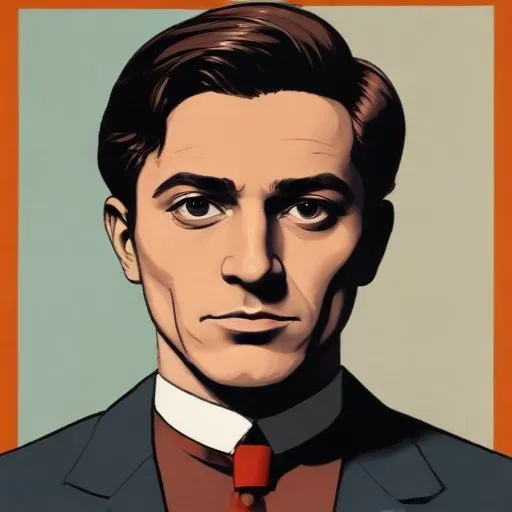
A 19th-century Italian painter, known for his romantic and dreamlike depictions of everyday life, landscapes, and fantastical scenes. His work often featured soft, feathery brushstrokes and a muted color palette.
Antonio Donghi, a renowned Italian painter, is celebrated for his captivating depictions of everyday life, landscapes, and still-life compositions, which showcase his exceptional technique and dedication to the neoclassical movement. His artistic prowess earned him critical acclaim, and he became one of Italy's leading figures in the 1920s.
Born on March 16, 1897, in Rome, Italy, Donghi began his artistic journey at the Instituto di Belle Arti, where he studied painting from 1908 to 1916. Following his military service in World War I, he further honed his skills in Florence and Venice, laying the foundation for his future success.
In the 1920s, Donghi's work gained widespread recognition, and he was hailed as a leading figure in the neoclassical movement. His distinctive style, characterized by strong composition, spatial clarity, and populist subject matter, earned him critical acclaim. His figures exuded a sense of gravity and archaic stiffness, reminiscent of Piero della Francesca.
In 1925, Franz Roh, a prominent art critic, listed Donghi among the major Italian artists associated with the new magic realism tendency. This recognition was followed by his triumph in 1927, when he won First Prize at an International Exhibit at the Carnegie Institute in Pittsburgh.
Donghi's work was greatly influenced by the avant-garde movements of his time, including Cubism and Futurism. However, he refused to be bound by these styles, instead developing a unique approach that blended traditional techniques with modernist sensibilities. His still-life compositions, often featuring a small vase of flowers, showcased his refined technique and ability to imbue ordinary subjects with a profound sense of beauty.
Critics drew parallels between Donghi's work and that of Henri Rousseau and Georges Seurat, noting the subtle humor and intimacy that permeated his scenes of everyday life.
By the 1940s, Donghi's work had fallen out of favor with the mainstream modernist movement, and his reputation began to decline. Undeterred, he continued to exhibit regularly, shifting his focus towards landscapes, which he painted with an emphasis on linear patterns. He remained committed to his artistic vision until his passing on July 16, 1963, in Rome.
Today, Donghi's work can be found in numerous Italian collections, including the Museo di Roma, a testament to his enduring legacy as a master of neoclassical art.
Born in 1882
A pioneering figure in Futurism, creating dynamic, abstracted depictions of modern life and technology, blending sculpture and painting to capture the essence of speed and energy.
Born in 1883
A pioneering Futurist painter and writer, known for vibrant, dynamic works that captured the energy of modern life and the chaos of war.
Born in 1888
A pioneer of Surrealist art, creating dreamlike, eerie, and thought-provoking scenes that blend reality and fantasy, influencing generations of artists and filmmakers.
Born in 1881
A 20th-century Italian painter, known for his abstract and lyrical works that explored the relationship between color and emotion. His vibrant, expressive paintings continue to inspire artists and art lovers alike.
Born in 1884
An Italian artist famous for elongated, emotive portraits and nudes that blended primitivism with cubism, capturing the essence of his subjects with expressive simplicity.
