


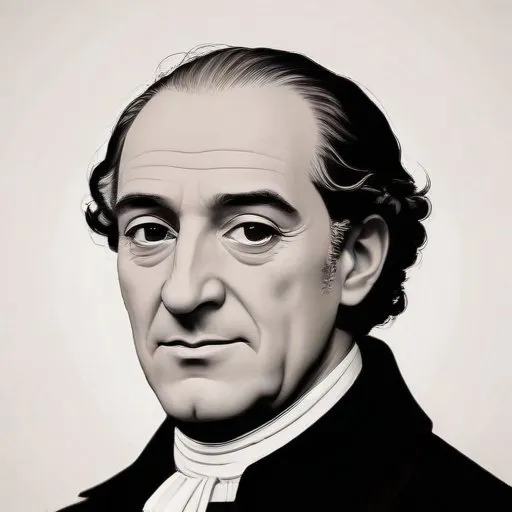
An 18th-century opera composer and music teacher, known for his innovative and expressive works that bridged the gap between Baroque and Classical styles. His compositions showcased emotional depth and dramatic flair.
Antonio Maria Gasparo Gioacchino Sacchini was a renowned Italian classical era composer, celebrated for his profound contribution to the world of opera. Born on June 14, 1730, in Florence, Italy, Sacchini's talent for music led him to become one of the most esteemed opera composers of his time.
Sacchini's musical journey began at a tender age of four, when he moved to Naples with his family. It was in Naples that he was introduced to the world of music, and his talent caught the attention of Francesco Durante, a prominent music teacher. Durante enrolled Sacchini in the Conservatorio di Santa Maria di Loreto, where he honed his skills in composition, harmony, and counterpoint under the guidance of Durante and Pietrantonio Gallo.
Sacchini's time at the conservatory was marked by his exceptional talent, which earned him the admiration of his teachers. Durante often pointed him out to his fellow pupils, warning them that Sacchini would be a difficult rival to beat.
After Durante's death in 1755, Sacchini returned to his alma mater as a mastricello, a junior teacher. This position gave him the opportunity to compose, and his talent soon spread throughout Italy. He wrote numerous operas, both serious and comic, which earned him widespread recognition.
In 1772, Sacchini traveled to London, where he wrote several operas for the Kings Theatre. His music captivated the British audience, and he became a celebrated figure in London's musical circles.
In 1781, Sacchini moved to Paris, where he became embroiled in the musical dispute between the followers of Christoph Willibald Gluck and Niccolò Piccinni. This rivalry divided the musical community, with Sacchini aligning himself with the Piccinni faction.
Sacchini's final years were marked by disappointment and tragedy. His opera, Œdipe à Colone, was initially met with disappointment, and he blamed its failure for his untimely death on October 6, 1786. However, when the opera was revived the following year, it became one of the most popular works of the 18th century French repertoire.
Sacchini's music had a profound impact on the development of opera, influencing generations of composers to come. His contribution to the genre helped shape the course of classical music, making him an integral part of its rich heritage.
Today, Sacchini's music is still celebrated for its beauty and emotional depth, a testament to the enduring power of his art.
Born in 1714
A pioneering opera composer who revolutionized the art form with his innovative and expressive works, blending music and drama in a way that captivated audiences.
Born in 1714
A prominent composer of the Neapolitan School, he wrote over 80 operas and was a key figure in the transition between the Baroque and Classical periods. His music was known for its dramatic intensity and expressive melodies.
Born in 1727
An 18th-century master of opera, known for his innovative and expressive compositions that blended Italian and French styles, influencing the development of opera seria.
Born in 1782
A virtuosic violinist and composer who revolutionized the instrument's technical possibilities, leaving an indelible mark on classical music.
Born in 1792
Operatic mastermind behind iconic comedies like "The Barber of Seville" and "William Tell," crafting catchy, witty, and playful music that still delights audiences today.
Born in 1797
A renowned Italian composer of the Romantic era, best known for his operas, particularly "L'elisir d'amore" and "Don Pasquale", which are still widely performed today.
Born in 1801
Operatic mastermind behind bel canto classics like "Norma" and "La Sonnambula", renowned for their beautiful, expressive melodies and dramatic flair.
Born in 1740
An 18th-century Italian composer and educator, known for his operas and contributions to the development of classical music. His works were widely performed and admired by European royalty and aristocracy.
