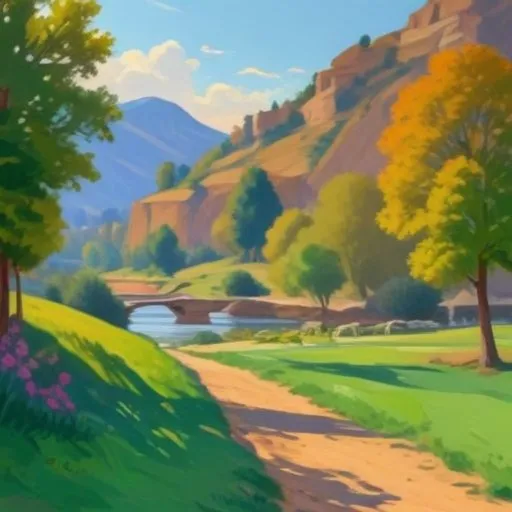
Armand Guillaumin: The French Impressionist Painter Who Paved the Way for Fauvism
A Pioneer of Bold Colors and Expressive Brushstrokes
Armand Guillaumin, a renowned French impressionist painter, is celebrated for his vibrant and expressive works of art that showcased his mastery of color and technique. As a member of the Impressionist circle, Guillaumin's paintings not only reflected the era's spirit of innovation but also paved the way for the development of Fauvism, a style characterized by bold, vivid colors and energetic brushstrokes.
Early Life and Training
Born Jean-Baptiste Armand Guillaumin on February 16, 1841, in Paris, France, the artist grew up in a family that encouraged his artistic inclinations. While working at his uncle's lingerie shop, Guillaumin attended evening drawing lessons, which eventually led him to study at the Académie Suisse in 1861. It was during this period that he befriended fellow artists
Paul Cézanne and
Camille Pissarro, with whom he maintained lifelong relationships.
A Lasting Impact on the Art World
Guillaumin's influence on his contemporaries was significant, particularly on Cézanne, who made etchings of Guillaumin in 1873. The three artists often painted together, and Guillaumin's bold use of color and expressive brushstrokes were an inspiration to Cézanne. In the 1870s, Guillaumin and Cézanne even shared adjacent studios on the Île Saint-Louis in Paris, further solidifying their artistic camaraderie.
Impressionist Exhibitions and Critical Acclaim
As a member of the Société Anonyme des Artistes Peintres, Sculpteurs et Graveurs (later dubbed Impressionistes), Guillaumin participated in six of the eight Impressionist exhibitions between 1874 and 1886. Critics of the time praised his assured brushwork and bold color palette, with Félix Fénéon, a prominent art critic, dubbing him a "furious colourist" in 1886.
A Fauve Ahead of His Time
By the 1890s, Guillaumin's palette had become even bolder, departing from naturalistic representations of color. This experimentation with vibrant hues and energetic brushstrokes predates the Fauvist movement, earning him recognition as a pioneer of the style.
Friendship and Inspiration
In 1886, Guillaumin became acquainted with
Vincent van Gogh, who held his work in high esteem. Van Gogh's brother, Theo, exhibited and sold some of Guillaumin's paintings, and Vincent frequently wrote about Guillaumin's art in his letters, praising his unique style.
A Meeting Place for Young Artists
Guillaumin's studio became a hub for young artists, including
Paul Gauguin,
Paul Signac, and
Georges Seurat, who were drawn to his innovative approach to color and technique. This convergence of artistic minds helped shape the course of modern art.
A Full-Time Painter
After years of balancing his art with a government job, Guillaumin finally quit his bureaucratic position in 1891, allowing him to focus on painting full-time. This newfound freedom enabled him to realizing his artistic vision without compromise.
Legacy and Influence
Armand Guillaumin's contributions to the development of Impressionism and Fauvism have secured his place as a prominent figure in the history of modern art. His innovative use of color and technique continues to inspire artists to this day, ensuring his legacy as a trailblazer in the world of art.
FAQ
What style of painting did Armand Guillaumin practice?
Armand Guillaumin was a Post-Impressionist painter, known for his vibrant and expressive use of color. He was a contemporary and friend of Paul Gauguin and Émile Bernard, and his work shared similarities with theirs.
What role did Armand Guillaumin play in the Impressionist movement?
Guillaumin was an active participant in the Impressionist movement, exhibiting his work in several Impressionist exhibitions alongside Claude Monet and Pierre-Auguste Renoir.
What are some of Armand Guillaumins most famous works?
Some of Guillaumins most famous works include The Seine at Rouen and The Village of Agay, which showcase his ability to capture the beauty of the French landscape.
How did Armand Guillaumins friendship with Paul Gauguin influence his work?
Guillaumins friendship with Gauguin introduced him to new techniques and ideas, such as Cloisonism, which he incorporated into his own work.
What is Armand Guillaumins legacy in the art world?
Guillaumins legacy lies in his contribution to the development of Post-Impressionism, and his influence on future generations of artists, including the Fauves and the Expressionists.