


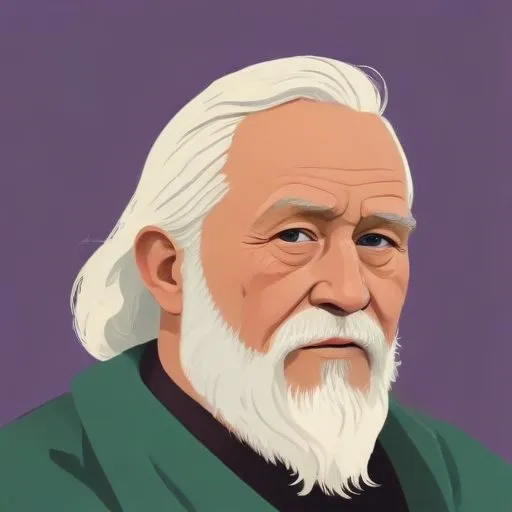
A Norwegian philosopher and environmentalist who developed the concept of "deep ecology," arguing that humans have an inherent value in the natural world and promoting a more holistic approach to environmentalism.
Arne Naess, a Norwegian philosopher, is revered for coining the term "deep ecology," an intellectual and inspirational force behind the environmental movement of the late 20th century. His profound ideas have left an indelible mark on our understanding of the natural world and our place within it.
Born on January 27, 1912, in Oslo, Norway, Naess was the son of Christine Dekke and Ragnar Eide Naess. His early life was marked by a deep affinity for nature, which would later shape his philosophical stance. Naess's academic pursuits led him to study philosophy, literature, and science at the University of Oslo.
In the 1960s, Naess's vision of deep ecology took shape, influenced by Rachel Carson's seminal work, Silent Spring. He recognized that the environmental crisis stemmed from unspoken philosophical presuppositions and attitudes within modern Western societies. Naess distinguished between "shallow" and "deep" ecological thinking, advocating for a profound understanding of nature that appreciates the intrinsic value of biological diversity and the interconnectedness of all living beings.
Naess's philosophical convictions led him to engage in direct action, combining ecological vision with Gandhian nonviolence. He participated in protests and demonstrations, inspiring a new generation of environmental activists. His commitment to environmentalism was unwavering, and he remained a vocal critic of the exploitation of nature.
Naess's ideas have permeated various aspects of modern society, from environmental ethics to eco-philosophy. His work has inspired a diverse range of individuals, from activists to scientists, to reexamine their relationship with nature. The deep ecology movement has become a beacon for those seeking a more sustainable and harmonious coexistence with the natural world.
Arne Naess's remarkable life and work have left an indelible mark on our collective understanding of the natural world. His commitment to environmentalism, philosophy, and direct action has inspired generations of thinkers and activists. As we navigate the complexities of the 21st century, Naess's vision of deep ecology remains a beacon of hope, guiding us toward a more sustainable and harmonious future.
Born in 1889
A German philosopher and academic who explored the meaning of existence, time, and human existence, influencing 20th-century philosophy with his concept of "Being-in-the-world".
Born in 1905
Existentialist philosopher and playwright who argued that humans have complete freedom to choose their actions and create their own meaning in life, influencing modern thought on morality and individual responsibility.
Born in 1908
A pioneering feminist philosopher who wrote extensively on ethics, politics, and gender, famously arguing that "one is not born, but rather becomes, a woman."
Born in 1813
A Danish philosopher and author who is considered the father of existentialism, known for his philosophical and theological writings that emphasized individualism and subjective experience.
Born in 1724
Developed influential philosophical frameworks, such as the Critique of Pure Reason, that shaped modern Western thought on ethics, morality, and human understanding.
Born in 1770
A German philosopher and academic who developed a comprehensive and systematic philosophy that emphasized the unity of all things and the dialectical process of thesis, antithesis, and synthesis. His ideas have had a profound impact on modern thought, influencing fields such as philosophy, politics, and art.
Born in 1859
A pioneer of phenomenology, this mathematician and philosopher developed a rigorous method to study conscious experience, seeking to understand how we perceive and interpret the world around us.
