


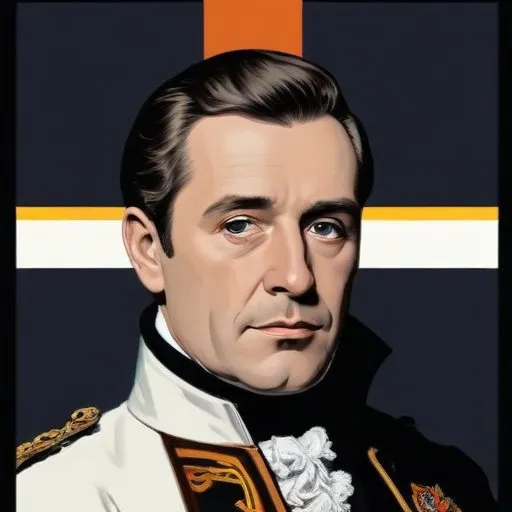
A prominent Irish-English politician who served as Lord Privy Seal and Lord President of the Council, known for his strong advocacy of the royal prerogative and his role in the English Restoration.
Arthur Annesley, 1st Earl of Anglesey, was a prominent Anglo-Irish royalist statesman who left an indelible mark on 17th-century politics. He is best known for serving as Lord Privy Seal between 1673 and 1682, President of the Council of State, and Treasurer of the Navy under King Charles II.
Annesley was born on July 10, 1614, in Dublin, Ireland, to Francis Annesley, 1st Viscount Valentia, and Dorothy Philipps, daughter of Sir John Philipps, Bt, of Picton Castle. He received his education at Magdalen College, Oxford, graduating with a Bachelor of Arts degree in 1634. He was subsequently admitted into Lincolns Inn.
In 1647, Annesley made a name for himself by concluding a treaty with the Duke of Ormonde, securing Ireland from complete subjection to the rebels. This feat earned him a seat in the House of Commons, where he represented Radnorshire. He supported the parliamentarians against the republican or army party, showcasing his moderate and Presbyterian leanings.
The anarchy of the last months of The Protectorate led Annesley to convert to royalism. He became a strong supporter of King Charles II, serving as President of the Council of State in February 1660. In the Convention Parliament, he sat for Carmarthen, solidifying his position as a prominent royalist statesman.
Annesley's remarkable career had a significant impact on 17th-century politics. His loyalty to King Charles II and his support for the monarchy helped shape the Restoration period. His moderate stance and willingness to work with both parliamentarians and royalists earned him respect from his contemporaries.
Today, Annesley is remembered as a skilled statesman who navigated the complexities of 17th-century politics with ease. His legacy serves as a testament to the enduring power of diplomacy, loyalty, and statesmanship.
Arthur Annesley, 1st Earl of Anglesey, left an indelible mark on history, cementing his place as a prominent Anglo-Irish royalist statesman of the 17th century.
Born in 1610
A prominent 17th-century figure who served as Lord Lieutenant of Ireland, playing a key role in Irish and British politics, while also being a respected academic and military leader. He's most known for his strategic military victories and effective governance of Ireland.
Born in 1593
A powerful and influential figure who served as Lord Lieutenant of Ireland, implementing policies that sparked controversy and ultimately led to his downfall. He's most known for his role in shaping Irish history and politics.
Born in 1592
A charismatic and influential favorite of King James I and Charles I, known for his meteoric rise to power and scandalous personal life. He played a significant role in shaping English politics and foreign policy during the early 17th century.
Born in 1630
The last monarch of the House of Stuart, restored to the throne after a republican Commonwealth, known for his lavish spending, mistresses, and the Great Fire of London. He ruled with a mix of absolutism and indulgence, shaping England's Restoration era.
Born in 1599
Leader of the Parliamentarian forces during the English Civil War, who later ruled England, Scotland, and Ireland as a republican dictator, known for his military victories and radical reforms.
Born in 1591
A prominent military leader and politician who played a key role in the English Renaissance, known for his ill-fated rebellion against Queen Elizabeth I.
Born in 1602
A prominent military leader during the Wars of the Roses, he fought on behalf of the Yorkist dynasty and played a key role in the Battle of Towton.
