


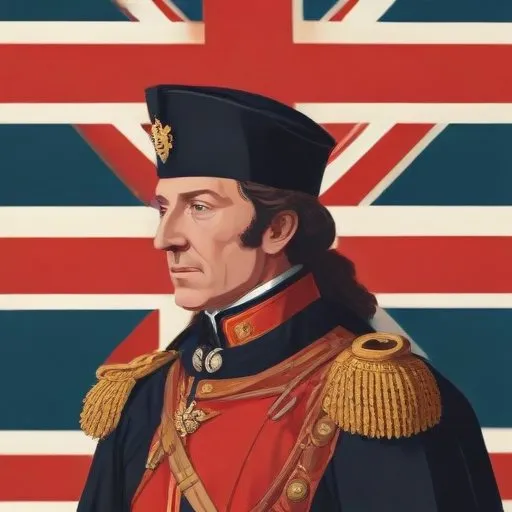
A powerful and influential figure who served as Lord Lieutenant of Ireland, implementing policies that sparked controversy and ultimately led to his downfall. He's most known for his role in shaping Irish history and politics.
Thomas Wentworth, 1st Earl of Strafford, was a prominent English statesman and a major figure in the tumultuous period leading up to the English Civil War. He is best known for his unwavering support of King Charles I, his authoritarian rule as Lord Deputy of Ireland, and his ultimate execution in 1641.
Wentworth was born on April 13, 1593, in London, to Sir William Wentworth, 1st Baronet, and Anne, daughter of Sir Robert Atkins of Stowell, Gloucestershire. He was educated at St John's College, Cambridge, and later became a law student at the Inner Temple in 1607. In 1611, he was knighted and began his foray into politics.
Wentworth's early parliamentary career was marked by his election as Yorkshire's representative in the Addled Parliament in 1614. However, it wasn't until the parliament of 1621 that he began to take an active role in debates. His ambivalence towards the popular party's zeal for war with Spain, coupled with his disagreement with King James I's denial of parliamentary rights, led him to join in the vindication of parliamentary claims.
In 1632, Wentworth was appointed Lord Deputy of Ireland, a position he held until 1640. During his tenure, he established a strong authoritarian rule, which earned him both admiration and criticism. His policies aimed to strengthen the English monarchy's grip on Ireland, leading to widespread reforms and the suppression of Catholicism.
In 1640, Wentworth was recalled to England and became a leading advisor to King Charles I. He worked tirelessly to strengthen the royal position against Parliament, earning him the ire of many parliamentarians. Despite his efforts, Parliament condemned him to death, and Charles reluctantly signed the death warrant in 1641.
Wentworth was advanced several times in the Peerage of England during his career, being created 1st Baron Wentworth in 1628, 1st Viscount Wentworth in late 1628 or early 1629, and finally, 1st Earl of Strafford in January 1640. His legacy is marked by his unwavering loyalty to the English monarchy, his authoritarian rule in Ireland, and his tragic execution.
Wentworth married twice, firstly to Margaret, daughter of Francis Clifford, Earl of Cumberland, and secondly to Arabella, daughter of Robert Holles, 1st Earl of Clare. His personal life was marked by controversy, including allegations of corruption and embezzlement during his tenure as Lord Deputy of Ireland.
Wentworth's legacy extends beyond his own lifetime, influencing the course of English history and politics. His authoritarian rule in Ireland paved the way for future colonialism, while his unwavering support of the monarchy contributed to the English Civil War. Today, he remains a complex and fascinating figure, whose life and times continue to captivate historians and scholars alike.
Born in 1630
The last monarch of the House of Stuart, restored to the throne after a republican Commonwealth, known for his lavish spending, mistresses, and the Great Fire of London. He ruled with a mix of absolutism and indulgence, shaping England's Restoration era.
Born in 1599
Leader of the Parliamentarian forces during the English Civil War, who later ruled England, Scotland, and Ireland as a republican dictator, known for his military victories and radical reforms.
Born in 1573
A 17th-century Archbishop of Canterbury who played a significant role in shaping the Church of England, known for his efforts to impose uniformity and suppress Puritanism.
Born in 1633
The last Catholic monarch of England, Scotland, and Ireland, who attempted to restore Catholicism and absolute monarchy, sparking the Glorious Revolution. He's infamous for his authoritarian rule and religious intolerance.
Born in 1623
A 17th-century republican thinker who advocated for individual liberties and constitutional government, influencing the development of modern democratic thought.
