


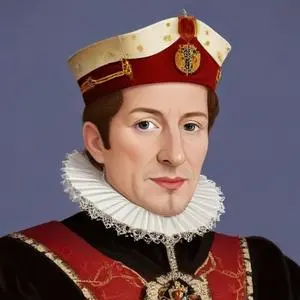
A prominent military leader and politician who played a key role in the English Renaissance, known for his ill-fated rebellion against Queen Elizabeth I.
Robert Devereux, 3rd Earl of Essex, is renowned for his prominent role as the first Captain-General and Chief Commander of the Parliamentarian army, also known as the Roundheads, during the English Civil War in the 17th century. His military leadership and strategic prowess played a significant role in shaping the course of British history.
Born on January 11, 1591, Robert Devereux was the son of Robert Devereux, 2nd Earl of Essex, a distinguished courtier and soldier, and Frances Walsingham, the daughter of Sir Francis Walsingham, Queen Elizabeth I's spymaster. He received his education at Eton College and Merton College, Oxford, where he was created MA by the university in 1605.
In 1604, Robert Devereux became the 3rd Earl of Essex after King James I restored the title to his family following his father's execution for treason. As a young earl, he formed a close friendship with Henry Stuart, Prince of Wales. In 1607, he embarked on a European tour, which lasted until 1609, during which he did not consummate his marriage to Frances Howard, whom he had married at the age of 13.
With the outbreak of the Civil War in 1642, Robert Devereux assumed the role of Captain-General and Chief Commander of the Parliamentarian army. Although he failed to deliver a decisive blow against the Royalist army of King Charles I, his leadership and military skills played a crucial role in the Parliamentarian victories. However, he was eventually overshadowed by the ascendancy of Oliver Cromwell and Thomas Fairfax, leading to his resignation from his commission in 1646.
Robert Devereux's personal life was marred by controversy, particularly his marriage to Frances Howard. The marriage was annulled in 1613 on the grounds of impotence, with Essex claiming that he was only impotent with his wife and had been capable with other women. The public spectacle of the divorce proceedings made Essex a subject of ridicule and embarrassment.
Despite his inability to secure a decisive victory against the Royalist army, Robert Devereux's leadership and military prowess played a significant role in shaping the course of the English Civil War. His legacy as a Parliamentarian leader and soldier continues to influence British history, making him an enduring figure of the 17th century.
Born in 1926
The monarch of the United Kingdom and its Commonwealth realms, serving as a unifying figurehead and symbol of national identity, while also carrying out various ceremonial and charitable duties.
Born in 1574
An English explorer and cartographer who mapped the New World and created innovative navigational tools, contributing significantly to the development of modern cartography.
Born in 1554
A Renaissance man who excelled in literature, politics, and warfare, leaving a lasting legacy in the world of poetry and chivalry.
Born in 1552
A Renaissance man who wrote poetry, fought in wars, and explored the New World, introducing potatoes and tobacco to England. He's famous for his daring exploits and romanticized legend.
Born in 1564
A Renaissance master of words, crafting plays and poems that explored the human condition, and translating ancient texts into English, leaving a lasting impact on literature.
