


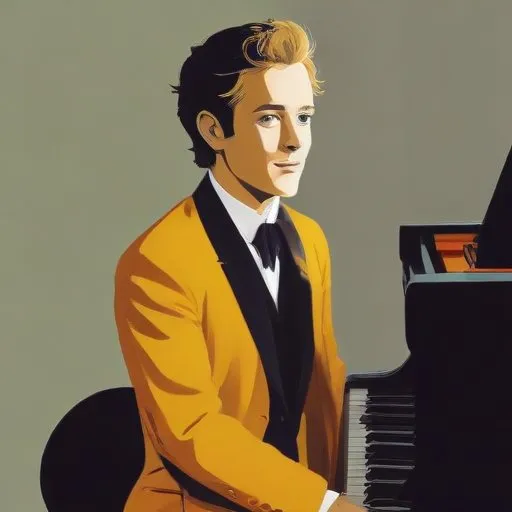
A renowned pianist, composer, and conductor, he was a prominent figure in Australian classical music, known for his romantic and impressionist compositions. His music is still widely performed today.
Arthur Benjamin, an Australian composer, pianist, conductor, and teacher, is best known for his iconic composition, "Jamaican Rumba" (1938), which has become synonymous with exoticism and elegance. This mesmerizing piece has been featured in both versions of Alfred Hitchcock's film, "The Man who Knew Too Much" (1934 and 1956), cementing Benjamin's reputation as a master of evocative music.
Born on September 18, 1893, in Sydney, Australia, into a Jewish family, Benjamin demonstrated a prodigious talent for music from an early age. At six, he made his first public appearance as a pianist, and by nine, he began formal training with George Sampson, the Organist of St. John's Cathedral and Brisbane City Organist.
In 1914, Benjamin joined the Officer Training Corps and served in the infantry and later in the Royal Flying Corps. On July 31, 1918, his aircraft was shot down over Germany, and he spent the remainder of the war as a prisoner of war at Ruhleben internment camp near Berlin. It was during this time that he met composer Edgar Bainton, who would later become a significant influence in his life.
After the war, Benjamin returned to Australia and became a piano professor at the New South Wales State Conservatorium of Music in Sydney. In 1921, he moved to England to teach piano at the Royal College of Music, where he developed a reputation as an exceptional teacher and performer. His appointment as a professor at the RCM in 1926 marked the beginning of a fruitful 13-year tenure, during which he composed some of his most renowned works.
Benjamin's "Storm Clouds Cantata" (1934) was featured in Hitchcock's "The Man who Knew Too Much," further solidifying his connection to the film world. This cantata, with its hauntingly beautiful harmonies, showcases Benjamin's mastery of orchestral composition.
Arthur Benjamin's contributions to the world of music are multifaceted and far-reaching. He inspired generations of composers, pianists, and conductors with his unique blend of elegance and exoticism. His music continues to evoke the glamour and sophistication of a bygone era, transporting listeners to a world of classic Hollywood and luxurious soirees.
Today, "Jamaican Rumba" remains a beloved piece, frequently performed and recorded by orchestras around the world. Its timeless allure lies in its ability to evoke a sense of sophistication and refinement, transporting listeners to a bygone era of glamour and elegance. As a testament to Benjamin's artistry, "Jamaican Rumba" continues to captivate audiences, ensuring his legacy as a master composer of the 20th century.
Born in 1873
A renowned Russian musician who composed iconic symphonies and piano concertos, and was also a skilled pianist and conductor, leaving a lasting legacy in classical music.
Born in 1882
A Russian master of music, renowned for revolutionizing classical music with bold, avant-garde compositions that blended traditional and modern elements. His iconic works, such as "The Rite of Spring," continue to inspire and influence artists across genres.
Born in 1892
A French composer and educator who blended jazz and classical music to create a unique sound, and is best known for his ballet scores and chamber music compositions.
Born in 1897
A child prodigy turned Hollywood legend, he composed iconic film scores, including the swashbuckling adventures of Errol Flynn, and is revered for his lush, romantic music.
Born in 1890
A Czech-American pianist and composer who blended neoclassicism and surrealism, creating innovative works that merged classical music with jazz and avant-garde elements.
Born in 1905
A British composer, conductor, and educator, renowned for his symphonies and film scores, including the iconic music for the 1950s and 1960s Hammer horror films.
Born in 1905
A British composer and conductor who blended jazz and classical music, creating innovative and eclectic works that showcased his unique style. He's also known for his witty writings on music and his association with the Ballets Russes.
