


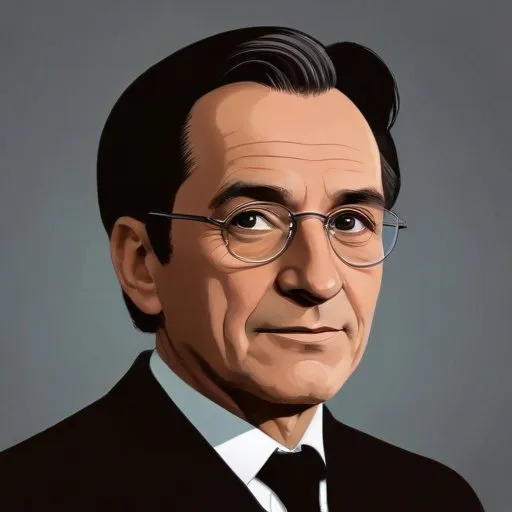
Developed groundbreaking research in dielectrics, ferroelectricity, and semiconductors, pioneering the field of materials science. His work laid the foundation for modern electronics and technology.
Arthur R. von Hippel was a trailblazing materials scientist and physicist who left an indelible mark on the world of dielectrics, ferromagnetic and ferroelectric materials, and semiconductors. His groundbreaking work in radar technology during World War II catapulted him to fame, earning him the prestigious President's Certificate of Merit in 1948.
Born on November 19, 1898, in Rostock, Mecklenburg-Schwerin, Germany, von Hippel was the son of Robert von Hippel. He graduated in physics from the University of Göttingen, where he was mentored by some of the greatest minds in mathematics and physics, including David Hilbert, Richard Courant, Robert Pohl, and Nobel Prize winners Peter Debye, Max Born, and Gustav Hertz. He received his Ph.D. in physics in 1924 under the guidance of Nobel Prize winner James Franck, who later became his father-in-law.
In 1933, von Hippel decided to leave Germany due to the rising Nazi regime and his Jewish wife, Dagmar Franck. He secured a position at the University of Istanbul, Turkey, and later spent a year at the Niels Bohr Institute in Copenhagen, Denmark. In 1936, he accepted an invitation from Karl Compton to join the Massachusetts Institute of Technology (MIT) as an assistant professor.
At MIT, von Hippel founded the Laboratory for Insulation Research in 1940, which soon became a hub for cutting-edge research and education in dielectrics and related fields. His work on high-voltage gas discharges and Lichtenberg figures paved the way for significant advancements in materials science. During World War II, he collaborated with the MIT Radiation Laboratory to develop radar technology, earning him the President's Certificate of Merit.
Von Hippel's contributions to the field of materials science are immense. He was a pioneer in the study of ferroelectric materials, discovered ferroelectricity, and developed the concept of "soft" and "hard" ferroelectrics. His work on the properties and behavior of high-voltage gas discharges led to significant breakthroughs in the understanding of dielectrics.
Throughout his career, von Hippel was recognized with numerous awards and honors, including the IEEE’s Lamme Medal in 1956 and the American Institute of Physics' (AIP) Medal for Industrial Applications of Physics in 1962. He was also a fellow of the American Physical Society and the American Association for the Advancement of Science.
Arthur R. von Hippel's remarkable life and career serve as a testament to his unwavering dedication to science, his perseverance in the face of adversity, and his lasting impact on the world of materials science.
Born in 1901
A pioneer in quantum mechanics, he formulated the uncertainty principle, which revolutionized our understanding of the atomic world. His groundbreaking work reshaped modern physics.
Born in 1885
A pioneer in quantum mechanics, he introduced the concept of wave-particle duality, revolutionizing our understanding of atomic structure. His philosophical approach to science also explored the nature of reality and human understanding.
Born in 1900
A pioneer in quantum mechanics, he formulated the exclusion principle, which states that no two electrons in an atom can have the same set of quantum numbers. His work laid the foundation for modern physics and chemistry.
Born in 1858
A pioneer in quantum theory, he introduced the concept of the Planck constant, revolutionizing our understanding of energy and matter.
Born in 1879
A brilliant physicist who developed the theory of relativity and is considered one of the most influential scientists of the 20th century, known for his groundbreaking work in physics and mathematics.
Born in 1901
A pioneer in nuclear physics, known for leading the team that developed the first nuclear reactor and playing a crucial role in the development of the atomic bomb.
Born in 1879
A pioneering nuclear chemist who discovered nuclear fission, a process that releases massive energy from atomic nuclei, and was awarded the Nobel Prize in Chemistry in 1944.
