


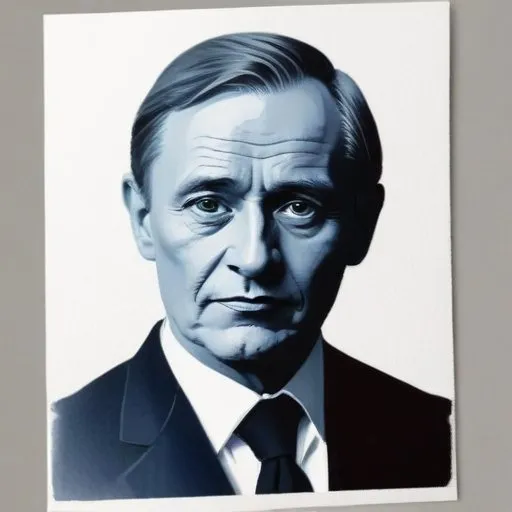
Estonian writer and politician who played a key role in the country's struggle for independence, penning influential works that shaped national identity.
August Jakobson was a prominent Estonian writer and politician, renowned for being one of the few playwrights whose works remained untouched by Soviet censorship, transcending borders to reach other Soviet states. His plays and novels, infused with ideological militancy, solidified his position as a leading figure in Soviet Estonian drama.
Born Augustin Jakobson on September 2, 1904, in Prnu, Estonia, he was the son of Mihkel Jakobson and Maria Jakobson (née Moritson). Jakobson's educational pursuits took him to the University of Tartu, where he studied economics from 1926 to 1929 and medicine from 1931 to 1935. Despite not acquiring a formal degree, his literary inclinations would soon take center stage.
Jakobson's debut novel, Vaestepatuste alev (1927), won first place in a literary competition sponsored by the publishing house Loodus. This early success paved the way for his subsequent works, including Elu tsitadellis (1946) and Vitlus rindejooneta (1947), both of which were plays that further cemented his reputation as a leading Stalinist in Soviet Estonian drama.
Jakobson's involvement in politics began in 1939, when he became the head of the Estonian Writers Union, a position he held until 1940. He would later assume the role again from 1944 to 1946, during which time the organization was known as the Writers Union of the Estonian SSR. In 1940, Jakobson joined a Soviet censorship committee, a move that would have far-reaching implications for his writing and reputation.
A testament to Jakobson's enduring legacy is the monument dedicated to him near the Endla Theatre in Prnu. His contributions to Estonian literature and politics have left an indelible mark on the country's cultural landscape. Jakobson's life and work serve as a fascinating exploration of the complex interplay between art, politics, and ideology during the Soviet era in Estonia.
Born in 1874
Estonia's first president, a key figure in the country's struggle for independence from Russia, served as a unifying force during tumultuous times. He's remembered for his role in shaping Estonia's early years and its path to sovereignty.
Born in 1868
Estonia's 2nd Prime Minister, a pioneering journalist, lawyer, and politician who played a crucial role in the country's struggle for independence and development. He's most known for his efforts to establish a democratic government and promote national unity.
Born in 1884
Estonia's 7th Prime Minister, a lawyer and politician who played a crucial role in shaping the country's early years of independence, known for his diplomatic efforts and national unification.
Born in 1872
Estonia's 7th State Elder, a prominent lawyer and politician, played a crucial role in shaping the country's early 20th-century government and politics. He's most known for his efforts in establishing Estonia's independence and sovereignty.
Born in 1871
Estonian physician and politician who served as the Head of State of Estonia, playing a crucial role in the country's struggle for independence. He is remembered for his efforts to establish a sovereign Estonian state.
Born in 1888
Estonian journalist and politician who served as the 6th Prime Minister of Estonia, known for his leadership during the country's interwar period and his role in shaping the nation's early years of independence.
Born in 1890
A prominent Estonian leader who served as the country's Prime Minister during a tumultuous period, guiding Estonia through World War II and the Soviet occupation. He's revered for his bravery and statesmanship during Estonia's struggle for independence.
Born in 1875
Estonia's second Prime Minister, a lawyer and politician, played a crucial role in shaping the country's early years, serving as a key figure in its struggle for independence. He's most known for his efforts in establishing Estonia's sovereignty and democratic government.
