


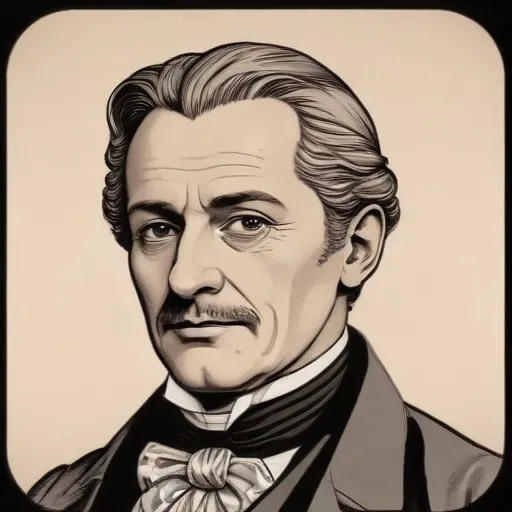
Austrian composer and music historian who wrote influential works on music theory and history, and was a key figure in the development of Romantic music.
August Wilhelm Ambros, an Austrian composer and music historian of Czech descent, is renowned for his monumental contribution to the world of music. His magnum opus, the five-volume "History of Music", published between 1862 and 1882, is a testament to his profound understanding and passion for the art form.
Born on November 17, 1816, in Mĕto, Rokycany District, Bohemia, Ambros was nurtured in a cultured environment. His father was a cultivated individual, and his mother was the sister of Raphael Georg Kiesewetter, a musical archaeologist and collector. This rich heritage instilled in him a deep appreciation for music and the arts, which would become his abiding passion.
Ambros studied at the University of Prague, where he received a well-rounded education in music and the arts. Although he was destined for a career in law and the Austrian civil service, music remained an integral part of his life.
From 1850 onwards, Ambros gained recognition as a critic and essay writer, sharing his insightful perspectives on music with the world. As a composer, he created numerous works reminiscent of Felix Mendelssohn, showcasing his exceptional skill as a pianist.
His academic pursuits continued, and in 1869, he became a professor of the history of music at Prague, a position he held until 1871. Concurrently, he sat on the board of governors at the Prague Royal Conservatory, further solidifying his impact on the music community.
By 1872, Ambros had relocated to Vienna, where he was employed by the Department of Justice as an officer and by Prince Rudolf's family as his tutor. His work in Vienna granted him a unique opportunity: a leave of absence for half the year to travel the world and collect musical information for his "History of Music" book.
This extraordinary privilege allowed him to delve deeper into the rich cultural heritage of various nations, further enriching his understanding of music and its evolution.
August Wilhelm Ambros's contributions to music are multifaceted and far-reaching. His "History of Music" remains an indispensable resource for music historians and scholars, offering a comprehensive and erudite exploration of the subject.
As a composer, critic, and educator, Ambros's influence has permeated generations of musicians, inspiring a deeper appreciation and understanding of the art form.
August Wilhelm Ambros's life was a testament to his unwavering passion for music and his unrelenting pursuit of knowledge. His contributions to the world of music are a lasting legacy, inspiring future generations to appreciate and celebrate the beauty of sound.
Born in 1770
A musical genius who expanded the possibilities of classical music, creating iconic symphonies and piano sonatas that continue to inspire and influence generations of artists.
Born in 1797
A renowned composer of symphonies, operas, and chamber music, particularly famous for his emotional and expressive lieder (art songs) that showcased his mastery of melody and harmony.
Born in 1810
A renowned Romantic-era composer and influential music critic, known for his expressive and emotionally charged works, including symphonies, piano music, and art songs.
Born in 1833
A renowned pianist and composer, he crafted complex, expressive works that blended traditional and innovative techniques, leaving an indelible mark on classical music.
Born in 1824
A renowned composer of symphonies and sacred music, known for his complex harmonies and innovative orchestration. His works are considered a bridge between Romanticism and modern classical music.
Born in 1860
A visionary composer and conductor who expanded symphonic music's emotional depth and complexity, creating works of profound beauty and intensity.
Born in 1864
A renowned composer and conductor of the late Romantic era, known for his tone poems and operas that showcased his mastery of orchestration and expressive storytelling.
Born in 1860
A Slovene-Austrian composer who expanded the art of songwriting by setting poetic lyrics to music, creating a new level of emotional intensity and depth. His innovative compositions continue to influence classical music today.
