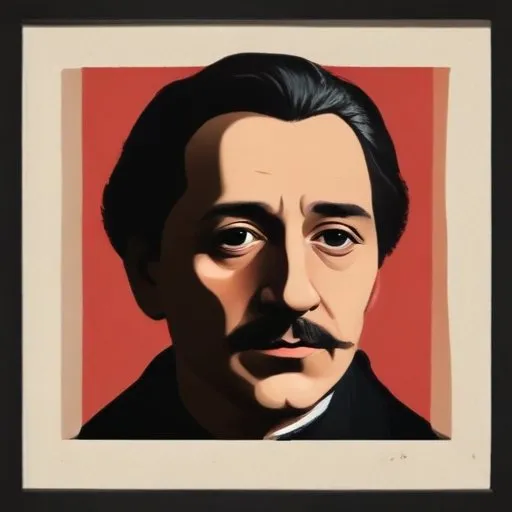
August von Kotzebue: The German Playwright and Diplomat
Notoriety and Assassination
August von Kotzebue, a renowned German playwright, and diplomat is best known for his literary contributions, as well as his untimely demise, which had far-reaching consequences in the world of politics. In 1819, Kotzebue was brutally murdered by Karl Ludwig Sand, a militant member of the Burschenschaften, a German student fraternity, sparking a chain reaction of events that led to the Carlsbad Decrees, which curbed academic freedom and restricted the liberal press.
Early Life and Education
Born on May 3, 1761, in Weimar, Saxe-Weimar, Kotzebue was raised in a respected merchant family. He received his education at the Wilhelm-Ernst-Gymnasium in Weimar, where his uncle, Johann Karl August Musus, a writer and critic, was one of his teachers. This early exposure to literature and criticism laid the foundation for Kotzebue's future literary pursuits.
Literary Career
Kotzebue's writing career began to take shape during his time at the University of Jena, where he studied legal science. His early works, including the novels
Die Leiden der Ortenbergischen Familie (The Sorrows of the Ortenberg Family) and
Geschichte meines Vaters (History of my Father), received widespread acclaim. His plays, such as
Adelheid von Wulfingen, further solidified his reputation as a prominent playwright.
Diplomatic Career
Through his association with Graf Goertz, the Prussian ambassador at the Russian court, Kotzebue became secretary to the Governor General of Saint Petersburg. He was later appointed assessor to the high court of appeals in Reval (now Tallinn, Estonia), where he married the daughter of a Russian lieutenant general. In 1785, he was ennobled and became president of the Magistrat of the Governorate of Estonia, a province of the Russian Empire.
Legacy and Historical Context
Kotzebue's assassination had a profound impact on the political landscape of the German Confederation. The Carlsbad Decrees, issued in response to his murder, led to the dissolution of the Burschenschaften, restricting academic freedom and the liberal press. Kotzebue's death was seen as a martyrdom, and it galvanized the liberal movement, paving the way for future reforms.
Influence on Modern Society
Kotzebue's literary works continue to inspire artists and writers to this day. His plays, in particular, are a testament to his skill in crafting engaging narratives that explore the human condition. His diplomatic career, though cut short, demonstrates the importance of effective diplomacy in shaping international relations.
Personal Milestones and Key Life Events
- 1776: Acted alongside Johann Wolfgang von Goethe in the premiere of Die Geschwister in Weimar
- 1777: Enrolled at the University of Jena to study legal science
- 1783: Became secretary to the Governor General of Saint Petersburg
- 1785: Ennobled and appointed president of the Magistrat of the Governorate of Estonia
- 1817: One of his books was burned during the Wartburg festival
- 1819: Assassinated by Karl Ludwig Sand
Philosophical Contributions and Beliefs
Kotzebue's literary works reflect his commitment to exploring the complexities of human nature. His plays often grappled with themes of love, family, and social hierarchy, offering nuanced insights into the human experience. His diplomatic career, marked by a deep understanding of international relations, highlights the importance of effective communication and cooperation.
Comparative Analysis with Contemporaries
Kotzebue's literary contributions can be compared to those of his contemporaries, such as Goethe and
Friedrich Schiller. While their works differ in style and theme, they share a common commitment to exploring the human condition through literature. Kotzebue's diplomatic career, marked by his service to the Russian Empire, invites comparison with other diplomats of the era, such as Graf Goertz.
Trivia and Fun Facts
- Kotzebue was ennobled in 1785, signifying his status as a member of the nobility
- His plays were performed throughout Europe, solidifying his reputation as a prominent playwright
- His literary works were often marked by a strong sense of social commentary, reflecting his commitment to exploring the complexities of human nature
By examining the life and works of August von Kotzebue, we gain a deeper understanding of the complex interplay between literature, diplomacy, and politics in the early 19th century. His legacy, marked by both artistic and political significance, continues to inspire and inform us to this day.