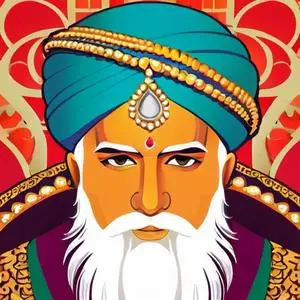
Aurangzeb: The Conqueror of the Mughal Empire
The Sixth Mughal Emperor and His Lasting Legacy
Aurangzeb, also known as Alamgir I, was the sixth Mughal emperor, reigning from 1658 until his death in 1707. He is known for expanding the Mughal Empire to its greatest extent, with territory spanning nearly the entire Indian subcontinent, earning him the regnal title "Conqueror of the World".
Early Life and Ascension to Power
Born as Muhi al-Din Muhammad in 1618, Aurangzeb was the third son of
Shah Jahan, the fifth Mughal emperor. He held various administrative and military posts under his father, gaining recognition as an accomplished military commander. Aurangzeb served as the viceroy of the Deccan from 1636 to 1637 and the governor of Gujarat from 1645 to 1647.
Rise to Power and Military Campaigns
Aurangzeb's claim to the throne was contested by his elder brother,
Dara Shikoh, whom Shah Jahan had nominated as his successor. However, Aurangzeb defeated Dara Shikoh and the Kingdom of Marwar at the Battle of Dharmat in 1658. He then defeated his brother again at the Battle of Samugarh, solidifying his position as the new emperor.
Under Aurangzeb's reign, the Mughal Empire expanded rapidly, with several dynasties and states being overthrown. He conquered the Bijapur and Golconda Sultanates, the kingdoms of Assam and Sikkim, and the Maratha Empire. His military campaigns reached as far as the Afghani border and the territories of present-day Pakistan.
Administrative Reforms and Legacy
Aurangzeb implemented various administrative reforms, including the creation of a new currency, the rupee, and the reorganization of the Mughal Empire's revenue system. He also built several monuments, including the Badshahi Mosque in Lahore and the Bibi Ka Maqbara in Aurangabad.
Despite his military conquests, Aurangzeb's reign was marked by controversy and criticism. He was accused of being intolerant towards non-Muslims, particularly Hindus and Sikhs, and his reign saw several instances of religious persecution.
Personal Life and Controversies
Aurangzeb was known for his piety and simplicity. He was a devout Muslim who practiced a simple and austere lifestyle, often giving away his personal wealth to charity.
However, his personal life was also marked by controversy. He imprisoned his father, Shah Jahan, after declaring him incompetent to rule. He also executed his brother, Dara Shikoh, on charges of apostasy.
Impact on Modern Society and Legacy
Aurangzeb's legacy is complex and multifaceted. While he expanded the Mughal Empire to its greatest extent, his reign was also marked by intolerance and persecution.
Despite this, Aurangzeb's legacy continues to shape modern Indian society. He played a significant role in shaping India's cultural heritage, including its architecture, literature, and art.
Quotes and Memorable Sayings
- "I am not a man of letters, but I am a man of action."
- "The emperor's throne is not a place for relaxation, but a seat of duty."
Historical Context and Legacy
Aurangzeb's reign marked the beginning of the decline of the Mughal Empire. While he expanded the empire's territory, his intolerance and persecution of non-Muslims created social and political tensions that would haunt the empire for centuries to come.
In conclusion, Aurangzeb's legacy is a complex web of conquest, controversy, and cultural achievement. Love him or hate him, Aurangzeb remains one of the most influential figures in Indian history, shaping the country's politics, culture, and society to this day.
FAQ
What were the key achievements of Aurangzeb during his reign as Mughal emperor?
Aurangzebs reign saw the expansion of the Mughal Empire to its greatest extent, with the conquest of the Deccan Plateau and the capture of the Shia kingdom of Golconda. He also implemented various administrative reforms and promoted Islamic education.
What was Aurangzebs stance on religious tolerance?
Aurangzeb was known for his strict adherence to Islamic law and his intolerance towards non-Muslims. He reimposed the jizya tax on non-Muslims and destroyed many Hindu temples and idols.
How did Aurangzebs relations with the Marathas affect the Mughal Empire?
Aurangzebs conflicts with the Marathas weakened the Mughal Empire and led to its decline. The Marathas were able to resist Aurangzebs attempts to conquer them, and eventually, they became a major power in India.
What was the significance of Aurangzebs patronage of art and architecture?
Aurangzeb was a patron of the arts, and his court attracted many poets, scholars, and artists. He commissioned many architectural projects, including the Badshahi Mosque in Lahore, which is considered one of the finest examples of Mughal architecture.
How did Aurangzebs legacy shape the course of Indian history?
Aurangzebs legacy is complex and contested. While he expanded the Mughal Empire, he also contributed to its decline and the rise of regional powers. His policies towards non-Muslims and his intolerance towards Shia Muslims also had long-term consequences for Indian society.