


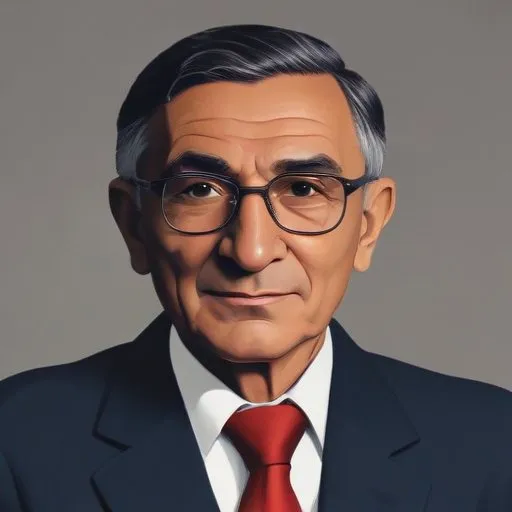
A Turkish-American biologist and academic who discovered the molecular mechanisms of DNA repair, earning a Nobel Prize in Chemistry in 2015. His work has led to a better understanding of cancer treatment and prevention.
Aziz Sancar is a renowned Turkish molecular biologist who has made groundbreaking contributions to the fields of DNA repair, cell cycle checkpoints, and circadian clock. In 2015, he was awarded the Nobel Prize in Chemistry, along with Tomas Lindahl and Paul L. Modrich, for their mechanistic studies of DNA repair.
Born on September 8, 1946, in the Savur district of Mardin Province, southeastern Turkey, Aziz Sancar came from a lower-middle-class Arab family. He was the seventh of eight children, and his parents, although uneducated, placed great emphasis on his education. Sancar's idealistic teachers, who received their education in the Village Institutes, instilled in him a strong passion for learning.
Sancar's academic excellence was noted by his teachers throughout his school life. He initially wanted to study chemistry, but was persuaded to pursue medicine instead. He went on to study medicine at the Faculty of Medicine of Istanbul University.
Aziz Sancar's research has focused on understanding the mechanisms of DNA repair, particularly photolyase and nucleotide excision repair in bacteria. His work has significantly advanced our understanding of these processes and has paved the way for the development of new cancer therapies.
Sancar is currently the Sarah Graham Kenan Professor of Biochemistry and Biophysics at the University of North Carolina School of Medicine. He is also a member of the UNC Lineberger Comprehensive Cancer Center.
Aziz Sancar's contributions to science have been recognized with numerous awards and honors, including:
Aziz Sancar's work is driven by a passion for understanding the intricacies of life and a desire to make a positive impact on humanity. He believes that scientific progress is key to improving human health and quality of life.
Aziz Sancar is the cofounder of the Aziz & Gwen Sancar Foundation, a non-profit organization that promotes Turkish culture and supports Turkish students in the United States.
Sancar's family has played a significant role in his life. His oldest brother, Kenan Sancar, is a retired brigadier general in the Turkish Armed Forces, and his cousin, Mithat Sancar, is a member of parliament from and chairman of the HDP.
Aziz Sancar's work has far-reaching implications for our understanding of DNA repair and its applications in cancer therapy. His research has paved the way for the development of new treatments and has inspired a new generation of scientists.
Through his foundation, Sancar continues to promote Turkish culture and support Turkish students in the United States, fostering greater understanding and cooperation between nations.
98 Years Old
Discovered the structure of DNA, revolutionizing our understanding of genetics and earning a Nobel Prize. Pioneering work in molecular biology has far-reaching implications for medicine and beyond.
Born in 1916
Pioneering scientist who discovered the structure of DNA, revolutionizing our understanding of genetics and life itself.
Born in 1920
A British scientist who contributed significantly to the discovery of the structure of DNA, providing high-quality X-ray crystallography images that helped James Watson and Francis Crick develop their famous model.
Born in 1916
A Nobel Prize-winning physicist and biologist who contributed significantly to the discovery of the structure of DNA, using X-ray crystallography to produce the first clear images of the molecule.
Born in 1901
Pioneering chemist and peace activist who won two unshared Nobel Prizes, one for chemistry and one for peace, for his groundbreaking work on the nature of the chemical bond and his tireless efforts to promote nuclear disarmament.
Born in 1905
A pioneer in DNA research, this biochemist discovered the base pairing rules of DNA, leading to a fundamental understanding of genetic code.
Born in 1918
Pioneering biochemist who discovered the mechanism of DNA replication and was awarded the Nobel Prize in Physiology or Medicine in 1959 for his groundbreaking work on nucleic acid synthesis.
Born in 1905
A pioneering biochemist who discovered the mechanism of RNA synthesis, earning a Nobel Prize in Physiology or Medicine in 1959. His work laid the foundation for our understanding of genetic code and protein synthesis.
