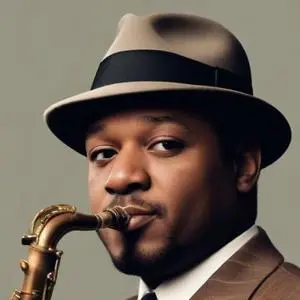
Ben Webster: The Tenor Saxophone Titan of Jazz
A Legacy of Soulful Improvisation
Ben Webster, the American jazz tenor saxophonist, left an indelible mark on the world of jazz with his soulful, expressive, and technically masterful playing style. Known for his distinctive, warm tone and improvisational genius, Webster is widely regarded as one of the greatest tenor saxophonists in jazz history.
Early Life and Career
Born Benjamin Francis Webster on March 27, 1909, in Kansas City, Missouri, Webster's early life was steeped in music. He began studying violin at age 11 and later learned to play blues piano from the great
Pete Johnson. It wasn't until he received saxophone lessons from Budd Johnson that he found his true calling. Webster's early career saw him playing with various bands, including the Young Family Band, led by
Lester Young, and the
Bennie Moten Orchestra, alongside
Count Basie, Hot Lips Page, and Walter Page.
The Ellington Era
Webster's most significant collaboration was with the
Duke Ellington Orchestra, which he joined in 1940. During his time with Ellington, Webster became a prominent soloist, appearing on the iconic recording "Cotton Tail." His tenure with Ellington had a profound impact on his playing style, with alto saxophonist
Johnny Hodges exerting a significant influence on his development. However, Webster's strong personality often clashed with Ellington's, leading to a tumultuous relationship that ultimately resulted in his departure from the orchestra in 1943.
LATER CAREER AND COLLABORATIONS
Following his departure from Ellington's orchestra, Webster worked regularly on 52nd Street in New York City, recording frequently as a leader and sideman. He collaborated with numerous musicians, including
Raymond Scott, John Kirby, Bill DeArango, Sid Catlett, Jay McShann, and
Jimmy Witherspoon. Throughout the 1940s and 1950s, Webster continued to hone his craft, developing a unique style that blended technical mastery with emotional intensity.
LEGGACY AND IMPACT
Ben Webster's influence on modern jazz is immeasurable. His soulful, expressive playing style has inspired generations of saxophonists, from
Stan Getz to
John Coltrane. His unique tone, phrasing, and improvisational approach have become a benchmark for excellence in jazz. Through his extensive discography, Webster has left behind a rich legacy of jazz classics, ensuring his place among the pantheon of jazz greats.
QUOTES AND MEMORABLE SAYINGS
- "I don't think I ever played a bad solo." - Ben Webster
- "The way I play is the way I feel." - Ben Webster
AWARDS AND HONORS
- Inducted into the DownBeat Jazz Hall of Fame (1974)
- Winner of the 1964 DownBeat Critics' Poll for Tenor Saxophonist of the Year
TRIVIA AND FUN FACTS
- Webster was known for his fondness for fine clothing and was often seen wearing tailored suits on stage.
- He was a proficient cook and enjoyed preparing traditional American dishes, such as chili con carne and corn bread.
By examining Ben Webster's remarkable life and career, we are reminded of the transformative power of jazz and the enduring legacy of its greatest practitioners. As a titan of the tenor saxophone, Webster's music continues to inspire and delight audiences around the world.
FAQ
What was Ben Websters contribution to jazz music?
Ben Webster was an American saxophonist who made significant contributions to jazz music. He was known for his smooth, soulful playing style and was a key figure in the development of swing and bebop jazz.
What was Ben Websters role in the development of swing jazz?
Ben Webster was one of the key figures in the development of swing jazz, a style of jazz that emerged in the 1930s. He played with many of the top swing bands of the era, including those led by Duke Ellington and Count Basie.
How did Ben Websters music influence other jazz musicians?
Ben Websters music had a significant influence on other jazz musicians, including John Coltrane, Sonny Rollins, and Stan Getz. He was a respected figure in the jazz community and helped to promote the careers of many young musicians.
What were Ben Websters musical influences?
Ben Websters musical influences were diverse and included jazz, blues, and swing music. He was particularly influenced by the music of Lester Young and Coleman Hawkins, two of the most important saxophonists of the era.
How is Ben Webster remembered today?
Ben Webster is remembered today as a pioneering jazz musician who helped to shape the course of American music. His legacy continues to inspire new generations of musicians and music lovers.