


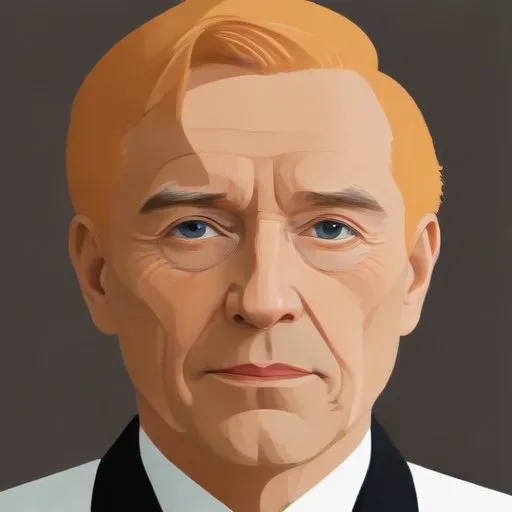
A Finnish composer and clarinetist, known for his virtuosic clarinet concertos and symphonies that blended classical and romantic styles. His music is still widely performed today.
Bernhard Henrik Crusell, a Swedish-Finnish clarinetist, composer, and translator, is renowned as the most significant and internationally recognized Finnish-born classical composer, preceding the iconic Jean Sibelius. With a career spanning multiple decades, Crusell left an indelible mark on the world of classical music, earning him the title of the outstanding Finnish composer of his time.
Born on October 15, 1775, in Uusikaupunki, Finland, to a poor family of bookbinders, Crusell's innate passion for music was sparked at a tender age. His grandfather, Bernhard Kruselius, had learned the trade of bookbinding in Turku and Stockholm, eventually settling in Pori where he fathered nine children, including Crusell's father, Jakob.
Crusell's early life was marked by tragedy, with his mother passing away when he was just a year old. His father remarried, and the family moved to Perttula, a rural village in Nurmijrvi, about 23 miles north of Helsinki. This move would prove pivotal in shaping Crusell's musical journey.
At the age of four, Crusell was drawn to the sweet melodies of a shop assistant who played the flute in the evenings. Entranced, he would sit in the street, listening intently, despite his parents' initial disapproval. This early fascination with music would eventually lead him to learn to play a friend's clarinet by ear, marking the beginning of his remarkable career.
In 1788, at just 13 years old, Crusell began receiving training from a member of the Nyland regimental band. This formal education laid the foundation for his future success, as he went on to compose numerous works, including concertos, symphonies, and chamber music.
Among his most notable compositions are:
Crusell's work was deeply rooted in the classical music tradition, with a strong emphasis on melody and harmony. His compositions often featured complex structures and nuances, showcasing his mastery of the clarinet.
Through his music, Crusell sought to evoke emotions and convey a sense of beauty, reflecting his strong connection to the natural world and the human experience.
In 1803, Crusell traveled to Stockholm, where he met and befriended prominent composers and musicians, further refining his craft. This period of his life was marked by intense creativity, resulting in some of his most celebrated works.
Crusell's later years were marked by declining health, but he continued to compose, leaving behind a legacy that would inspire generations of musicians to come.
Bernhard Crusell's contributions to classical music are undeniable, with his works remaining a staple of the clarinet repertoire to this day. His music has inspired countless composers, including the great Ludwig van Beethoven.
Crusell's legacy extends beyond the world of classical music, serving as a testament to the power of dedication, perseverance, and passion. His remarkable story continues to inspire and captivate audiences around the world.
Crusell was known for his exceptional skill on the clarinet, earning him the nickname "the Finnish Mozart."
Despite being a prolific composer, Crusell's music was largely forgotten until the mid-20th century, when a renewed interest in his works led to a revival of his legacy.
In 1941, the Finnish government established the Bernhard Crusell Society, dedicated to promoting his music and preserving his legacy.
Today, Crusell's music continues to be performed and celebrated around the world, a testament to the enduring power of his art.
Born in 1756
A child prodigy and master of classical music, he composed over 600 works, including symphonies, operas, and chamber music, that continue to inspire and influence musicians today.
Born in 1770
A musical genius who expanded the possibilities of classical music, creating iconic symphonies and piano sonatas that continue to inspire and influence generations of artists.
Born in 1759
A virtuosic violinist and prolific composer, he wrote over 250 works, including symphonies, concertos, and chamber music, showcasing his mastery of classical music forms.
Born in 1750
A renowned 18th-century composer and conductor, known for his operas and rivalry with Mozart, as depicted in the movie Amadeus.
Born in 1714
A pioneering opera composer who revolutionized the art form with his innovative and expressive works, blending music and drama in a way that captivated audiences.
Born in 1732
A renowned composer and pianist of the Classical period, known for his symphonies, operas, and chamber music that showcased his innovative and expressive style. He played a significant role in shaping the Classical music era.
Born in 1782
A virtuosic violinist and composer who revolutionized the instrument's technical possibilities, leaving an indelible mark on classical music.
Born in 1833
A renowned pianist and composer, he crafted complex, expressive works that blended traditional and innovative techniques, leaving an indelible mark on classical music.
