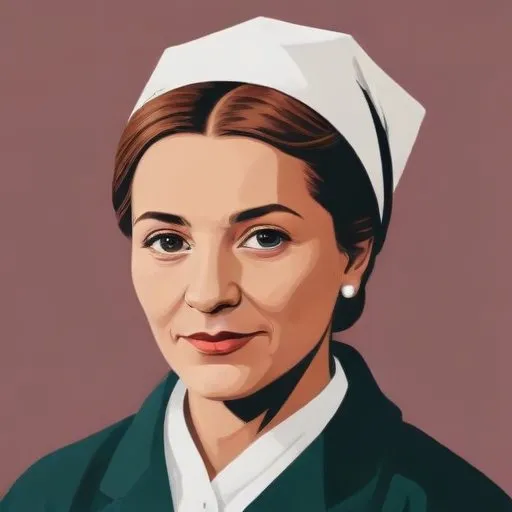
Bertha De Vriese: A Pioneer in Medicine and a Beacon of Hope
A Trailblazer in a Male-Dominated Field
Bertha De Vriese, a Belgian physician, made history by becoming the first woman to conduct research and graduate as a doctor of medicine from Ghent University. This remarkable achievement in 1900 paved the way for future generations of women in the medical profession.
Early Life and Education
Bertha Coletta Constantia De Vriese was born on September 26, 1877, in Ghent, Belgium, to Coralie Pannenmaeker and Lodewijk De Vriese. In an era where women's education was limited, De Vriese's parents recognized her potential and provided her with a home-schooled education, preparing her for university studies.
Breaking Barriers in Medical School
In 1893, De Vriese passed the exams of the Central Jury, earning her a spot in the Ghent University's medical school, where she was the first woman to be admitted. She excelled in her studies, graduating summa cum laude with a diploma in medicine, obstetrics, and gynecology in 1900.
Laureate and Gold Medalist
The following year, De Vriese was awarded a prize and distinction as Laureate in the University Competition, earning her a gold medal from the mayor of the city of Ghent. Her research paper, "Etudier les modifications que la distribution des vaisseaux sanguins des extrémités subit chez l'homme au cours du développement" (Investigating the changes humans undergo on the distribution of blood vessels in the extremities during development), scored an impressive 95 out of 100 possible points.
Private Pediatric Clinic and Director of the Children's Ward
Despite being denied an academic career, De Vriese opened a private pediatric clinic and served as the director of the Children's Ward at the Bijloke Hospital in Ghent. Her dedication to pediatric care and her pioneering spirit inspired countless women to pursue careers in medicine.
Personal Life and Marriage
In 1914, De Vriese married Josef Vercouillie, a physician, and continued to make significant contributions to the medical field.
A Legacy of Inspiration and Perseverance
Bertha De Vriese's remarkable achievements serve as a testament to her unwavering dedication, perseverance, and passion for medicine. Her trailblazing spirit paved the way for future generations of women in medicine, inspiring them to pursue their dreams despite the obstacles.
Timeline of Milestones
- 1877: Born on September 26 in Ghent, Belgium
- 1893: Passed the exams of the Central Jury
- 1900: Graduated summa cum laude from Ghent University's medical school
- 1901: Awarded a prize and distinction as Laureate in the University Competition
- 1914: Married Josef Vercouillie
- 1958: Passed away on March 17
A Lasting Impact on the Medical Profession
Bertha De Vriese's remarkable legacy continues to inspire and motivate women to pursue careers in medicine, ensuring that her pioneering spirit lives on for generations to come.
FAQ
What were Bertha De Vrieses contributions to the field of medicine?
Bertha De Vriese was a pioneering physician who made significant contributions to the field of medicine, including her work on womens health and pediatrics.
What was Bertha De Vrieses role in promoting women in medicine?
Bertha De Vriese was a trailblazer for women in medicine, and she worked to promote the education and career advancement of women in the field.
What awards did Bertha De Vriese receive for her work?
Bertha De Vriese received several awards for her contributions to medicine, including the Order of Leopold II in 1952.
What was Bertha De Vrieses approach to healthcare?
Bertha De Vrieses approach to healthcare emphasized the importance of preventive care and community health initiatives.
What is Bertha De Vrieses legacy in the field of medicine?
Bertha De Vrieses legacy in the field of medicine is significant, as she paved the way for women in medicine and improved healthcare outcomes for countless individuals.