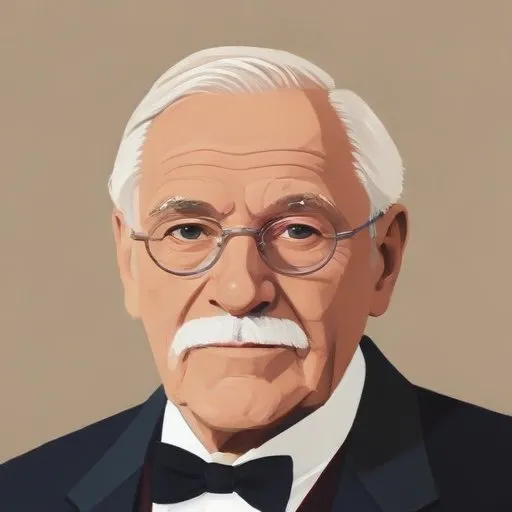
Hugo Theorell: Nobel Laureate and Pioneer in Enzyme Research
A Legacy in Enzymology
Hugo Theorell is renowned for his groundbreaking discoveries in the field of enzyme research, earning him the Nobel Prize in Physiology or Medicine in 1955. His pioneering work on oxidoreductase enzymes and their effects has had a profound impact on our understanding of biological processes, paving the way for significant advancements in biochemistry and medicine.
Early Life and Education
Born on July 6, 1903, in Linköping, Sweden, Theorell was the son of Thure Theorell and Armida Bill. He pursued his secondary education at Katedralskolan in Linköping, passing his examination in 1921. Subsequently, he enrolled at the Karolinska Institute, where he graduated as a Bachelor of Medicine in 1924. Theorell's early fascination with bacteriology led him to spend three months studying under Professor
Albert Calmette at the Pasteur Institute in Paris.
Career Highlights and Major Works
Theorell's academic prowess earned him an M.D. degree in 1930, with a thesis on the lipids of blood plasma. He was subsequently appointed professor of physiological chemistry at the Karolinska Institute. His dedication to enzyme research led to the establishment of the Biochemical Department of the Nobel Medical Institute in 1936, where he served as its first head.
Some of Theorell's most notable contributions include:
- Discovering the toxic effects of sodium fluoride on the cofactors of crucial human enzymes
- Pioneering work on alcohol dehydrogenases, enzymes that break down alcohol in the liver and other tissues
Awards and Honors
Theorell's remarkable achievements were recognized with numerous honors and accolades, including:
- Nobel Prize in Physiology or Medicine in 1955
- Honorary degrees from universities in France, Belgium, Brazil, and the United States
- Membership in the American Academy of Arts and Sciences, the United States National Academy of Sciences, and the American Philosophical Society
Personal Life and Legacy
Theorell was married to Elin Margit Elisabeth née Alenius, a distinguished pianist and harpsichordist. He passed away on August 15, 1982, in Stockholm, and is interred in Norra begravningsplatsen (The Northern Cemetery) alongside his wife, who died in 2002. Theorell's remarkable legacy continues to inspire generations of scientists, with his work remaining a cornerstone of enzyme research and biochemistry.
Historical Context and Impact
Theorell's contributions to the field of biochemistry have had far-reaching implications, influencing the development of medical treatments and our understanding of biological processes. His work has paved the way for significant advancements in fields such as enzyme engineering, biotechnology, and pharmaceutical research. As a pioneer in enzyme research, Theorell's legacy continues to shape the course of scientific inquiry, ensuring his impact will be felt for generations to come.
FAQ
What is Hugo Theorells notable contribution to biochemistry?
Hugo Theorell is renowned for his discovery of the enzyme horse liver alcohol dehydrogenase, which paved the way for significant advances in biochemistry and enzymology. This discovery earned him the Nobel Prize in Physiology or Medicine in 1955.
How did Hugo Theorells research on enzymes influence the field of biochemistry?
Hugo Theorells research on enzymes had a profound impact on the field of biochemistry, as it revealed the importance of enzymes in catalyzing chemical reactions and shed light on their structural and functional properties.
What is the significance of Hugo Theorells Nobel Prize?
Hugo Theorells Nobel Prize is significant because it recognized his groundbreaking research on enzymes and its far-reaching implications for biochemistry, medicine, and related fields.
Did Hugo Theorell receive any other notable awards for his work?
Yes, Hugo Theorell received several other notable awards and honors for his work, including the Copley Medal from the Royal Society in 1959.
How did Hugo Theorells collaboration with other scientists influence his research?
Hugo Theorells collaboration with other scientists, including his colleague Anders Lehmann, enriched his research and provided valuable insights into the mechanisms of enzymes and their biological significance.