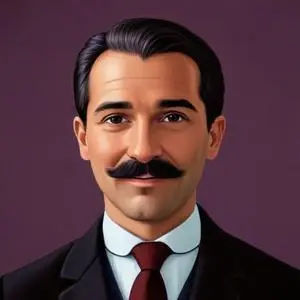
Albert Calmette: The Pioneer of Modern Vaccinology
A Legacy of Life-Saving Discoveries
Albert Calmette, a French physician, bacteriologist, and immunologist, is renowned for his groundbreaking contributions to the field of vaccinology. He is credited with the discovery of Bacillus Calmette-Guérin (BCG), an attenuated form of Mycobacterium bovis used in the BCG vaccine against tuberculosis, as well as the development of the first antivenom for snake venom, known as Calmette's serum.
Early Career and Inspirations
Born on July 12, 1863, in Nice, France, Calmette was drawn to the naval medical corps, where he began his career in 1881. During his time in Hong Kong, he worked alongside Dr. Patrick Manson, a pioneering figure in the study of parasitic worms. This experience sparked Calmette's interest in filariasis, a parasitic disease that would become the subject of his medical degree.
Association with Pasteur and the Pasteur Institute
In 1890, Calmette returned to France and met the illustrious
Louis Pasteur, who would become a mentor and inspiration. Pasteur entrusted Calmette with the task of founding and directing a branch of the Pasteur Institute in Saigon, French Indochina, in 1891. During his time in Saigon, Calmette delved into the nascent field of toxicology, exploring the properties of snake and bee venom, plant poisons, and curare.
The BCG Vaccine and Beyond
Calmette's most significant contribution to science came in 1908, when he developed the BCG vaccine. This achievement marked a major milestone in the fight against tuberculosis, a disease that had claimed countless lives throughout history. In addition to the BCG vaccine, Calmette's work on antivenoms led to the development of Calmette's serum, a treatment for snake bites.
Pioneering Research and Legacy
Throughout his career, Calmette demonstrated a relentless passion for scientific inquiry. His research spanned a wide range of topics, from malaria and sleeping sickness to pellagra and cholera. His work laid the foundation for future generations of scientists, including Vital Brazil, who built upon Calmette's research on antivenoms.
Awards and Honors
Calmette's groundbreaking contributions to science earned him numerous accolades, including election as a Foreign Member of the Royal Society (ForMemRS) in 1921.
Personal Milestones and Key Life Events
- 1863: Born in Nice, France
- 1881: Joined the School of Naval Physicians at Brest
- 1883: Began serving in the Naval Medical Corps in Hong Kong
- 1887: Assigned to Saint-Pierre and Miquelon
- 1890: Returned to France and met Louis Pasteur
- 1891: Founded and directed a branch of the Pasteur Institute in Saigon, French Indochina
- 1908: Developed the BCG vaccine
- 1921: Elected as a Foreign Member of the Royal Society (ForMemRS)
- 1933: Passed away on October 29
Impact on Modern Society
Calmette's work has had a profound impact on modern society, shaping the course of vaccine development and saving countless lives worldwide. His legacy continues to inspire scientists, physicians, and researchers today, serving as a testament to the power of human ingenuity and determination.
FAQ
What was Albert Calmettes contribution to medicine?
Albert Calmettes most significant contribution to medicine was the development of the Bacille Calmette-Guérin (BCG) vaccine against tuberculosis, which has saved millions of lives worldwide.
How did Albert Calmettes work impact the fight against tuberculosis?
Albert Calmettes work on the BCG vaccine led to a significant reduction in tuberculosis cases and deaths globally, making it a crucial tool in the fight against this deadly disease.
What was Albert Calmettes role in the Pasteur Institute?
Albert Calmette worked at the Pasteur Institute in Lille, France, where he conducted research on tuberculosis and developed the BCG vaccine, earning him international recognition as a leading expert in the field.
What awards did Albert Calmette receive for his work?
Albert Calmette was awarded the Copley Medal in 1930 for his outstanding contributions to medicine, and was also elected as a foreign member of the Royal Society in 1927.
What is Albert Calmettes legacy in the field of medicine?
Albert Calmettes legacy is one of groundbreaking research and innovation, paving the way for future generations of scientists and medical professionals to build upon his work and continue the fight against infectious diseases.