


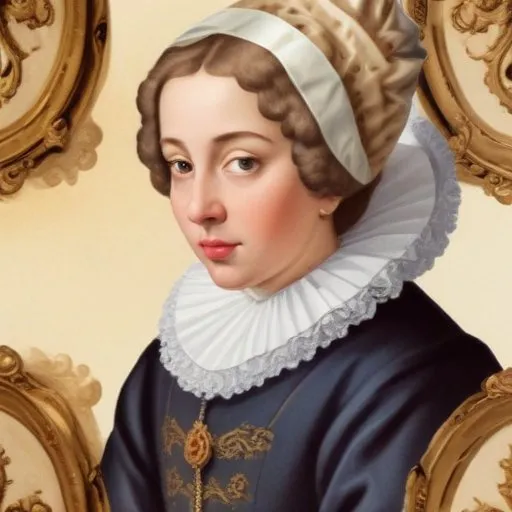
A Flemish Baroque painter, known for his exquisite and emotive depictions of everyday life, landscapes, and biblical scenes, characterized by rich colors and dramatic lighting.
Bertholet Flemalle, a Belgian painter, left an indelible mark on the art world with his vivid and intricate depictions of biblical scenes, earning him the reputation as one of the most skilled artists of the Baroque period. Flemalle's extensive career, spanning over three decades, saw him traverse Europe, from Rome to Paris, leaving behind a trail of masterpieces that continue to captivate art enthusiasts to this day.
Born on May 23, 1614, in Liège, Belgium, Flemalle was the son of a glass painter. His early training in art was under the tutelage of Henri Trippet and Gerard Douffet, two prominent artists of the time. This solid foundation in art laid the groundwork for Flemalle's subsequent success.
In 1638, Flemalle embarked on a journey to Rome, a city that would have a profound impact on his artistic style. During his Italian sojourn, he was invited by the Duke of Tuscany to Florence, where he worked on decorating one of the duke's galleries. This experience exposed Flemalle to the rich cultural heritage of Italy, influencing his artistic expression.
Flemalle's travels next took him to Paris, where he executed elaborate decorative work at the Palace of Versailles. His most famous work from this period is the Adoration of the Magi, a stunning painting that adorned the sacristy of the church of the Augustinians. This masterpiece showcased Flemalle's ability to weave intricate narratives into his art.
In 1647, Flemalle returned to his native Liège, where he continued to produce an array of magnificent paintings for the city's churches. His reputation as a master painter soon reached the ears of Louis XIV, who appointed him a professor of the Royal Academy of Paris in 1670. This prestigious position solidified Flemalle's status as a leading artist of his time.
Towards the end of his life, Flemalle's mental health began to decline, and he fell into a state of profound melancholy. Under the care of a medical professional, he continued to paint until his death on July 10, 1675. Despite his struggles, Flemalle's artistic output during this period remained remarkable, including his Glorification of the Holy Cross, which hangs in St. Bartholomew's Church, Liège.
Flemalle's artistic style has been characterized as pale and weak in terms of color, with some critics arguing that his figures appear artificial. However, his unique ability to capture the essence of his subjects and infuse his paintings with a sense of drama and emotion has earned him a loyal following among art enthusiasts.
Flemalle's influence on the art world extends beyond his own works. One of his pupils, Gerard de Lairesse, went on to become a prominent painter in his own right. Flemalle's legacy serves as a testament to the enduring power of art to inspire and captivate generations.
Bertholet Flemalle's remarkable life and artistic achievements have left an indelible mark on the art world. His paintings continue to captivate audiences with their beauty, drama, and emotional depth, ensuring that his legacy endures for generations to come.
Born in 1577
A renowned Flemish painter and diplomat, famous for his vivid and emotive Baroque-style masterpieces, particularly his lush nudes and dramatic altarpieces.
Born in 1599
A renowned Flemish-English painter and etcher, famous for capturing the essence of 17th-century European aristocracy through his exquisite portraits, characterized by dramatic lighting and subtle emotional depth.
Born in 1579
A Flemish master of still life and animal painting, known for his vivid and intricate depictions of fruit, game, and market scenes. His works often featured in collaboration with other prominent artists of the time.
Born in 1609
A Flemish painter renowned for exquisite still-life compositions, particularly of flowers, game, and fruit, characterized by remarkable realism and attention to detail.
Born in 1610
A Flemish painter of everyday life and landscapes, capturing the charm of 17th-century Europe with vivid colors and detailed scenes.
